
Bread(unleavened bread)
“Food, bread, or grain”
Summary
The staple food of ancient Israel, bread held profound spiritual significance as both daily sustenance and a symbol of Christ, the 'bread of life.'
☩Materials and Preparation
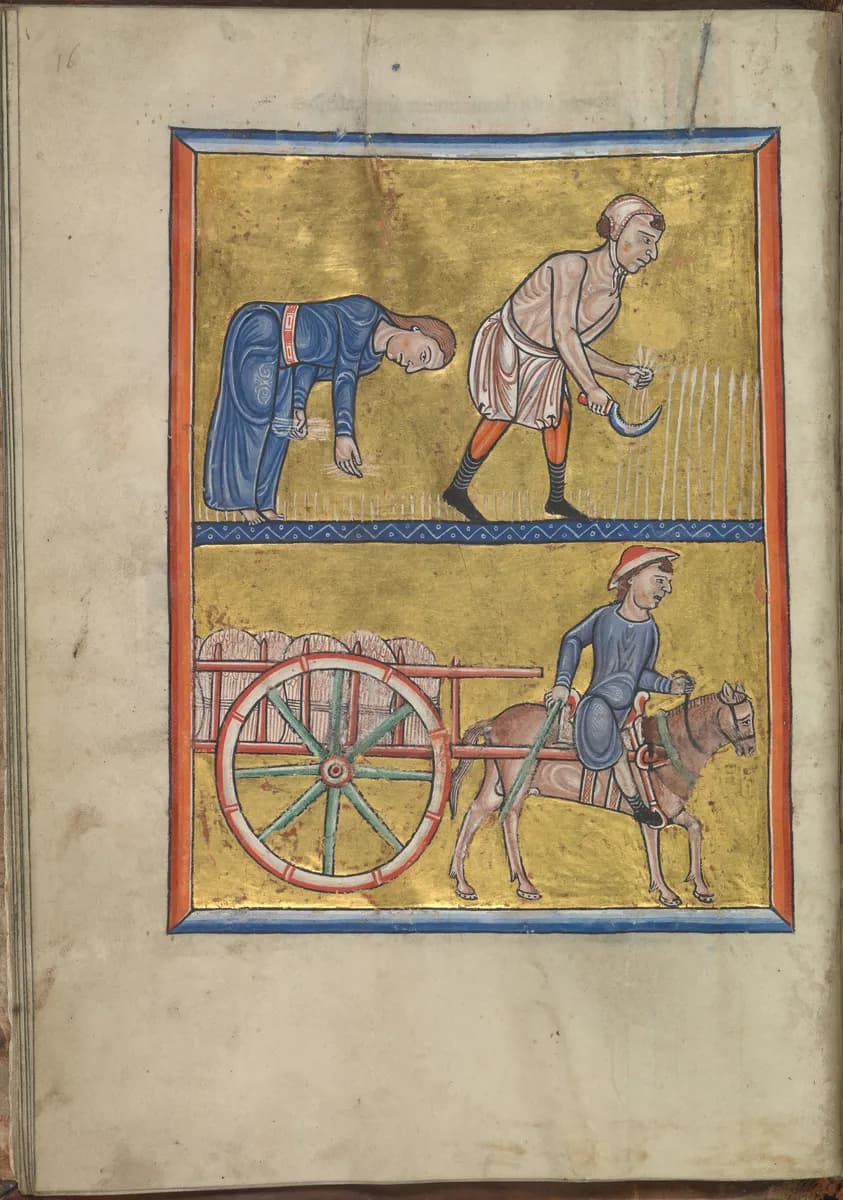
Bread was made primarily from wheat flour, though barley was used by the poor and in times of scarcity. The grain was ground daily using a hand-mill or mortar, mixed with water, kneaded in a wooden trough, and usually leavened with a piece of fermented dough from the previous day's batch. The round, flat loaves were about a span in diameter and a finger's breadth thick, easily broken rather than cut. An ephah (about three measures) of flour was the standard amount for a single baking.
☩Baking Methods
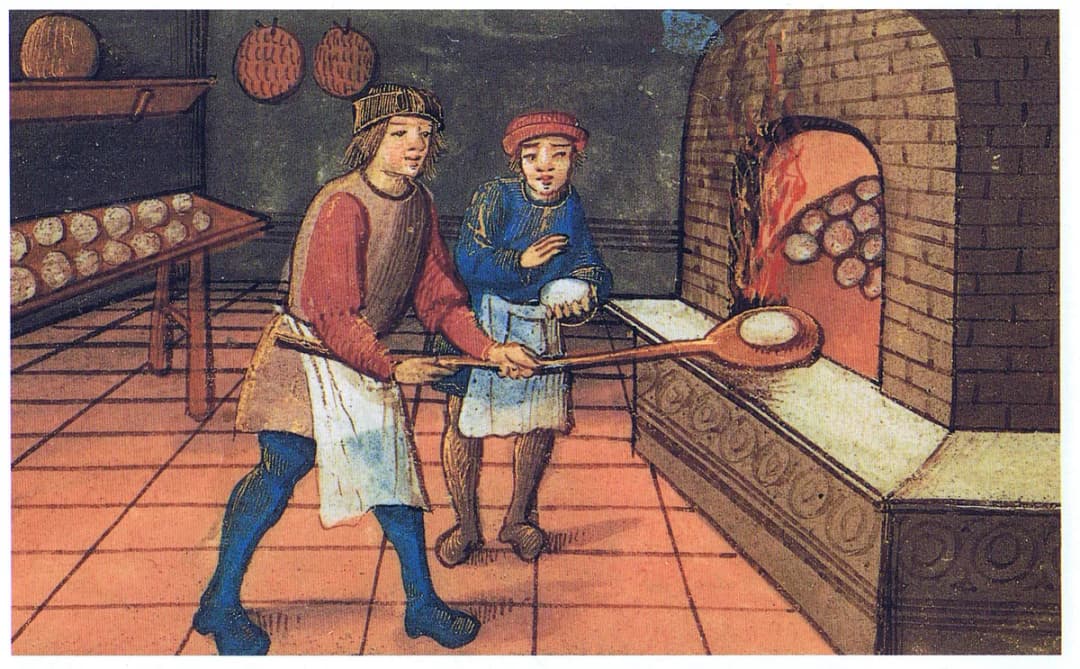
The simplest method was baking on hot stones covered with ashes, still practiced by Bedouins. More commonly, a portable clay oven called a tannur was used—a large jar heated internally with dried grass, thorns, or dung fuel. The dough was pressed against the hot inner walls and quickly baked. In towns, professional bakers plied their trade, as evidenced by the 'bakers' street' in Jerusalem. The thin loaves needed turning during baking, giving rise to Hosea's image of 'a cake not turned'—burnt on one side, raw on the other.
☩Leavened and Unleavened
Ordinary bread was leavened, but unleavened bread (matstsoth) was required for Passover and certain offerings. Leaven, because it causes fermentation and puffing up, symbolized moral corruption and was excluded from most sacrifices. The Feast of Unleavened Bread commemorated the haste of the Exodus, when there was no time for dough to rise. Paul applied this symbolism to the Christian life: 'Purge out therefore the old leaven, that ye may be a new lump.'
☩Bread in Worship
The showbread (literally 'bread of the presence') consisted of twelve loaves placed on the golden table in the holy place, renewed every Sabbath and eaten only by priests. This bread represented God's provision for the twelve tribes and pointed forward to Christ. Bread accompanied various sacrifices and was the meal offering's primary component. When David ate the showbread in his hunger, Jesus cited this as precedent for mercy over rigid ceremonialism.
☩Christ the Bread of Life
Jesus declared Himself the true bread from heaven, superior to the manna that Israel's fathers ate and died. 'I am the bread of life; he that cometh to me shall never hunger.' At the Last Supper, He took bread, blessed it, broke it, and gave it to His disciples, saying, 'This is my body, which is given for you.' The breaking of bread became the church's central act of worship, commemorating Christ's sacrifice and communion with Him.
Related Verses350 mentions
References
- 1.John McClintock and James Strong, "Bread," in Cyclopedia of Biblical, Theological and Ecclesiastical Literature, vol. I (Harper & Brothers, 1867–1887).
- 2.James Orr (ed.), "Bread," in International Standard Bible Encyclopedia, vol. I (Howard-Severance Company, 1915).
- 3.James Hastings (ed.), "Bread," in Dictionary of Christ and the Gospels, vol. I (T. & T. Clark, 1906–1908).