
Israel(israelites)
“He strives with God, or prince with God”
Summary
The name given to Jacob after wrestling with God, which became the designation for his descendants and the nation that bore his name.
☩Origin of the Name
The name Israel was given to Jacob after he wrestled with a divine being at the ford of Jabbok. The account states, 'Thy name shall be called no more Jacob, but Israel: for as a prince hast thou power with God and with men, and hast prevailed.' The name commemorates Jacob's spiritual transformation and his perseverance in seeking God's blessing. From that point forward, both names—Jacob and Israel—were used interchangeably for the patriarch and his descendants.
☩The Nation of Israel
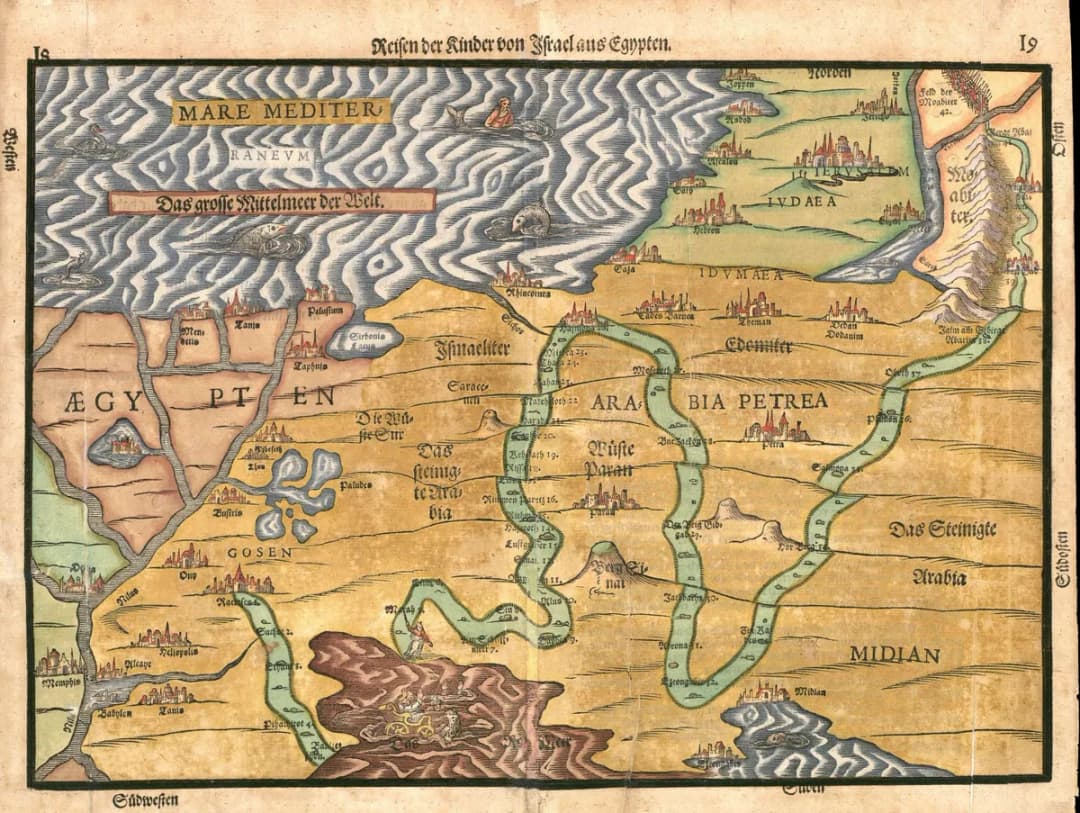
Israel became the collective name for the twelve tribes descended from Jacob's sons. During their time in Egypt, the descendants of Jacob multiplied into a great nation, and God delivered them through Moses. At Sinai, God established a covenant with them, declaring, 'Ye shall be unto me a kingdom of priests, and an holy nation.' The nation was uniquely chosen to receive God's law, worship in the tabernacle and temple, and preserve the oracles of God.
☩Division of the Kingdom
After Solomon's death, the kingdom divided into two: the northern kingdom retained the name Israel (also called Ephraim), while the southern kingdom was called Judah. The northern kingdom of Israel, comprising ten tribes, fell to Assyria in 722 BC and was scattered among the nations. The term 'Israel' thereafter sometimes referred specifically to the northern tribes, though it also continued to designate the covenant people as a whole.
☩Israel in Prophecy
The prophets spoke extensively of Israel's future restoration and blessing. Isaiah applied the name to the Messiah Himself: 'Thou art my servant, O Israel, in whom I will be glorified.' The New Testament identifies believers in Christ—both Jews and Gentiles—as the 'Israel of God,' heirs of the promises made to Abraham. Paul distinguishes between physical descent and spiritual inheritance, noting that 'they are not all Israel, which are of Israel.'
Related Verses2495 mentions
References
- 1.John McClintock and James Strong, "Israel," in Cyclopedia of Biblical, Theological and Ecclesiastical Literature, vol. IV (Harper & Brothers, 1867–1887).
- 2.James Orr (ed.), "Israel," in International Standard Bible Encyclopedia, vol. III (Howard-Severance Company, 1915).