
Exodus
“Exit, departure, going out”
Summary
The departure of the Israelites from Egyptian bondage, a foundational event in Israel's history that established them as a nation under God's covenant.
☩The Departure
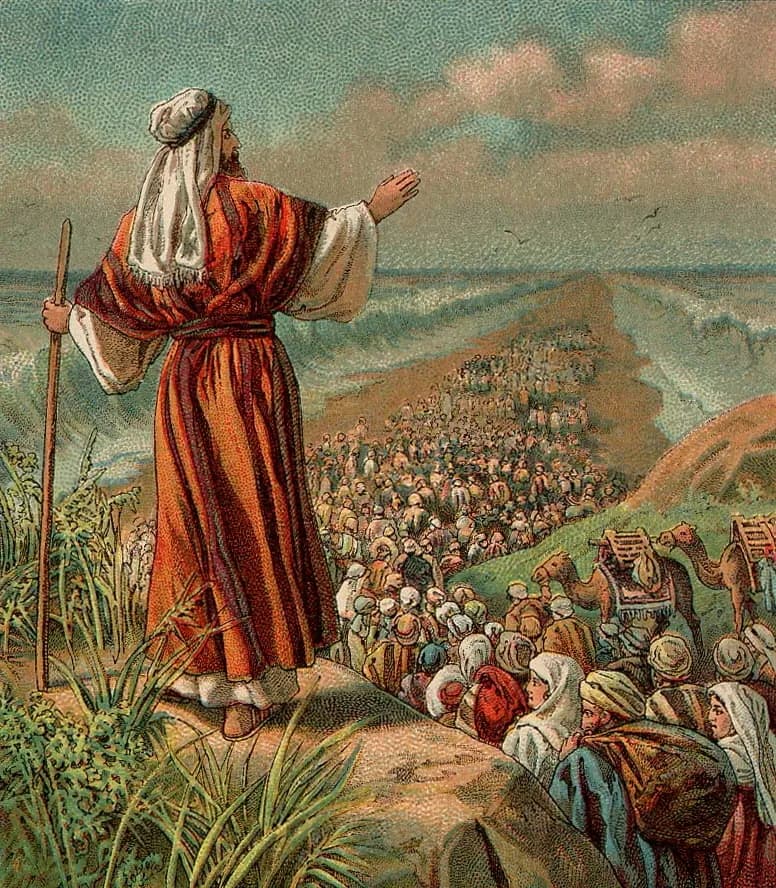
The Exodus was the departure of the Israelites from Egypt following the ten plagues that demonstrated God's power over Pharaoh and Egypt's gods. There were 600,000 men, implying a total population of perhaps two million including women and children, plus a 'mixed multitude' and much cattle. They went out 'harnessed' (organized in ranks) after the death of Egypt's firstborn caused Pharaoh to release them. The Egyptians gave them gold, silver, and clothing as they departed. 'Egypt was glad when they departed: for the fear of them fell upon them.'
☩Historical Significance
The Exodus marks a grand epoch in redemptive history—the patriarchal period ends and the giving of the law begins. God's providential preparations had led the Hebrews to sojourn in Egypt, where they learned agriculture and the arts of settled life while preserving their national identity. Joseph's position secured them the best land, apart from the Egyptians, favorable for multiplication and preserving their faith. The Exodus is referenced throughout Scripture as the defining act of God's redemption of His people.
See Also
References
- 1.George Morrish, "Exodus," in Morrish's Concise Bible Dictionary (George Morrish, 1898).
- 2.F. N. Peloubet & M. A. Peloubet (ed.), "Exodus," in Smith's Bible Dictionary (Porter & Coates, 1884).
- 3.Andrew Robert Fausset, "Exodus," in The Englishman's Critical and Expository Bible Cyclopædia (Hodder & Stoughton, 1878).