
God
Summary
The one true divine Being revealed in Scripture through various names expressing His nature, attributes, and relationship with His creation.
☩The Divine Names
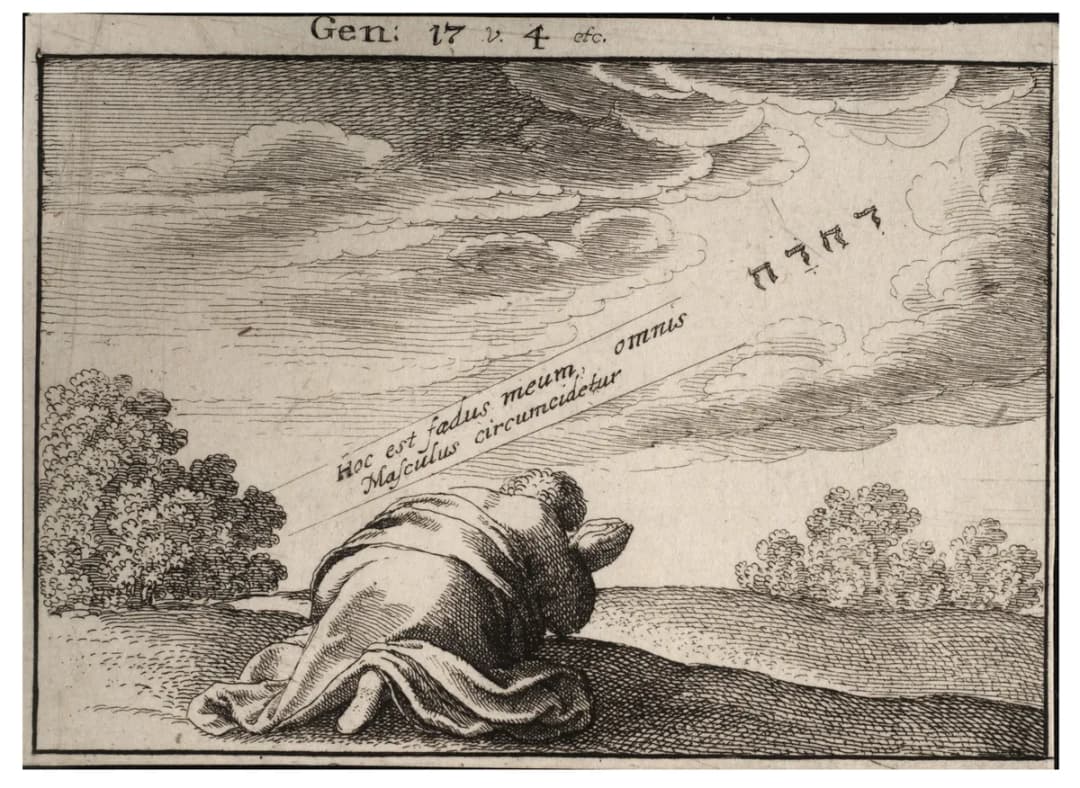
Throughout Hebrew Scripture, two chief names are used for the divine Being: Elohim, commonly translated 'God,' and Jehovah (Yahweh), translated 'LORD.' Elohim derives from a root meaning 'to be strong' and expresses God's might as Creator, Sustainer, and supreme Governor of the world. The plural form does not refer to multiple gods but denotes the fullness of divine strength and perfections. Jehovah, derived from the verb 'to be,' means 'the Existing One' and designates specifically the one true God who made Israel guardians of His truth. This name is never applied to false gods.
☩Attributive Names
El Elyon, meaning 'Most High,' expresses God's sublimity over all creation. El Shaddai, 'God Almighty,' signifies His all-sufficiency and was the name by which He was specially known to the patriarchs. Adonai denotes His lordship over all. While Elohim is a more philosophical term for absolute Deity, Jehovah is the revealed Elohim, the name on which His covenant people could count.
☩Unity and Trinity
Jesus affirmed the ancient confession that God is one, quoting the Shema from Deuteronomy: 'Jehovah our God is one Jehovah.' Yet the plural form Elohim with singular verbs hints at plurality within unity. The personal acts attributed to the Son and to the Holy Spirit prove the distinctness of the Persons within the Godhead. The thrice-repeated 'LORD' in the Aaronic blessing and 'Holy' in Isaiah's vision further imply this mystery.
☩Divine Attributes
God is revealed as possessing infinite love, goodness, justice, wisdom, creative power, and inexhaustible riches of excellence. His self-existence, grace, and providence are especially emphasized in Scripture. The prophets stressed His righteousness, holiness, and universality, while maintaining His personal nature and role as lawgiver and judge. In New Testament teaching, all these conceptions are modified by the central revelation of God as Father.
Related Verses5636 mentions
References
- 1.F. N. Peloubet & M. A. Peloubet (ed.), "God," in Smith's Bible Dictionary (Porter & Coates, 1884).
- 2.John McClintock and James Strong, "God," in Cyclopedia of Biblical, Theological and Ecclesiastical Literature, vol. III (Harper & Brothers, 1867–1887).
- 3.Andrew Robert Fausset, "God," in The Englishman's Critical and Expository Bible Cyclopædia (Hodder & Stoughton, 1878).
- 4.George Morrish, "God," in Morrish's Concise Bible Dictionary (George Morrish, 1898).
- 5.James Hastings (ed.), "God," in Dictionary of Christ and the Gospels, vol. I (T. & T. Clark, 1906–1908).
- 6.James Orr (ed.), "God," in International Standard Bible Encyclopedia, vol. II (Howard-Severance Company, 1915).