
Sabbath(lords day)
“To cease, rest, or desist from labor”
Summary
The seventh day of the week set apart as a day of rest and worship, commemorating God's rest after creation and Israel's deliverance from Egyptian bondage.
☩Origin and Institution
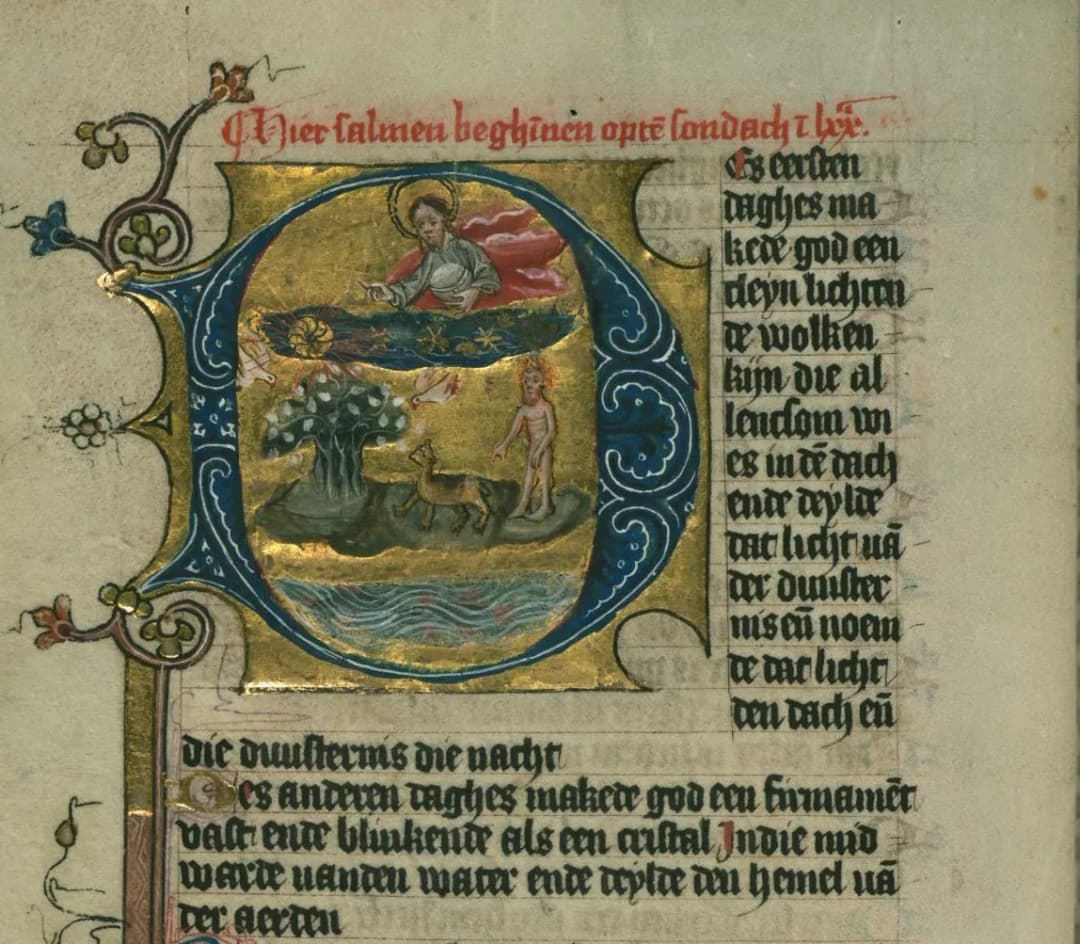
The Sabbath has its foundation in creation itself, when God rested on the seventh day after completing His creative work and sanctified it as holy. The word derives from the Hebrew shabbath, meaning "to cease" or "to rest." The first explicit mention occurs in connection with the giving of manna in the wilderness, where God commanded Israel to gather a double portion on the sixth day since none would be provided on the seventh. Shortly afterward, the Sabbath commandment was formally incorporated into the Decalogue at Sinai, establishing it as foundational to Israel's religious and moral life.
☩Observance and Regulations
The Sabbath was observed from sunset on Friday until sunset on Saturday, following the pattern of "the evening and the morning" in the creation account. Work was forbidden for all household members including servants and even animals, expressing God's merciful concern for all creatures. The day preceding the Sabbath was called the day of Preparation, during which all necessary work had to be completed. In the Temple, the daily offerings were doubled on the Sabbath, and the showbread was changed. The Sabbath was designated as a "holy convocation," a time for the community to gather for worship, prayer, and instruction in God's law.
☩Significance as Covenant Sign
The Sabbath served as a perpetual sign of the covenant between God and Israel, marking them as His sanctified people. In Deuteronomy, observance is also connected to remembrance of deliverance from Egyptian slavery, giving the Sabbath a redemptive dimension alongside its creational basis. The prophets emphasized that true Sabbath-keeping expressed delight in the Lord rather than mere external compliance, and they condemned hypocritical observance while calling Israel to experience the day's intended blessing.
☩Jesus and the Sabbath
Jesus' Sabbath observance became a major point of conflict with the religious authorities of His day. The Pharisees had developed elaborate restrictions on Sabbath activity, including thirty-nine categories of forbidden work with numerous subcategories. Jesus challenged these human additions to the law, performing healings and allowing His disciples to pluck grain on the Sabbath. He declared that "the Sabbath was made for man, not man for the Sabbath," affirming its beneficent purpose while rejecting legalistic distortions that turned blessing into burden.
☩The Lord's Day
The Christian observance shifted from Saturday to Sunday, the first day of the week, commemorating Christ's resurrection. This represented not merely a change of day but a fundamental reorientation—from the close of the old creation week to the opening of the new. The writer of Hebrews speaks of a "Sabbath rest" (sabbatismos) that remains for God's people, pointing to the ultimate spiritual rest foreshadowed by the weekly observance. The Sabbath principle thus continues in the Christian Lord's Day while finding its complete fulfillment in the eternal rest awaiting believers.
Related Verses162 mentions
See Also
References
- 1.John McClintock and James Strong, "Sabbath days Journey," in Cyclopedia of Biblical, Theological and Ecclesiastical Literature, vol. IX (Harper & Brothers, 1867–1887).
- 2.James Orr (ed.), "Sabbath," in International Standard Bible Encyclopedia, vol. IV (Howard-Severance Company, 1915).
- 3.James Hastings (ed.), "Sabbath," in Dictionary of the Apostolic Church, vol. II (T. & T. Clark, 1915–1918).
- 4.Philip Schaff and Johann Herzog (ed.), "SABBATH," in The New Schaff-Herzog Encyclopedia of Religious Knowledge, vol. X (Funk and Wagnalls, 1908–1914).
- 5.James Hastings (ed.), "Sabbath," in Dictionary of Christ and the Gospels, vol. II (T. & T. Clark, 1906–1908).
- 6.F. N. Peloubet & M. A. Peloubet (ed.), "Sabbath," in Smith's Bible Dictionary (Porter & Coates, 1884).
- 7.Andrew Robert Fausset, "Sabbath," in The Englishman's Critical and Expository Bible Cyclopædia (Hodder & Stoughton, 1878).
- 8.George Morrish, "Sabbath," in Morrish's Concise Bible Dictionary (George Morrish, 1898).