Mill(grinding)
Summary
A device for grinding grain into flour, consisting of two circular stones, essential to daily life in ancient Israel.
☩Construction
The ancient mill consisted of two round stones. The lower stone (nether millstone) was fixed; the upper stone (rider) rotated upon it, grinding grain between them. Hand mills were small enough for home use. Larger mills required two women or were turned by animals (Matthew 18:6—'millstone that an ass turns').
☩Women's Work
Jesus described normal life: 'Two women shall be grinding at the mill; the one shall be taken, and the other left' (Matthew 24:41). Grinding was typically women's work (Exodus 11:5; Isaiah 47:2) or assigned to slaves and prisoners (Judges 16:21—Samson at the mill). The task was tedious but essential for daily bread.
☩Legal Protection
Because grinding was essential for survival, the Law protected mills from seizure: 'No man shall take the nether or the upper millstone to pledge: for he taketh a man's life to pledge' (Deuteronomy 24:6). Taking someone's mill meant taking their ability to make bread.
☩Symbol of Life
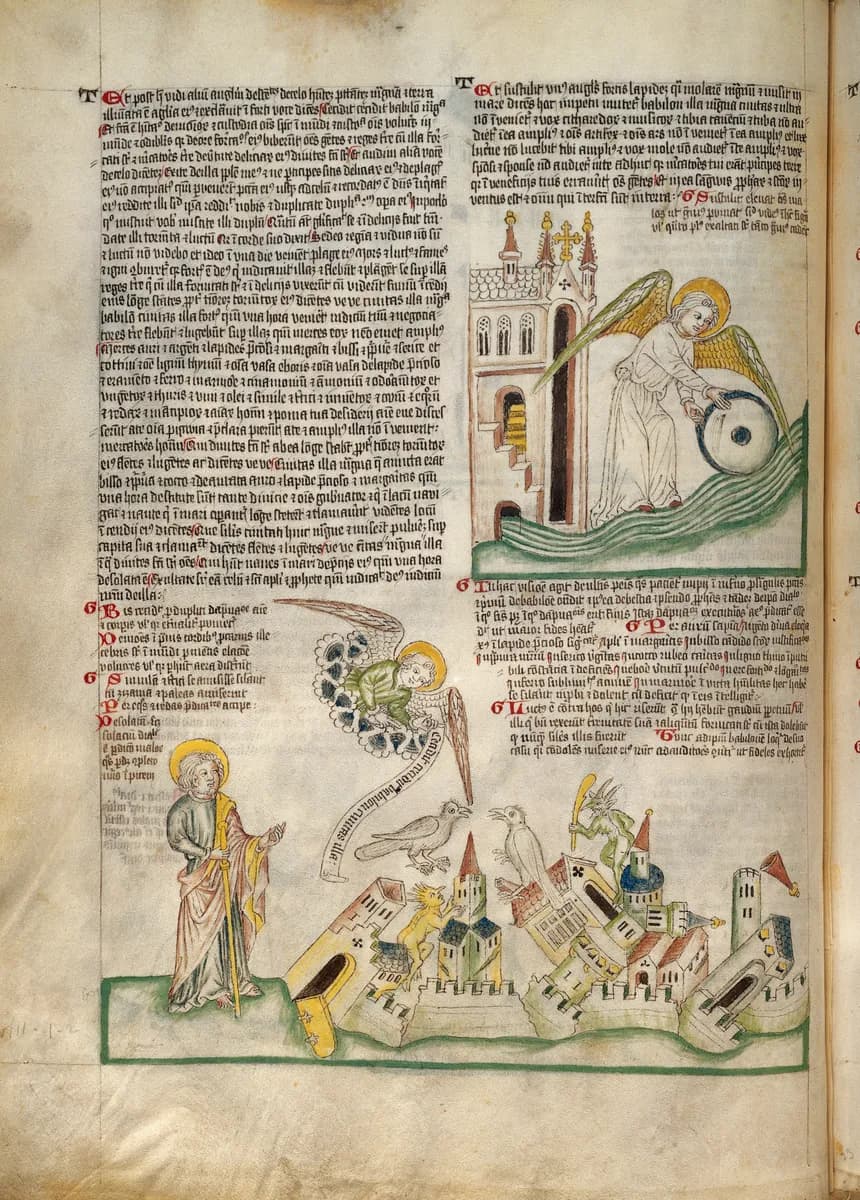
The sound of grinding represented normal community life. Jeremiah prophesied judgment: 'I will take from them... the voice of the bridegroom, and the voice of the bride, the sound of the millstones, and the light of the candle' (Jeremiah 25:10). Revelation echoes this: 'The sound of a millstone shall be heard no more at all in thee' (Revelation 18:22).