
Wheat
“Chittah, related to Arabic hinteh; cognate with Germanic words for wheat (German Weizen, Gothic hvaite)”
Summary
Wheat was the most valuable and widely cultivated cereal in ancient Palestine, serving as a staple food and prominent symbol in biblical teaching.
☩Cultivation and Harvest
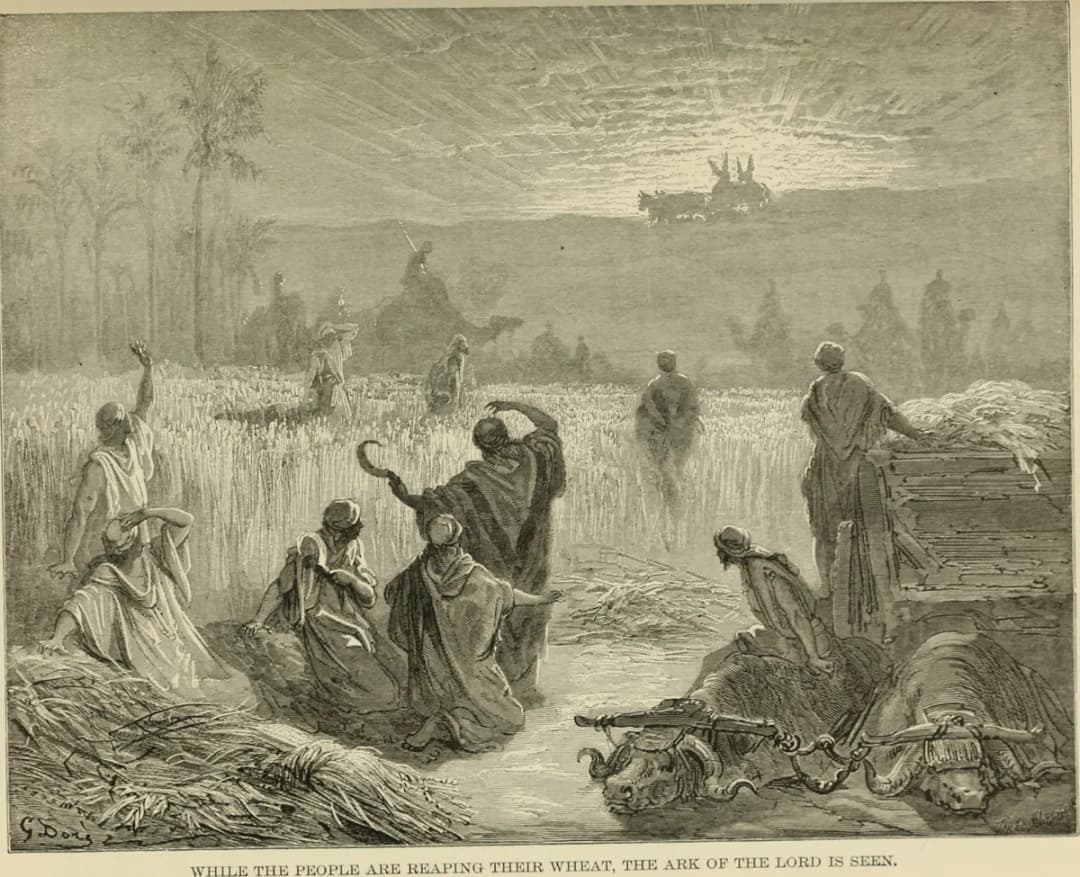
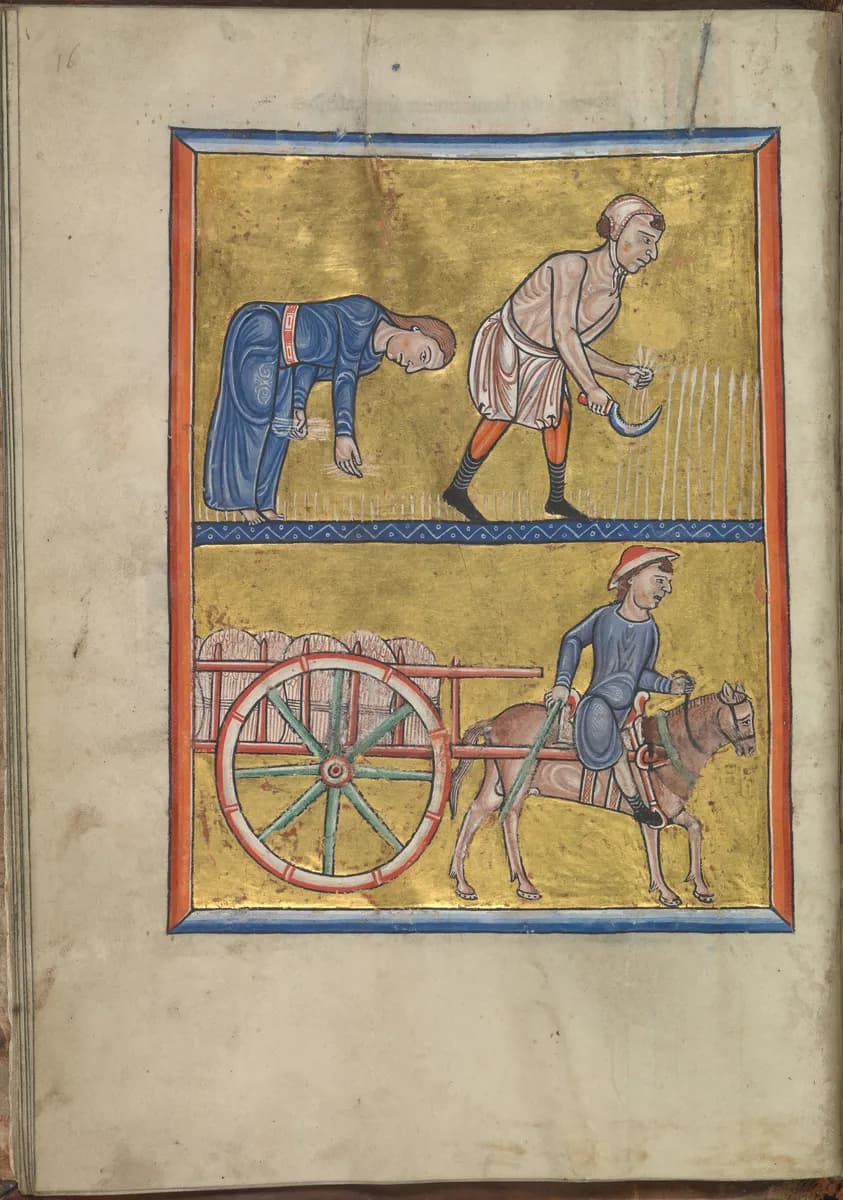
Wheat was cultivated throughout Palestine, with the great plain of the Hauran serving as a vast expanse of wheat fields. The grain was sown in winter, after the first rains softened the soil, and was harvested from April to June depending on altitude and location. Several varieties were grown, including Triticum vulgare, Triticum spelta, and the bearded Triticum compositum similar to Egyptian wheat. The wheat was either broadcast and ploughed in, or planted in rows to ensure larger ears.
☩Biblical Significance
Wheat appears prominently in Scripture from Genesis onward, with references to the wheat harvests of Jacob, Joseph's interpretation of Pharaoh's dream of seven-eared wheat, and the abundant grain of the Promised Land. Jesus used wheat in powerful parables: the wheat and tares representing children of the kingdom versus the wicked, and the grain of wheat that must die to bring forth much fruit, pointing to His own death and resurrection. The hundredfold return mentioned in the parable of the sower, while extraordinary, was attainable in Palestine's fertile regions.
☩Trade and Economy
Wheat was an important export commodity from ancient times, with Ezekiel recording trade from Palestine to Tyre, and Acts mentioning the grain trade between regions. Egypt and Babylonia were renowned for exceptional wheat harvests, with Herodotus claiming Babylonian fields could yield two to three hundredfold returns. The Revelation prophecy of a quart of wheat for a denarius (a day's wage) signified severe scarcity, as this represented barely enough for one person's daily food.
Related Verses51 mentions
See Also
References
- 1.John McClintock and James Strong, "Wheat," in Cyclopedia of Biblical, Theological and Ecclesiastical Literature, vol. X (Harper & Brothers, 1867–1887).
- 2.James Orr (ed.), "Wheat," in International Standard Bible Encyclopedia, vol. V (Howard-Severance Company, 1915).
- 3.James Hastings (ed.), "Wheat," in Dictionary of the Apostolic Church, vol. II (T. & T. Clark, 1915–1918).
- 4.F. N. Peloubet & M. A. Peloubet (ed.), "Wheat," in Smith's Bible Dictionary (Porter & Coates, 1884).
- 5.George Morrish, "Wheat," in Morrish's Concise Bible Dictionary (George Morrish, 1898).