
Magic(magician)
Summary
The art of bringing about results beyond human power through superhuman agencies, strictly forbidden in Scripture but widely practiced in the ancient Near East.
☩Definition and Types
The word 'magic' derives from the Greek magike (with techne, 'art' understood), originating from the magi or Zoroastrian priests of Persia. Magic may be described as the art of bringing about results beyond man's own power by superhuman agencies. There are two kinds: impersonal magic, which treats forces as a crude science to be utilized through incantations, magical acts, or drugs; and personal magic, where living spiritual beings are made the real agents whom men influence and control. The Hebrews had no magic of their own; it was so strictly forbidden by the law that it could never have had any recognized existence save in times of general heresy or apostasy.
☩Mosaic Prohibitions
The attitude of the Bible toward magic is distinctly hostile, as it could not but be in documents inculcating the ethical and spiritual religion of Israel. The Mosaic law specifically prohibited multiple forms of magical practice, including divination (qecem), sorcery (kashaph, from a root meaning 'to have a dark appearance'), enchantment (lachash, connected with serpent-charming), use of amulets (chebher, things 'bound' on the person to ward off evil), incantation (shichar, 'to charm away'), consulting familiar spirits, wizardry, and necromancy. These prohibitions set Israel apart from surrounding nations where magic formed an essential element in religion, especially among the Persians, Chaldeans, and Egyptians.
☩Magic in the Old Testament
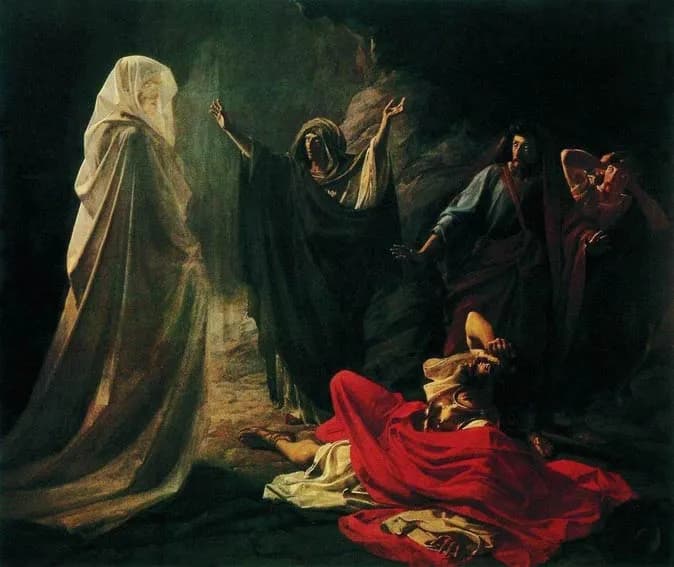
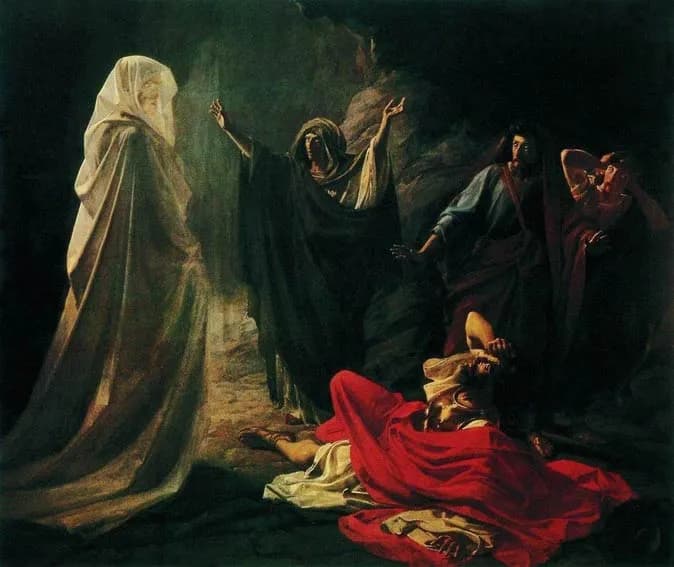
From the first entrance into the promised land until the destruction of Jerusalem, constant glimpses appear of magic practiced in secret by both common people and the great. Laban attached great value to teraphim, household objects supposed capable of warding off evil. The Egyptian magicians appeared during the plagues, able to replicate some miracles but ultimately confessing their limitations, acknowledging 'This is the finger of God.' Pharaoh's and Nebuchadnezzar's magicians failed to interpret dreams that God revealed through Joseph and Daniel. Balaam practiced divination, and Saul consulted the witch of Endor in desperation. Daniel was made master of Babylon's magicians after demonstrating that the God of Israel alone reveals mysteries.
☩Magic in the New Testament
Simon Magus practiced sorcery in Samaria, amazing people until Philip preached Christ and Simon himself believed and was baptized; yet his attempt to purchase the power of the Holy Spirit revealed his heart was not right with God. Paul encountered Elymas the sorcerer (Bar-Jesus) on Cyprus, a 'learned' man skilled in magical arts whom Paul struck blind for opposing the gospel. At Ephesus, many who practiced magic arts brought their books together and burned them publicly; the total value was calculated at fifty thousand pieces of silver. Paul classes pharmakeia ('witchcraft' or 'sorcery,' originally referring to drugs used in magic) with the works of the flesh.
☩Potency of Words and Charms
Among ancient Semites there was strong belief in the potency of magical words of blessing and curse; the mere utterance was regarded as enough to secure realization. Scripture records instances of the power of the spoken word in blessing and curse. The mandrakes in Genesis illustrate belief in the power of plants as love-charms, and Jacob's use of peeled rods represents sympathetic magic. Jesus warned against 'vain repetitions' (battologeo), referring to the superstition that repeated utterance of words will secure one's wish, as seen in the prophets of Baal calling on their god from morning until evening. The Scriptures afford no evidence that man can gain supernatural powers to use at his will; biblical notices do not positively state that any but illusive results were produced by magical rites.
Related Verses17 mentions

References
- 1.James Orr (ed.), "Magic; Magician," in International Standard Bible Encyclopedia (Howard-Severance Company, 1915).
- 2.F. N. Peloubet & M. A. Peloubet (ed.), "Magic, Magicians," in Smith's Bible Dictionary (Porter & Coates, 1884).
- 3.John McClintock and James Strong, "Magic," in Cyclopedia of Biblical, Theological and Ecclesiastical Literature, vol. V (Harper & Brothers, 1867–1887).