
Man
“Humanity (adam), noble man (ish), mighty man (geber), mortal man (enosh)”
Summary
Man is the term used in Scripture to denote humanity created in God's image, with several Hebrew and Greek words conveying distinct aspects of human nature: Adam (generic humanity), ish (noble man), geber (mighty man), and enosh (frail mortal).
☩Hebrew Terms for Man
Four principal Hebrew words are translated 'man' in Scripture, each with distinct meaning. אָדָם (adam) is the generic name of the human race derived from a root meaning 'ruddy' or 'red,' also used as the proper name of the first man. אִישׁ (ish) denotes a man in the distinguished sense, implying strength and vigor of mind and body, as distinguished from woman, and often meaning 'husband.' גֶּבֶר (geber) means a mighty, warlike man, from gabar 'to be strong.' אֱנוֹשׁ (enosh) signifies man as subject to corruption and mortality, notably not used until after the fall.
☩Greek Terms for Man
In the New Testament, ἄνθρωπος (anthropos) denotes man in the sense of humanity, irrespective of sex, while ἀνήρ (aner) distinguishes man from woman and commonly means 'husband.' Jesus employed these terms with classical precision, using anthropos generically and aner when distinguishing from women.
☩Creation of Man
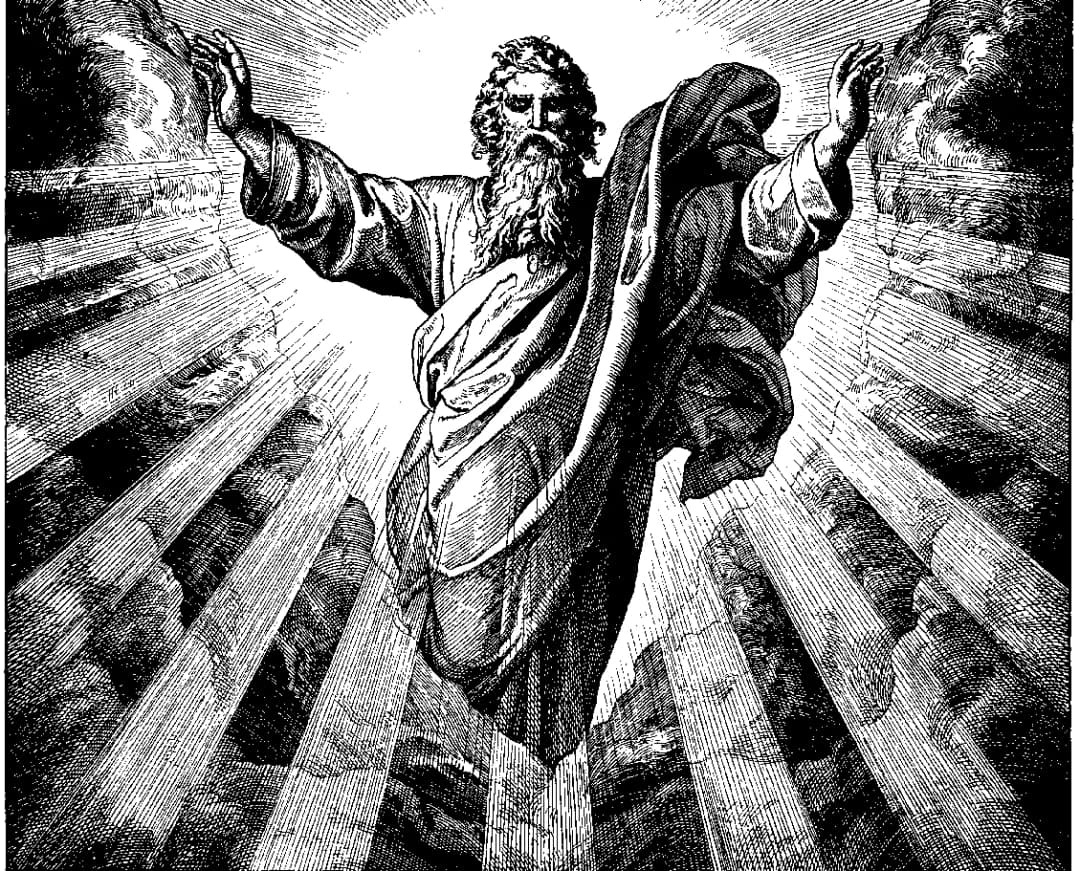
Man was God's crowning work of creation, formed from the dust of the ground with the breath of life breathed into his nostrils. Unlike animals whose instincts are perfect from birth, human infants require extended care, demonstrating that man came into the world by the Creator's special interposition. Adam came into existence as a fully grown man capable of naming the animals and tending the garden, serving as the priest of nature to interpret her inarticulate language and offer conscious adoration before God.
☩Dignity and Destiny
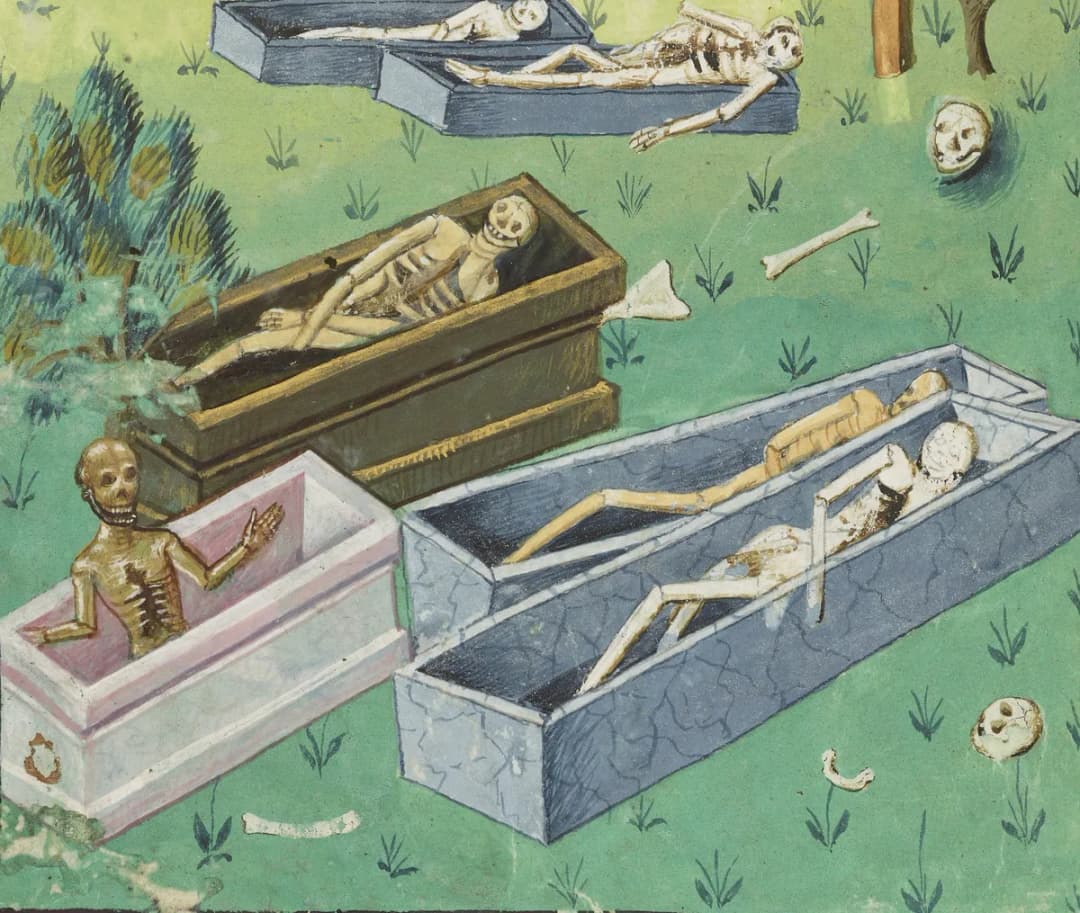
Man was set in dominion over the sphere in which he was placed, a position impossible to have arisen through evolution from lower forms of life. All humanity has descended from Adam and Eve, made of one blood to dwell on all the face of the earth. The soul being immortal, man continues to exist after death and will be raised bodily to face either eternal separation from God in punishment or, by grace through Christ's atoning work, eternal happiness with the Lord.
☩Son of Man
The phrase 'son of man' in the Old Testament denotes man as frail and unworthy, frequently addressed to the prophet Ezekiel with the force of 'mortal!' This title takes on profound significance when assumed by Christ, who represents man before God through the incarnation—the crowning miracle of grace parallel to Adam's creation as the crowning miracle of nature.
Related Verses2471 mentions
References
- 1.John McClintock and James Strong, "Man," in Cyclopedia of Biblical, Theological and Ecclesiastical Literature, vol. V (Harper & Brothers, 1867–1887).
- 2.James Hastings (ed.), "Man," in Dictionary of Christ and the Gospels, vol. II (T. & T. Clark, 1906–1908).
- 3.George Morrish, "Man," in Morrish's Concise Bible Dictionary (George Morrish, 1898).
- 4.F. N. Peloubet & M. A. Peloubet (ed.), "Man," in Smith's Bible Dictionary (Porter & Coates, 1884).
- 5.Andrew Robert Fausset, "Man," in The Englishman's Critical and Expository Bible Cyclopædia (Hodder & Stoughton, 1878).