
Prison
Summary
Prisons in biblical times served primarily as places of detention for persons awaiting trial or execution rather than as places of punishment, with conditions ranging from relative comfort in guard-rooms to severe misery in subterranean dungeons.
☩Biblical Terminology
Scripture employs numerous terms for prison, reflecting the variety of confinement methods. The Greek phylakē (place of guarding) is the most common New Testament term, used for John the Baptist's confinement and translated variously as 'prison' or 'ward.' Desmōtērion (place of bonds) emphasizes restraint through chains and fetters. Tērēsis (place of keeping) suggests milder custody, translated 'hold' or 'ward.' Oikēma (a room) was a polite Attic equivalent for prison, used in Acts 12:7 for Peter's cell. The Old Testament uses at least eight different Hebrew roots, testifying to the number of prisoners and variety of treatment in ancient times.
☩Prison Locations and Structure
In Egypt, special places served as prisons under military custody, as when Joseph was confined in the royal prison. During Israel's wilderness period, confinement 'in ward' was used on occasion, though imprisonment was not prescribed by the Mosaic law. Under the kings, prisons became appendages to the palace or occupied special parts of it. Private houses were sometimes used as places of confinement, similar to Persian prisons where private speculators maintained prisoners at their own cost. At Jerusalem, the Romans used the Tower of Antonia as a prison, while at Caesarea the praetorium of Herod served this purpose. The sacerdotal authorities also maintained a prison under special officers.
☩Conditions and Treatment
Prison conditions varied greatly. The 'inner prison' denoted the most secure and often harshest section, where Paul and Silas were placed at Philippi with their feet in stocks. Stocks (Greek xylon, Latin nervus) were wooden frames confining feet, and sometimes hands and neck. Chains and fetters were standard means of confinement—Joseph's feet were hurt with fetters, and Peter slept bound between two soldiers by two chains. Roman prisons could be 'pestilential cells, damp and cold, from which light was excluded, and where chains rusted on the limbs of prisoners.' The Mamertine Prison at Rome consisted of two chambers, the lower Tullianum accessible only through a hole in the ceiling—a condemned cell where prisoners awaited execution.
☩Purpose of Imprisonment
Unlike modern practice, ancient prisons served primarily as places of detention for persons awaiting trial or execution, not as places of punishment for convicted criminals. Among Jews, Greeks, and Romans, other penalties—fines, scourging, death—were typically inflicted for offenses against law and order. This explains why prisoners often had access to visitors: Jeremiah received visitors in the court of the prison, and Paul's friends had free access during his Caesarean imprisonment. Paul's Roman custody allowed remarkable liberty—he dwelt two years in his own hired house receiving all who came to him. However, his possible second Roman imprisonment, traditionally in the Mamertine, appears to have involved severer treatment.
☩Apostolic Experience
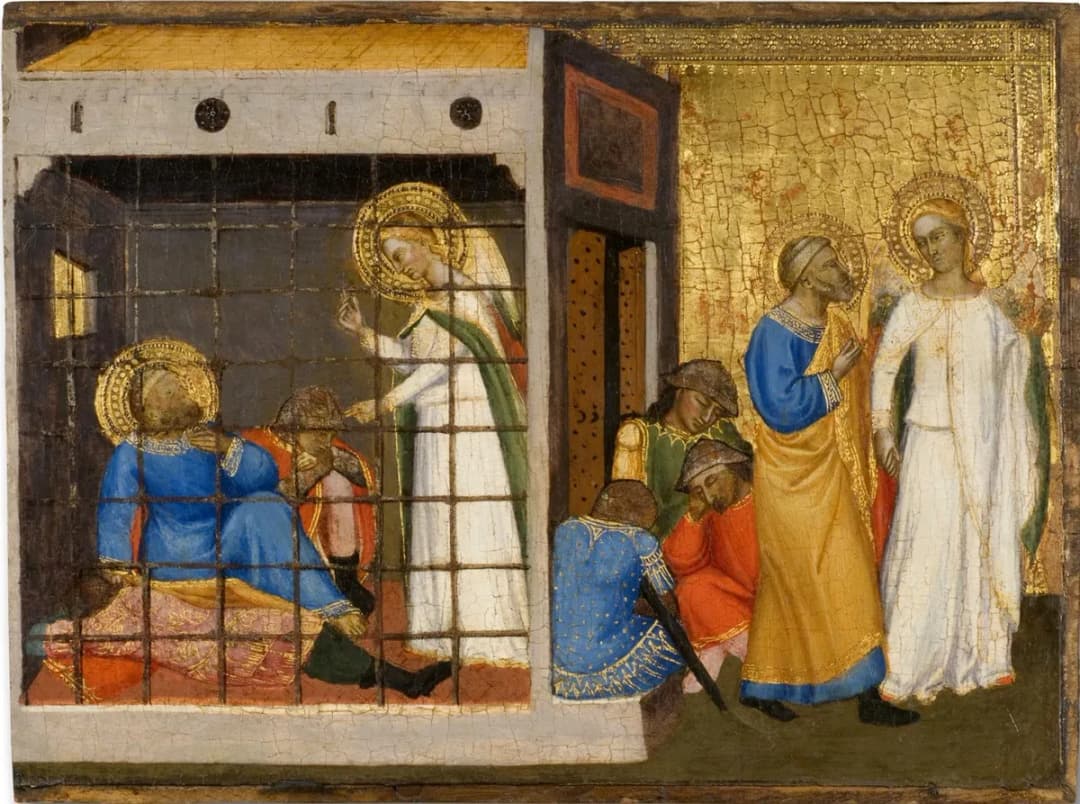
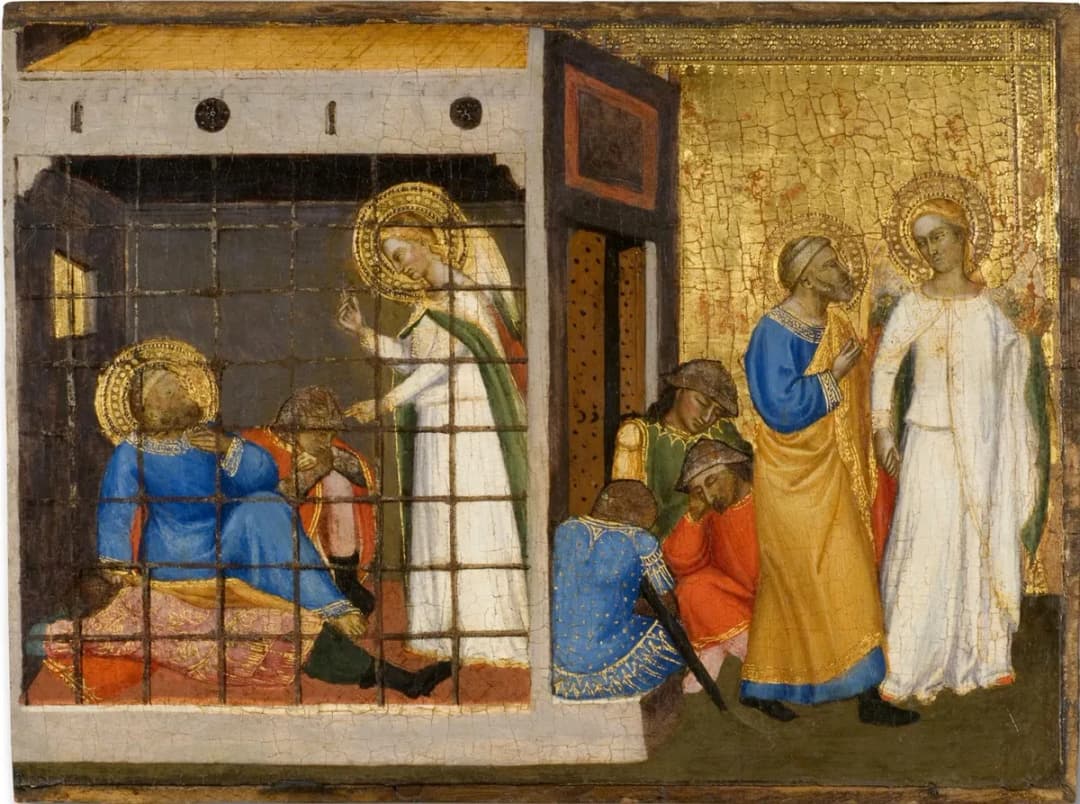
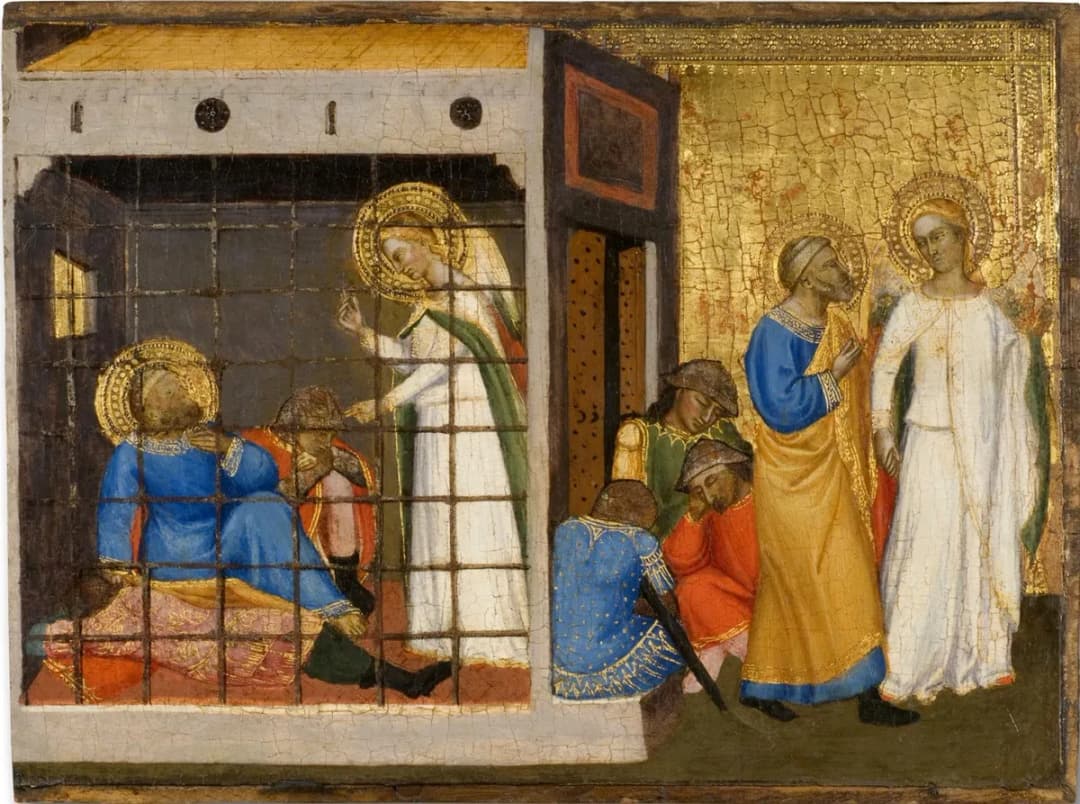
The apostles became painfully familiar with imprisonment. Peter was confined in a guard-room of Antonia fortress, escaping only by passing through 'the first and second ward' to an iron gate leading into the city. Paul listed 'prisons more frequent' among his sufferings, experiencing confinement at Philippi, Jerusalem (Antonia barracks), Caesarea (over two years), and Rome. At Philippi, Paul and Silas prayed and sang hymns at midnight in the inner prison until an earthquake opened the doors. Paul's chains became known throughout the whole praetorian guard, turning his imprisonment into an occasion for gospel advance.
☩Spiritual and Metaphorical Use
Scripture applies 'prison' metaphorically to the place of confinement for disobedient spirits from Noah's day, to whom Christ preached. These are identified with angels who kept not their first estate, reserved in everlasting chains under darkness unto judgment. The allusion appears to draw from apocalyptic literature representing fallen angels undergoing temporary punishment in Tartarus until final judgment. The abyss where Satan will be bound for a thousand years is also called a prison. These passages extend the concept of imprisonment beyond physical confinement to divine restraint of spiritual beings awaiting ultimate judgment.
Related Verses91 mentions
See Also

References
- 1.John McClintock and James Strong, "Prison," in Cyclopedia of Biblical, Theological and Ecclesiastical Literature, vol. VIII (Harper & Brothers, 1867–1887).
- 2.James Hastings (ed.), "Prison," in Dictionary of the Apostolic Church, vol. II (T. & T. Clark, 1915–1918).
- 3.James Hastings (ed.), "Prison," in Dictionary of Christ and the Gospels, vol. II (T. & T. Clark, 1906–1908).
- 4.F. N. Peloubet & M. A. Peloubet (ed.), "Prison," in Smith's Bible Dictionary (Porter & Coates, 1884).
- 5.George Morrish, "Prison," in Morrish's Concise Bible Dictionary (George Morrish, 1898).