
Satan
“Adversary or accuser”
Summary
The chief of fallen spirits and arch-enemy of God and mankind, known by various names including the Devil, the Serpent, the Tempter, and the Prince of this World.
☩Names and Titles
Scripture gives Satan numerous names revealing his character and work. 'Satan' (Hebrew) and 'Devil' (Greek) both mean adversary or accuser. He is called the Serpent, Dragon, Evil One, Tempter, Prince of this World, Prince of the Power of the Air, God of this Age, Beelzebub, Belial, Apollyon (Destroyer), Accuser of the Brethren, Murderer, Father of Lies, and Angel of the Bottomless Pit. Each title illuminates a different aspect of his malevolent nature and activity against God and humanity.
☩Origin and Fall
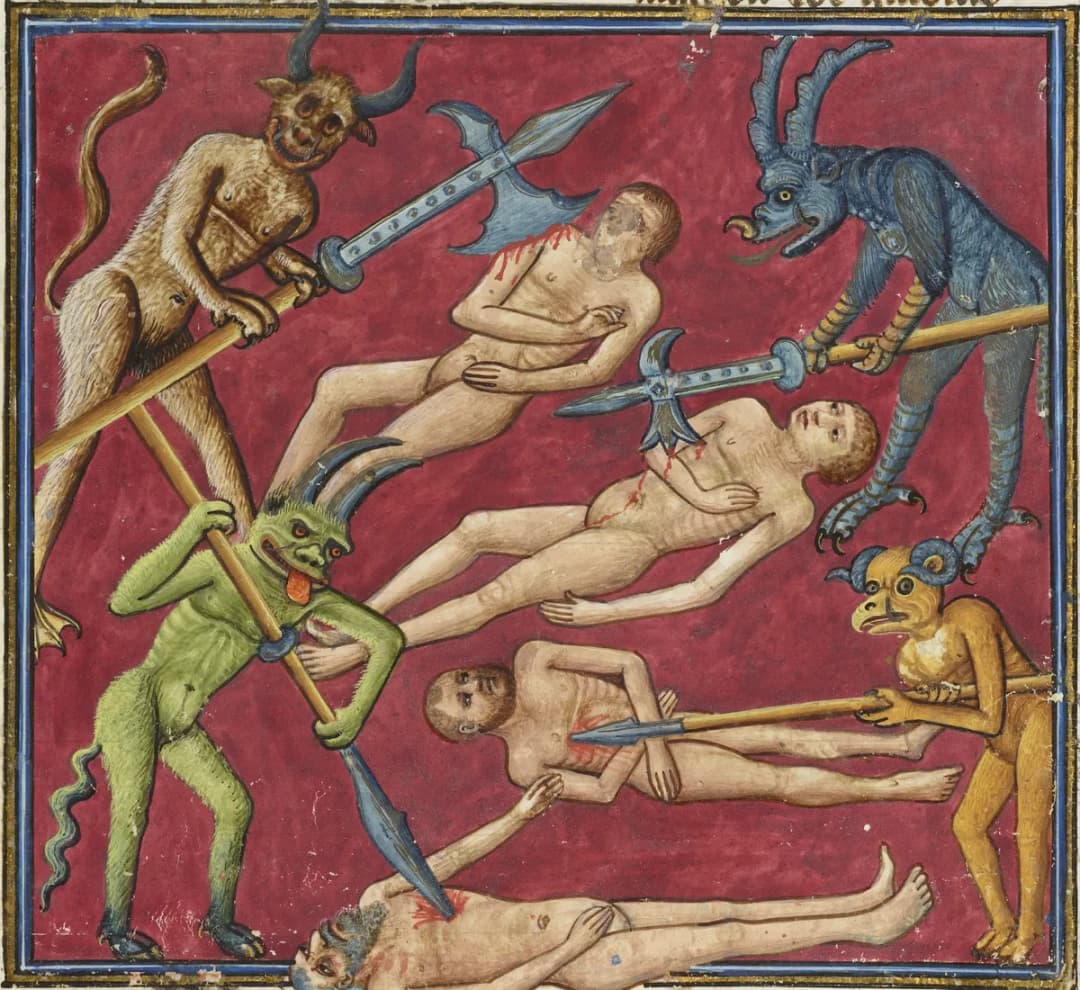
Scripture reveals little directly about Satan's origin, but indicates he was a created being of high rank who fell through pride. Passages in Ezekiel and Isaiah, though addressed to earthly kings, have been understood as describing Satan's original exalted state and subsequent rebellion. He was an anointed cherub, perfect in beauty and wisdom, until iniquity was found in him. He kept not his first estate but led other angels in rebellion, for whom everlasting fire was prepared.
☩Character and Methods
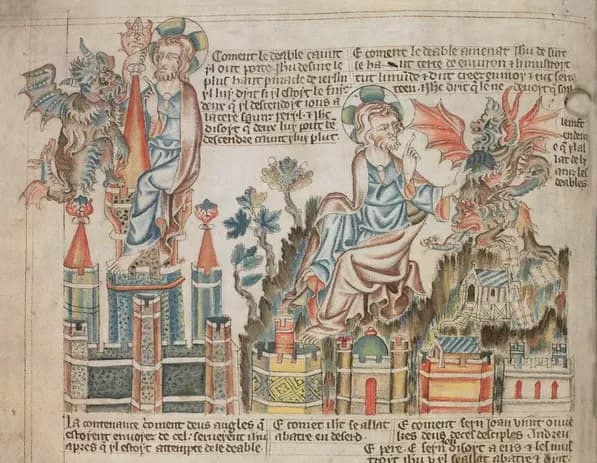
Satan is described as the evil one, the embodiment of moral evil, marked by hatred of God and man. Jesus said he was a murderer from the beginning and abode not in the truth—when he lies, he speaks of his own nature, for he is a liar and the father of lies. His fundamental strategy is deception; his kingdom rests on falsehood. He transforms himself into an angel of light, disguising evil as good. He steals the good seed from careless hearts and sows tares among the wheat.
☩Power and Limitations
Satan possesses real but limited power. He rules an organized kingdom of demons and exercises significant influence over the world system and unbelieving humanity. Yet he acts only within bounds God permits, as seen in Job, where he could afflict Job's possessions and body only by divine permission. Christ's death and resurrection broke Satan's power; He spoiled principalities and powers and through death destroyed him who had the power of death. Believers can resist Satan, and he will flee; they are equipped with spiritual armor to stand against his schemes.
☩Destiny
Scripture foretells Satan's ultimate defeat. The seed of the woman would crush the serpent's head—a promise fulfilled in Christ's victory at the cross. Satan was cast out as accuser when Christ ascended; his access to heaven was curtailed. During the millennium he will be bound in the abyss, then released briefly before being cast into the lake of fire forever. The God of peace will soon crush Satan under believers' feet, and His eternal kingdom will know no adversary.
Related Verses112 mentions
See Also
References
- 1.John McClintock and James Strong, "Satan," in Cyclopedia of Biblical, Theological and Ecclesiastical Literature, vol. IX (Harper & Brothers, 1867–1887).
- 2.James Orr (ed.), "Satan," in International Standard Bible Encyclopedia, vol. IV (Howard-Severance Company, 1915).
- 3.James Hastings (ed.), "Satan," in Dictionary of Christ and the Gospels, vol. II (T. & T. Clark, 1906–1908).
- 4.Andrew Robert Fausset, "Satan," in The Englishman's Critical and Expository Bible Cyclopædia (Hodder & Stoughton, 1878).