
Fetters
“Bronze fetters (dual form indicating a pair)”
Summary
Shackles specifically designed for confining the feet of prisoners, typically made of bronze or iron, used to restrict movement and prevent escape.
☩Description and Materials
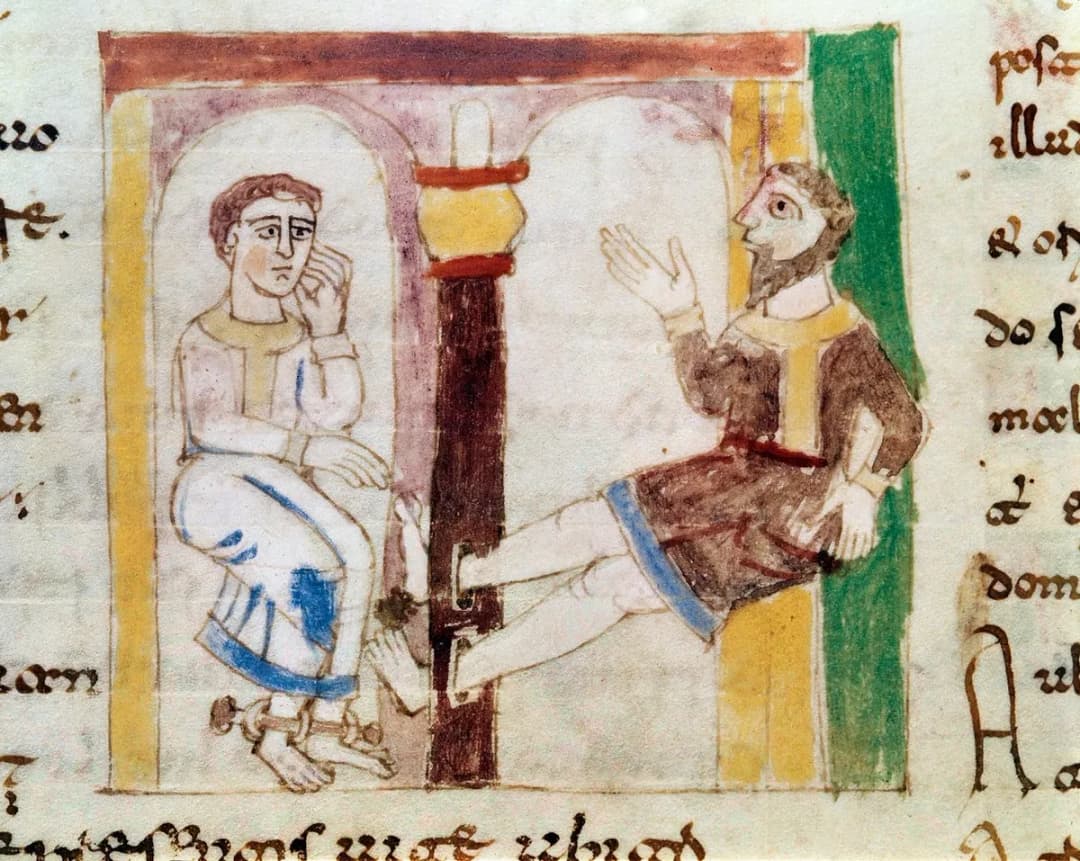
Fetters were shackles designed specifically for confining the feet, distinct from chains which could be applied to any part of the body. They were usually made in pairs (the Hebrew word being in the dual number) and typically constructed of bronze (brass), though iron was occasionally employed (Psalm 105:18, 149:8). The word for 'fetters' comes from a root meaning 'copper' or 'bronze,' indicating the typical material.
☩Biblical Examples
Samson, after being betrayed by Delilah and blinded by the Philistines, was bound with fetters of brass (Judges 16:21). King Zedekiah was similarly bound in fetters when taken captive to Babylon (2 Kings 25:7). The Gadarene demoniac was often bound with fetters and chains, but broke them through demonic strength (Mark 5:4, Luke 8:29). Joseph's feet were 'hurt with fetters' during his imprisonment in Egypt (Psalm 105:18).
☩Figurative Use
Fetters are used figuratively to represent affliction, bondage, and divine discipline. The wicked are said to be bound in fetters and chains of affliction (Job 36:8). The psalmist speaks of binding kings with chains and nobles with fetters of iron as divine judgment (Psalm 149:8). These images convey restriction, powerlessness, and captivity to sin or circumstances.
Related Verses10 mentions
See Also
References
- 1.George Morrish, "Fetters," in Morrish's Concise Bible Dictionary (George Morrish, 1898).
- 2.F. N. Peloubet & M. A. Peloubet (ed.), "Fetters," in Smith's Bible Dictionary (Porter & Coates, 1884).