
Benjamin
“Son of the right hand”
Summary
The youngest son of Jacob and Rachel, whose descendants became one of the twelve tribes of Israel, known for their martial prowess and producing Israel's first king.
☩Birth and Name
Benjamin was born on the road between Bethel and Bethlehem as Jacob's family traveled south. His mother Rachel died giving birth to him, naming him with her last breath Ben-oni, 'son of my sorrow.' Jacob changed this ill-omened name to Benjamin, meaning 'son of my right hand,' suggesting both honor and the support he expected from this child of his old age. He was Jacob's only son born in Canaan and the full brother of Joseph.
☩In Egypt
Benjamin became the object of his father's special affection after Joseph's supposed death, and Jacob refused to let him accompany his brothers on their first journey to Egypt. Only under extreme pressure of famine did Jacob finally consent to send Benjamin, and Joseph tested his brothers by threatening to keep Benjamin as a slave. Judah's plea to take Benjamin's place revealed the brothers' changed hearts, and Joseph then revealed himself. Benjamin received five times as much as his brothers at Joseph's table and special gifts of clothing.
☩Jacob's Prophecy
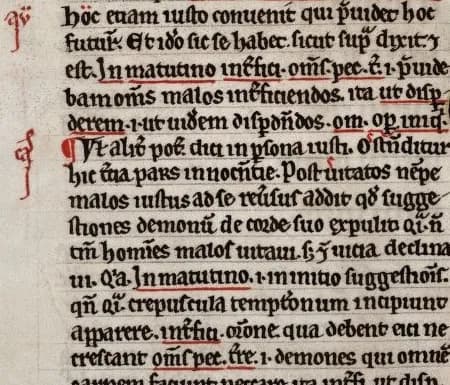
In his dying blessing, Jacob prophesied: 'Benjamin shall ravin as a wolf; in the morning he shall devour the prey, and at night he shall divide the spoil.' This martial imagery proved accurate in the tribe's history, as Benjamites were renowned for their fierce warriors, skilled with bow and sling, many being ambidextrous. The prophecy foreshadowed both their exploits in defense of Israel and their nearly self-destructive conflict with the other tribes.
☩Tribal History
Benjamin's territory lay between Ephraim to the north and Judah to the south, a small but strategic region controlling key passes from the coastal plain and the Jordan valley. Jerusalem straddled the border between Benjamin and Judah. Notable Benjamites include Ehud the left-handed judge who delivered Israel from Moab, and Saul, Israel's first king. The near-destruction of the tribe following the outrage at Gibeah reduced them to 600 men, yet they recovered. After the kingdom divided, Benjamin remained with Judah rather than following Jeroboam.
☩New Testament Connection
Paul the apostle proudly identified himself as 'of the tribe of Benjamin, a Hebrew of Hebrews.' This lineage connected him to Israel's first king and the tribe that remained loyal to the house of David. In Revelation, twelve thousand from Benjamin are sealed among the servants of God.
Related Verses173 mentions
See Also
References
- 1.John McClintock and James Strong, "Benjamin," in Cyclopedia of Biblical, Theological and Ecclesiastical Literature, vol. I (Harper & Brothers, 1867–1887).
- 2.James Orr (ed.), "Benjamin," in International Standard Bible Encyclopedia, vol. I (Howard-Severance Company, 1915).
- 3.Andrew Robert Fausset, "Benjamin," in The Englishman's Critical and Expository Bible Cyclopædia (Hodder & Stoughton, 1878).