
Oil(coal oil)
“Pressed juice, fatness”
Summary
Oil in Scripture primarily refers to olive oil, which was essential to daily life in Palestine for food, light, medicine, cosmetics, and religious rituals.
☩Production and Storage
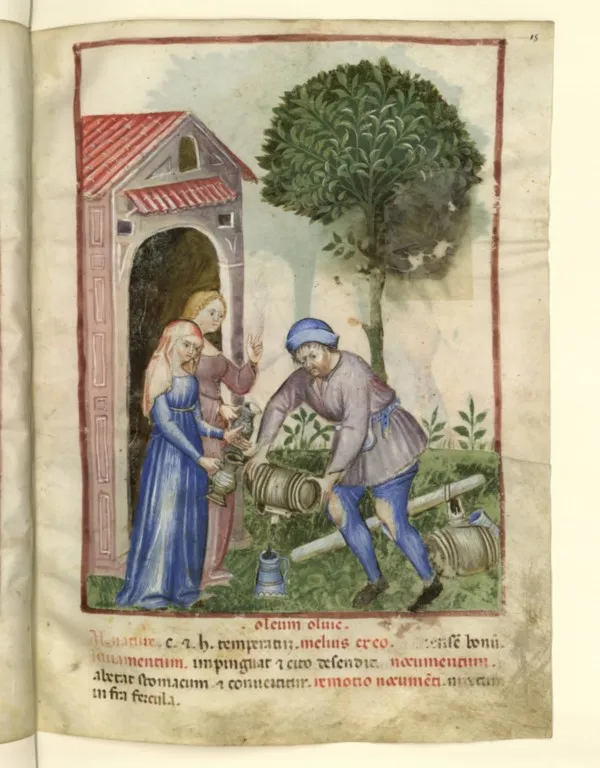
Olive oil was made by harvesting olives, typically in November after they began to change color but before turning fully black. The fruit was gathered by hand or beaten from the trees with light sticks, with care taken not to damage the branches. The olives were then crushed by various methods: bruised in a mortar for the finest "beaten oil," trodden with feet, ground in mills, or pressed in olive presses. The Hebrew word for oil press, 'gath-shemen,' gives us the name Gethsemane ("oil press"). After pressing, the oil was allowed to separate from water and sediment before being stored in earthenware jars or underground cisterns. Oil from Tekoa was considered the finest quality.
☩Domestic Uses
Oil served numerous purposes in daily life. As food, it replaced butter in the diet of Mediterranean peoples, used for frying, added to stews, and poured over vegetables and bread. It was the primary fuel for household lamps, which required regular replenishing. Olive oil was highly valued for its healing properties, applied to wounds to soothe pain and promote healing. As a cosmetic, it was used for anointing the head and body, particularly after bathing, keeping skin and hair soft and healthy. The absence of oil was a sign of mourning or poverty.
☩Sacred Uses
Oil held special significance in Israel's religious life. A sacred anointing oil was compounded with precious spices according to a specific formula for consecrating the tabernacle, its furnishings, and the priests. Kings were anointed with oil to signify their divine appointment. Pure beaten olive oil was required for the sanctuary lamps, which burned continually before the Lord. Oil was an essential component of grain offerings, mingled with or poured upon the flour. However, sin offerings and jealousy offerings were presented without oil, as these occasions called for humiliation rather than gladness.
☩Symbolic Meaning
Oil symbolizes the Holy Spirit throughout Scripture. The anointing of kings and priests with oil typified the Spirit's empowerment for service. Jesus, the Messiah ("Anointed One"), was anointed with the "oil of gladness" above His fellows. The oil in the lamps of the wise virgins represents the Spirit's presence in believers' lives. Zechariah's vision of olive trees supplying oil to golden lamps illustrates how grace flows through living channels to sustain God's people.
Related Verses193 mentions


References
- 1.John McClintock and James Strong, "Oil," in Cyclopedia of Biblical, Theological and Ecclesiastical Literature, vol. VII (Harper & Brothers, 1867–1887).
- 2.James Orr (ed.), "Oil," in International Standard Bible Encyclopedia, vol. IV (Howard-Severance Company, 1915).
- 3.James Hastings (ed.), "Oil," in Dictionary of Christ and the Gospels, vol. II (T. & T. Clark, 1906–1908).
- 4.Andrew Robert Fausset, "Oil," in The Englishman's Critical and Expository Bible Cyclopædia (Hodder & Stoughton, 1878).
- 5.George Morrish, "Oil," in Morrish's Concise Bible Dictionary (George Morrish, 1898).