
Reuel
“Friend of God”
Summary
Reuel ('friend of God') is the name of several Old Testament figures, most notably the Midianite priest who was the father or grandfather of Moses' wife Zipporah.
☩Son of Esau
The first Reuel mentioned in Scripture was a son of Esau by his wife Bashemath, Ishmael's daughter. His four sons—Nahath, Zerah, Shammah, and Mizzah—became chiefs or princes among the Edomites. This Reuel represents one of the important Edomite family lines descended from Esau.
☩Father-in-Law of Moses
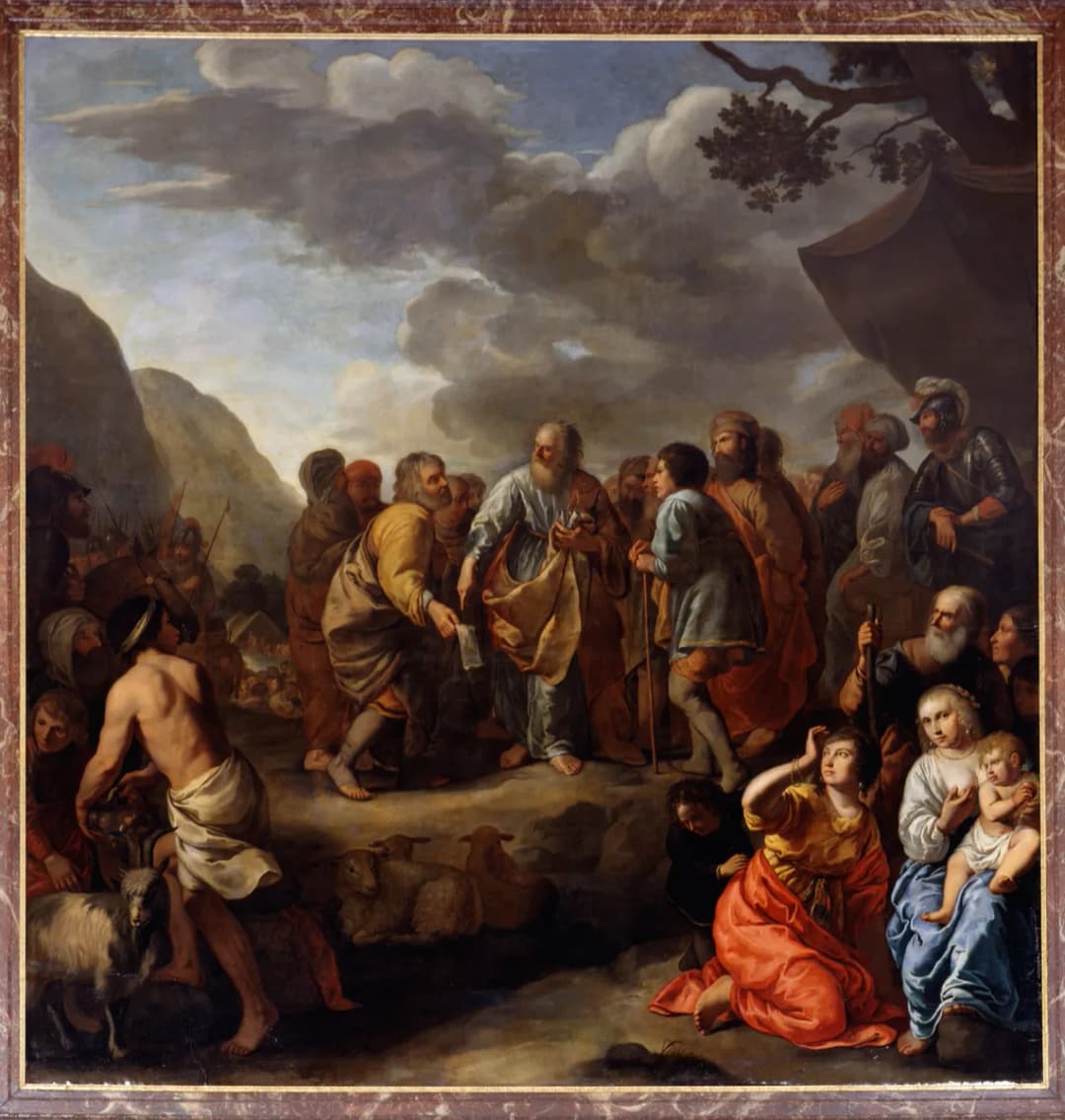
A Midianite priest named Reuel appears in Exodus 2:18 as the father of Zipporah, whom Moses married. The relationship between Reuel and Jethro (who is also called Moses' father-in-law in other passages) has been variously explained: some consider them two names for one man, others understand Reuel as the grandfather and Jethro as the father, and still others see Jethro as a title meaning 'excellency.' The name Reuel, meaning 'friend of God,' was not uncommon in ancient times.
☩Other Persons Named Reuel
A third Reuel was the father of Eliasaph, the leader of the tribe of Gad at the time of the census at Sinai. In parallel passages this name appears as Deuel, likely a scribal variation. A fourth Reuel was a Benjamite, the son of Ibnijah and father of Shephatiah, mentioned in the genealogies of those who returned from exile.
Related Verses13 mentions
See Also
References
- 1.John McClintock and James Strong, "Reuel," in Cyclopedia of Biblical, Theological and Ecclesiastical Literature, vol. VIII (Harper & Brothers, 1867–1887).
- 2.James Orr (ed.), "Reuel," in International Standard Bible Encyclopedia, vol. IV (Howard-Severance Company, 1915).
- 3.George Morrish, "Reuel," in Morrish's Concise Bible Dictionary (George Morrish, 1898).