
Blasphemy(profanity, swearing)
“Injurious speech, from blapto (to injure) and pheme (speech)”
Summary
Speaking evil of God or attributing to Him what is contrary to His nature, a grave sin punishable by death under Mosaic law.
☩Definition and Scope
The Greek word blasphemia originally meant any speech injurious to another's reputation, whether directed at God or man. In its technical theological sense, blasphemy denotes irreverent or insulting language toward God, denying His attributes, or attributing to Him something unseemly. Scripture also recognizes that conduct which brings reproach upon God's name constitutes blasphemy, as when David's sin gave occasion to the enemies of the Lord to blaspheme.
☩Old Testament Law
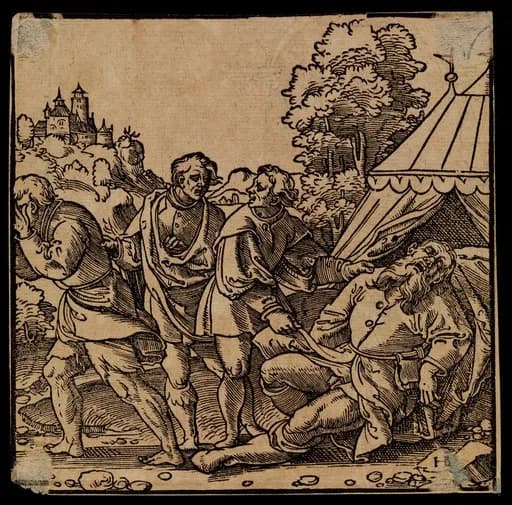
Under the Mosaic law, blaspheming the name of the Lord was punishable by death through stoning. The case of the son of Shelomith, who cursed during a quarrel, established this precedent when God commanded the congregation to stone him. The Jews interpreted this so strictly that they refused to pronounce the divine name Yahweh under any circumstance, substituting Adonai when reading Scripture.
☩Blasphemy Against Jesus
Jesus was accused of blasphemy on multiple occasions: when He forgave the paralytic's sins, the scribes reasoned that only God could forgive sins; when He claimed equality with the Father, the Jews took up stones; and at His trial, the high priest tore his robes at Jesus' claim to be the Son of Man seated at God's right hand. Stephen was likewise charged with blasphemy against Moses and God. These charges ironically fulfilled prophecy, as God's true servants were condemned for speaking truth.
☩The Unpardonable Sin
Jesus declared that while all sins and blasphemies may be forgiven, blasphemy against the Holy Spirit shall not be forgiven, neither in this age nor the age to come. This warning was given when the Pharisees attributed His casting out of demons to Beelzebub, the prince of demons. To consciously and deliberately attribute the manifest work of the Holy Spirit to Satan represents such hardened opposition to God that repentance becomes morally impossible. The very fear that one has committed this sin is evidence that one has not, for the truly guilty would have no such concern.
☩Blasphemy in Revelation
The book of Revelation depicts blasphemy as characteristic of the beast and end-time rebellion against God. The beast from the sea has names of blasphemy on its heads and is given a mouth speaking great things and blasphemies against God, His name, His tabernacle, and those dwelling in heaven. Despite divine plagues, men blaspheme God rather than repent, demonstrating the ultimate hardening of hearts.
Related Verses172 mentions
See Also

References
- 1.John McClintock and James Strong, "Blasphemy," in Cyclopedia of Biblical, Theological and Ecclesiastical Literature, vol. I (Harper & Brothers, 1867–1887).
- 2.James Orr (ed.), "Blasphemy," in International Standard Bible Encyclopedia, vol. I (Howard-Severance Company, 1915).
- 3.James Hastings (ed.), "Blasphemy," in Dictionary of Christ and the Gospels, vol. I (T. & T. Clark, 1906–1908).
- 4.Andrew Robert Fausset, "Blasphemy," in The Englishman's Critical and Expository Bible Cyclopædia (Hodder & Stoughton, 1878).