
Lamp(candle)
Summary
A vessel containing oil burned with a wick to produce light, used throughout Scripture both literally for illumination and figuratively for divine guidance, life, and spiritual blessing.
☩Hebrew and Greek Terms
Several Hebrew and Greek words are translated 'lamp' in Scripture. The Hebrew ner or nir properly means 'light' or 'light-giving thing' and refers to the lamps used in the tabernacle and temple where olive oil provided illumination. The Hebrew lappid typically denotes a torch or flambeau, as carried by Gideon's soldiers. In Greek, luchnos refers to an oil lamp for domestic use, while lampas indicates a torch fed with oil, as in the parable of the Ten Virgins. The King James Version often rendered these terms as 'candle,' but 'lamp' is the accurate translation since candles were not used in biblical times.
☩Sacred Lamps
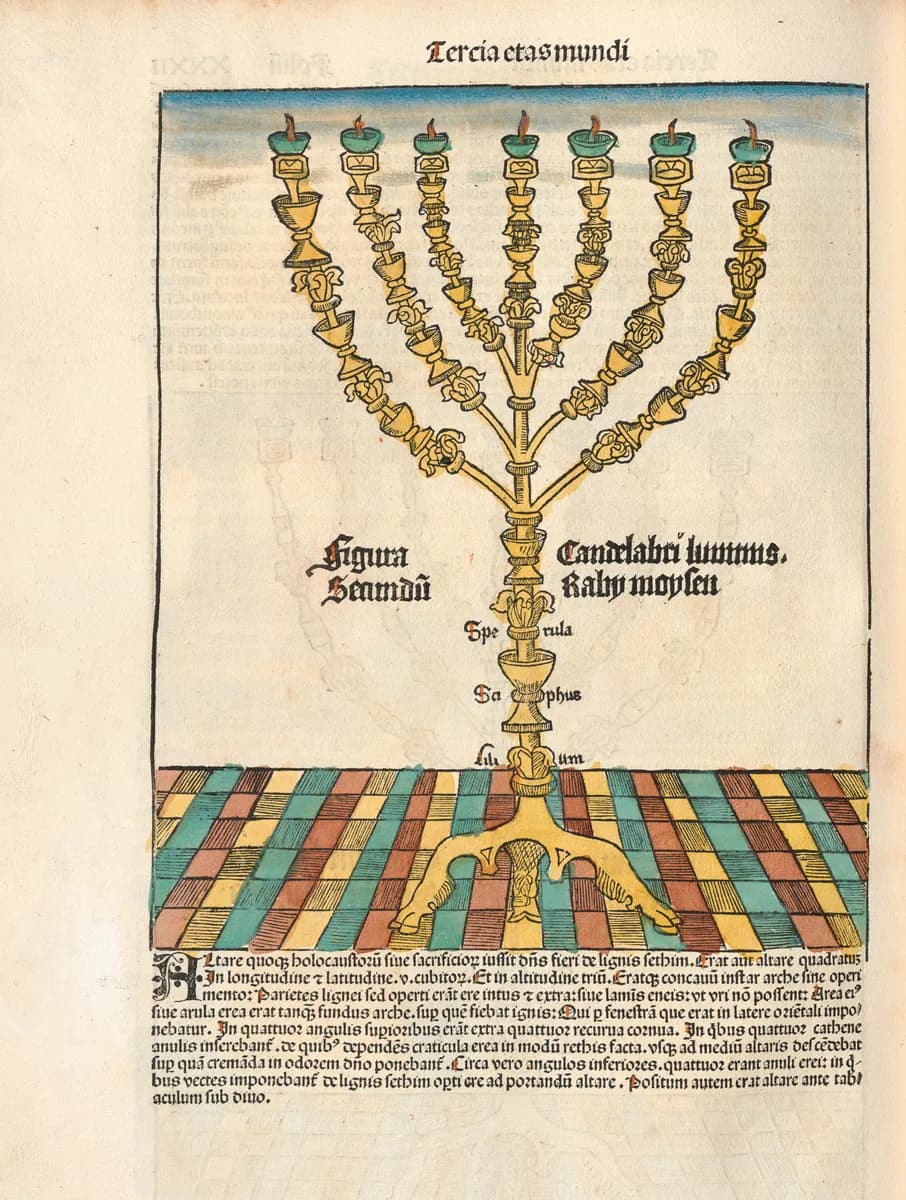
The golden lampstand in the tabernacle bore seven lamps that the priests lighted every evening and trimmed every morning. Pure olive oil of the finest quality was prescribed for these sacred lamps. Solomon placed ten golden lampstands in the temple before the Holy of Holies. The shape of these sacred lamps is not described, but they were likely cylindrical forms adapted to fit their sockets. Cotton or linen wicks were used, with the rabbis suggesting that worn priestly garments were unraveled to provide wicking material.
☩Domestic and Ceremonial Use
Ancient Hebrews, like Greeks, Romans, and modern Orientals, burned lamps overnight in their chambers. This practice gives force to expressions about 'outer darkness' and supplies various figures to sacred writers. The extinguishing of a lamp symbolizes calamity and death, while its continued burning represents enduring succession and blessing. Lamps and torches featured prominently in wedding processions, when the bridegroom came to conduct home the bride by night. This custom illuminates the parable of the Ten Virgins, where preparedness with oil-filled lamps determined participation in the wedding feast.
☩Figurative Uses
Scripture employs lamp imagery extensively. God's Word is called 'a lamp to my feet and a light to my path.' The human spirit is 'the lamp of the Lord' searching the inner depths. A lamp represents prosperity and blessing, while its extinction signifies disaster and divine judgment. In Revelation, the seven lamps before God's throne represent the sevenfold Spirit, and a falling star burns like a lamp. The New Jerusalem needs no created lamp because the glory of God illuminates it.
Related Verses64 mentions
See Also
References
- 1.James Orr (ed.), "Lamp; Lampstand," in International Standard Bible Encyclopedia, vol. III (Howard-Severance Company, 1915).
- 2.John McClintock and James Strong, "Lamp," in Cyclopedia of Biblical, Theological and Ecclesiastical Literature, vol. V (Harper & Brothers, 1867–1887).
- 3.James Hastings (ed.), "Lamp," in Dictionary of Christ and the Gospels, vol. II (T. & T. Clark, 1906–1908).
- 4.George Morrish, "Lamp," in Morrish's Concise Bible Dictionary (George Morrish, 1898).