
Gleaning
Summary
The practice of gathering leftover grain or fruit after harvest, protected by law as provision for the poor, the stranger, the widow, and the orphan.
☩The Law of Gleaning
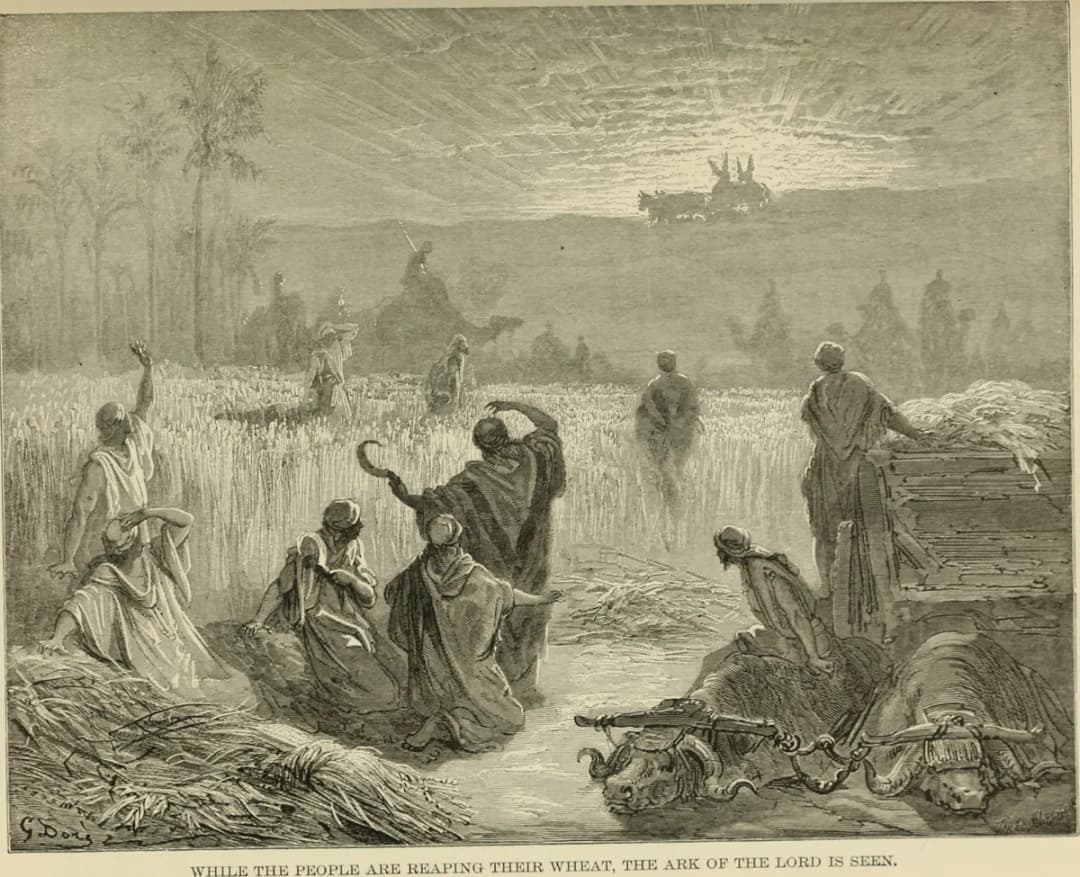
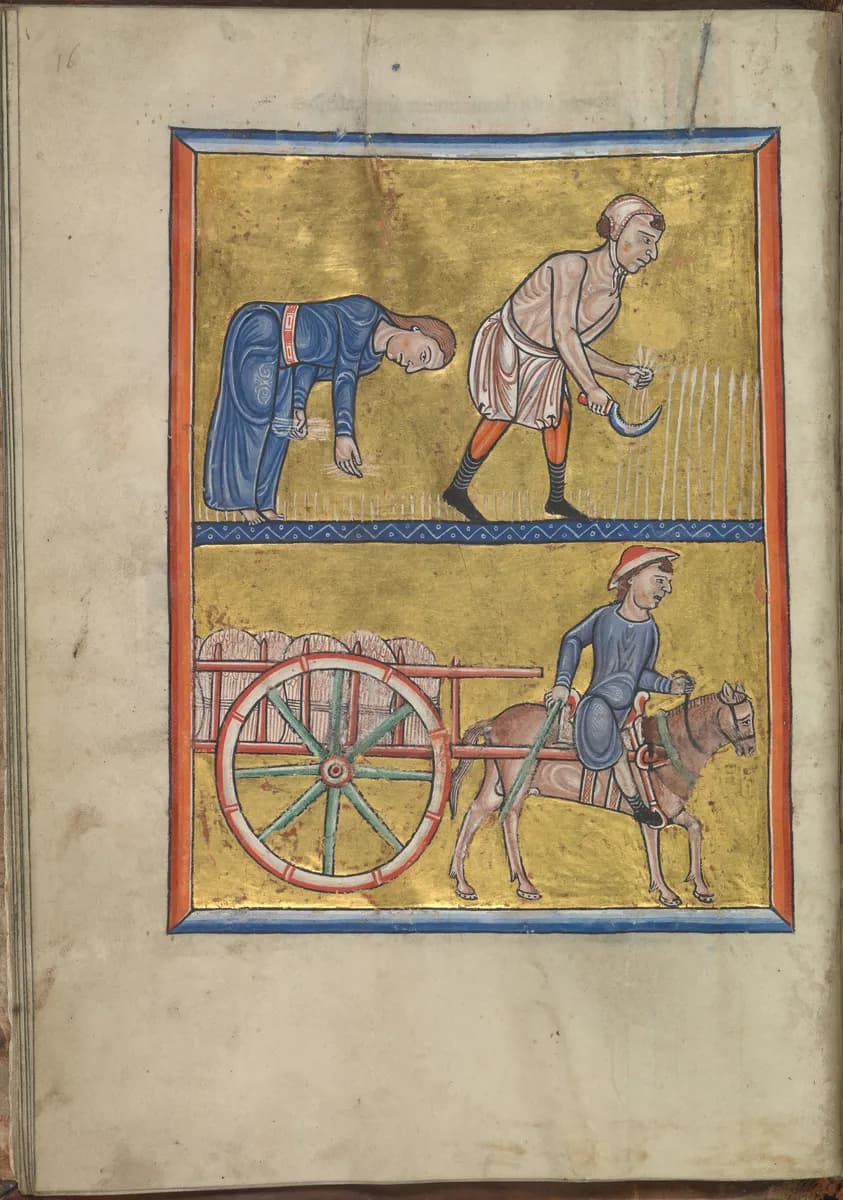
Mosaic law required that farmers not reap to the very corners of their fields nor gather every last grape or olive. What fell during harvest was to be left for the poor and the stranger. The law specifically protected this provision for widows and orphans, commanding harvesters not to return for forgotten sheaves. This merciful legislation was unique to Israel among ancient peoples.
☩Ruth the Gleaner
The most famous example of gleaning is Ruth, who came to gather grain in the fields of Boaz after following her mother-in-law Naomi to Bethlehem. Boaz showed her exceptional kindness, commanding his young men to leave extra grain for her and inviting her to share their food. Through this humble beginning, Ruth became an ancestor of King David and of Christ.
☩Figurative Use
Gleaning is used figuratively for the remnant that survives judgment, as when gleaning grapes remain after the vintage. Gideon used the image ironically when the Ephraimites complained of being left out of battle: 'Is not the gleaning of Ephraim better than the vintage of Abiezer?'
Related Verses23 mentions
See Also
References
- 1.James Orr (ed.), "Gleaning," in International Standard Bible Encyclopedia, vol. II (Howard-Severance Company, 1915).
- 2.John McClintock and James Strong, "Gleaning," in Cyclopedia of Biblical, Theological and Ecclesiastical Literature, vol. III (Harper & Brothers, 1867–1887).
- 3.George Morrish, "Gleaning," in Morrish's Concise Bible Dictionary (George Morrish, 1898).
- 4.Andrew Robert Fausset, "Gleaning," in The Englishman's Critical and Expository Bible Cyclopædia (Hodder & Stoughton, 1878).