
Demagoguery(demagogism)
“People-leader; from demos (people) and agogos (leading)”
Summary
The practice of gaining or maintaining power by flattering the populace, manipulating public emotion, and sacrificing justice or truth for personal advantage—a recurring pattern among leaders in Scripture.
☩Definition
Demagoguery is the exploitation of popular sentiment by a leader who appeals to the passions and prejudices of the people rather than acting from principle or justice. Scripture records several prominent figures who yielded to this temptation, compromising righteousness to secure the favor of the crowd.
☩Absalom: Stealing the Hearts of Israel
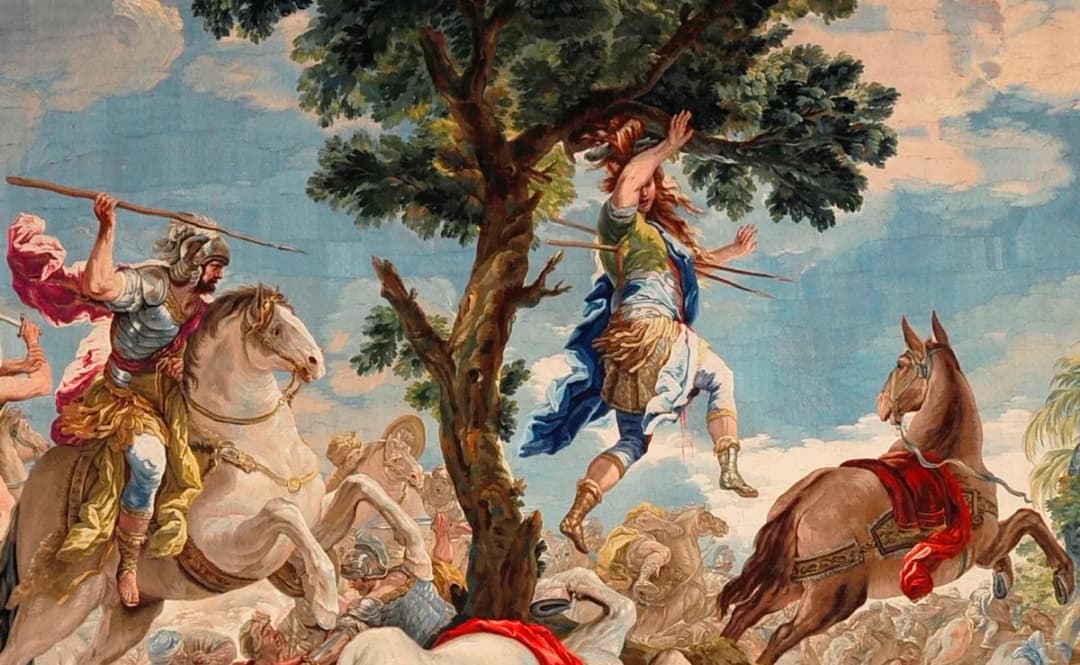
The most deliberate example of demagoguery in the Old Testament is Absalom's campaign against his father David. He stationed himself at the city gate, intercepted those coming to the king for judgment, and implied that their cases would never be heard—but that he would give them justice if he were judge. Through this calculated 'popularity hunting,' as one commentator describes it, 'Absalom stole the hearts of the men of Israel.' After four years of systematically cultivating popular support, he went to Hebron under pretense of fulfilling a vow and had himself proclaimed king, forcing David to flee Jerusalem.
☩Pilate: Yielding to the Crowd
Pontius Pilate condemned an innocent man to death because he feared the crowd. After examining Jesus and repeatedly declaring 'I find no fault in this man,' Pilate nevertheless delivered Him to be crucified, 'willing to content the people.' His hand-washing was a futile gesture of innocence that fooled no one—he sacrificed justice to preserve his political standing.
☩Felix: Currying Favor
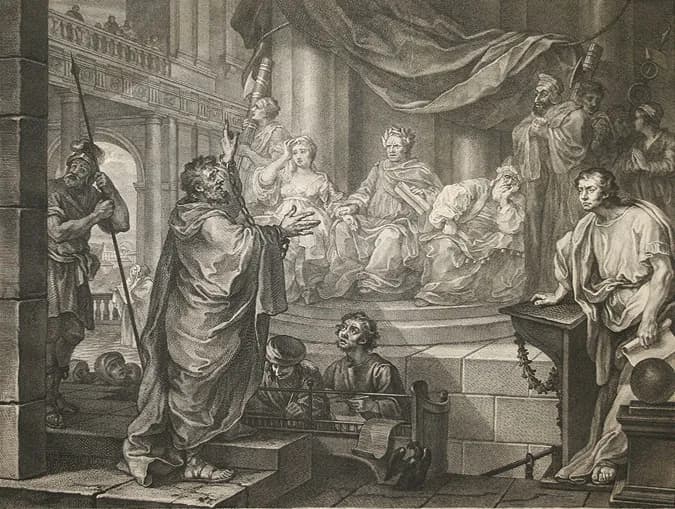
The Roman procurator Felix, though convicted by Paul's reasoning on righteousness and judgment, kept Paul imprisoned for two years not from any legal cause but because he was 'willing to show the Jews a pleasure.' His demagogy was compounded by venality—he repeatedly summoned Paul in hope of receiving a bribe for his release.
☩Herod Agrippa I: Persecution for Popularity
Herod Agrippa I carried demagoguery to its most violent extreme. He killed James the brother of John with the sword, and 'because he saw it pleased the Jews, he proceeded further to take Peter also.' His entire policy of persecuting the church was driven not by conviction but by the desire to win favor with the Jewish populace, making him a grim illustration of how far the appetite for popular approval can lead a ruler.
Related Verses50 mentions
See Also


References
- 1.Andrew Robert Fausset, "Absalom," in The Englishman's Critical and Expository Bible Cyclopædia (Hodder & Stoughton, 1878).
- 2.John McClintock and James Strong, "Absalom," in Cyclopedia of Biblical, Theological and Ecclesiastical Literature, vol. I (Harper & Brothers, 1867–1887).
- 3.John McClintock and James Strong, "Pontius Pilate," in Cyclopedia of Biblical, Theological and Ecclesiastical Literature (Harper & Brothers, 1867–1887).
- 4.John McClintock and James Strong, "Felix," in Cyclopedia of Biblical, Theological and Ecclesiastical Literature, vol. III (Harper & Brothers, 1867–1887).