
Children(infants, babes)
Summary
Offspring regarded as a blessing and heritage from God, subject to extensive biblical instruction concerning their upbringing, responsibilities, and place in the covenant community.
☩Children as Divine Gift
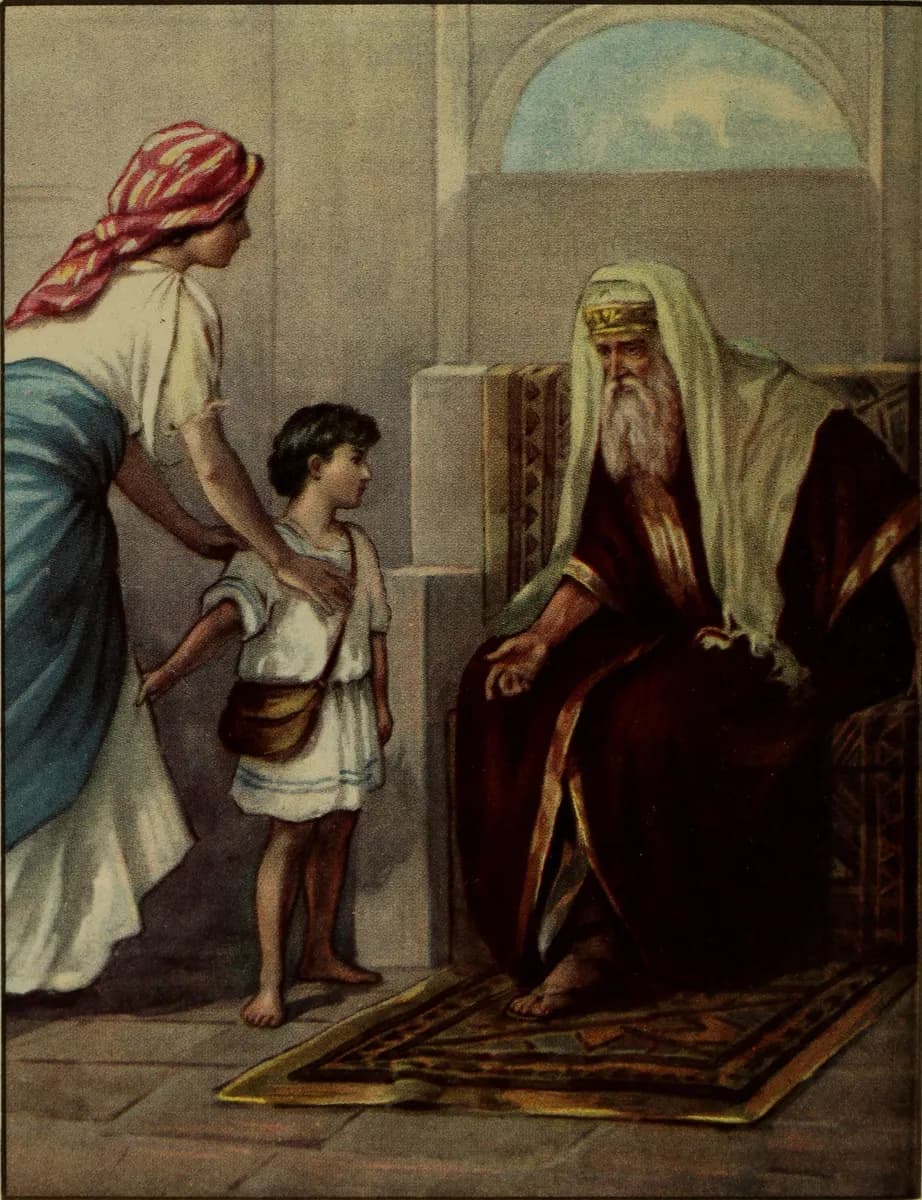
Scripture consistently presents children as a blessing from God. The Psalmist declared, 'Children are an heritage of the Lord: and the fruit of the womb is his reward' (Psalm 127:3). Eastern women highly valued offspring, particularly sons, and barrenness was considered a severe trial. Notable examples of divinely-given children include Isaac to Sarah, Samuel to Hannah, and John to Elizabeth—all born to previously barren women through God's intervention.
☩Care and Upbringing
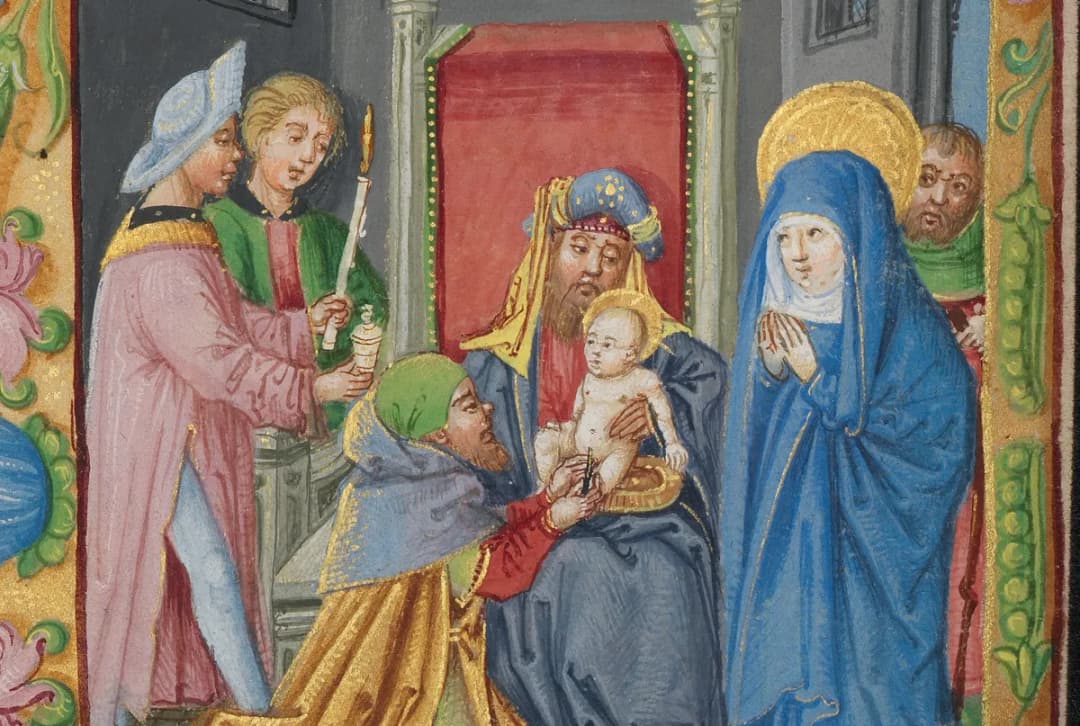
At birth, the child was washed, rubbed with salt, and wrapped in swaddling clothes. Male children were circumcised on the eighth day and given a name. The nursing period often extended to three years, and weaning was celebrated with rejoicing. Boys were initially under their mother's care but later passed to the father's training around age five. At twelve, Jewish boys became 'sons of the law,' subject to fuller religious instruction. Daughters typically remained under their mother's care until marriage.
☩Parental Authority and Discipline
Parents, especially fathers, held significant authority over their children. The law commanded children to honor their parents, and smiting or cursing a parent was punishable by death. Persistent rebellion by a son could result in public execution by stoning. Parents bore responsibility to teach the law diligently to their children, instructing them 'when thou sittest in thine house, and when thou walkest by the way.' Corporal discipline was endorsed: 'He that spareth his rod hateth his son' (Proverbs 13:24).
☩Jesus and Children
Jesus elevated the status of children in His teaching and ministry. When disciples rebuked those bringing children to Him, Jesus said, 'Suffer the little children to come unto me, and forbid them not: for of such is the kingdom of God' (Mark 10:14). He blessed children and used them as examples of the humble faith required to enter God's kingdom. He raised children from the dead and healed them of various afflictions, demonstrating God's compassion for the young.
☩Spiritual Immaturity
In the epistles, 'babes' or 'little children' describe a class of spiritually immature believers, in contrast to 'young men' and 'fathers' who have grown in understanding. Paul told the Corinthians, 'I have fed you with milk, and not with meat: for hitherto ye were not able to bear it,' rebuking their inability to receive deeper teaching. The writer of Hebrews similarly warns those who 'have need of milk, and not of strong meat,' being 'unskilful in the word of righteousness.' Peter exhorts new believers to 'desire the sincere milk of the word' that they may grow—recognizing that while spiritual infancy is a starting point, maturity is expected.
☩Children of God
Scripture uses the term 'children' metaphorically to describe the relationship between God and His people. Believers are called 'children of God,' 'children of light,' and 'children of promise.' This relationship involves both privilege—being heirs with Christ—and responsibility—imitating the Father's character. The apostle John particularly emphasizes that believers are 'born of God' and must conduct themselves as His children.
Related Verses1772 mentions
See Also

References
- 1.James Hastings (ed.), "Children," in Dictionary of Christ and the Gospels, vol. I (T. & T. Clark, 1906–1908).
- 2.George Morrish, "Children," in Morrish's Concise Bible Dictionary (George Morrish, 1898).
- 3.F. N. Peloubet & M. A. Peloubet (ed.), "Children," in Smith's Bible Dictionary (Porter & Coates, 1884).
- 4.Andrew Robert Fausset, "Children," in The Englishman's Critical and Expository Bible Cyclopædia (Hodder & Stoughton, 1878).
- 5.James Hastings (ed.), "Children of God, Sons of God," in Dictionary of the Apostolic Church, vol. I (T. & T. Clark, 1915–1918).