
Elam
“Eternity or hidden”
Summary
An ancient kingdom east of Babylonia whose king Chedorlaomer ruled as supreme power in Abraham's day, and the name of several Israelites in later periods.
☩Origin and Geography
Elam takes its name from Elam, son of Shem, whose descendants settled the region east of Babylonia and the lower Tigris. The country, also called Susiana by the Greeks, lay south of Assyria and east of Persia proper, with its capital at Susa (biblical Shushan). Daniel was at Shushan in the province of Elam where he received his vision by the river Ulai. The region corresponds to modern Khuzistan in southwestern Iran. From earliest times it was one of the most ancient and powerful regions of the East, and its rulers maintained quasi-independent status while acknowledging the supremacy of successive empires.
☩Historical Importance
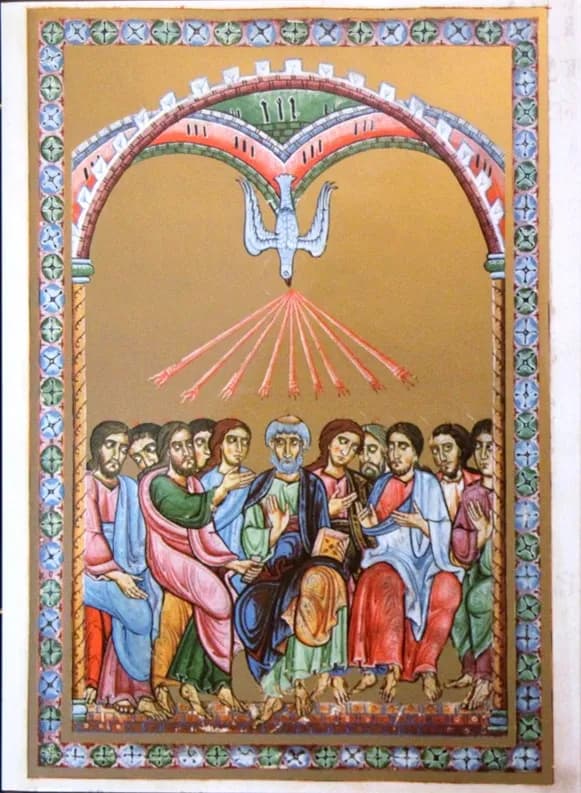
In Abraham's time, Chedorlaomer king of Elam was the dominant power in Lower Mesopotamia, holding supremacy even over the king of Shinar (Babylonia). He invaded Canaan and captured Lot before being defeated by Abraham. The Elamites were famed as skilled archers and warriors, hence the prophecy that God would 'break the bow of Elam.' Isaiah prophesied that Elam and Media together would destroy Babylon, which was fulfilled when Cyrus advanced against the city and Elam likely joined in the assault. Elam became a satrapy of the Persian Empire, and Susa became the imperial capital and court residence. Jews settled in Elam during the exile, and Elamites were among those at Pentecost who heard Peter's sermon in their own tongue—an earnest of the prophecy that God would restore Elam's captivity in the latter days.
☩Persons Named Elam
Besides the ancestor of the Elamites, several Israelites bore this name. A Korhite Levite named Elam served among the gatekeepers in David's time. A Benjamite chief named Elam appears among Shashak's sons. After the exile, 'children of Elam' numbering 1,254 returned with Zerubbabel, and another group called 'the other Elam' returned with the same number. Seventy-one more descendants accompanied Ezra's second caravan. One named Elam supported Ezra's reforms regarding foreign marriages, and six of the sons of Elam put away their foreign wives. A priest named Elam participated in the dedication of Jerusalem's rebuilt wall under Nehemiah.
Related Verses27 mentions
See Also
References
- 1.John McClintock and James Strong, "Elam," in Cyclopedia of Biblical, Theological and Ecclesiastical Literature, vol. III (Harper & Brothers, 1867–1887).
- 2.James Orr (ed.), "Elam," in International Standard Bible Encyclopedia, vol. II (Howard-Severance Company, 1915).
- 3.George Morrish, "Elam," in Morrish's Concise Bible Dictionary (George Morrish, 1898).
- 4.James Hastings (ed.), "Elamites," in Dictionary of the Apostolic Church, vol. I (T. & T. Clark, 1915–1918).
- 5.Andrew Robert Fausset, "Elam," in The Englishman's Critical and Expository Bible Cyclopædia (Hodder & Stoughton, 1878).