
Merchant
Summary
Merchants in biblical times were typically traveling traders who journeyed in caravans between major commercial centers, engaging in trade that connected the ancient Near East with Africa, Asia, and the Mediterranean world.
☩Ancient Commerce
Trade is of great antiquity in the East, conducted both by sea and more commonly by land through caravans. The Hebrew word for merchant (sachar) means 'to travel about,' reflecting the itinerant nature of ancient commerce. Merchants associated in companies for protection during their journeys between trading centers. In patriarchal times, Ishmaelite and Midianite traders passed through Canaan carrying spices, balm, and myrrh to Egypt, and sometimes purchased slaves.
☩Israel's Commercial Position
Though the geographical position of Palestine seemed advantageous for trade, the Mosaic law did not particularly encourage commerce, and the nation was oriented primarily toward agriculture. Solomon developed international trade as a royal monopoly, importing horses from Egypt and operating a merchant fleet from Red Sea ports in partnership with Tyre. After Solomon's death, this maritime commerce declined until the ports passed entirely from Israelite control.
☩Trade Relations
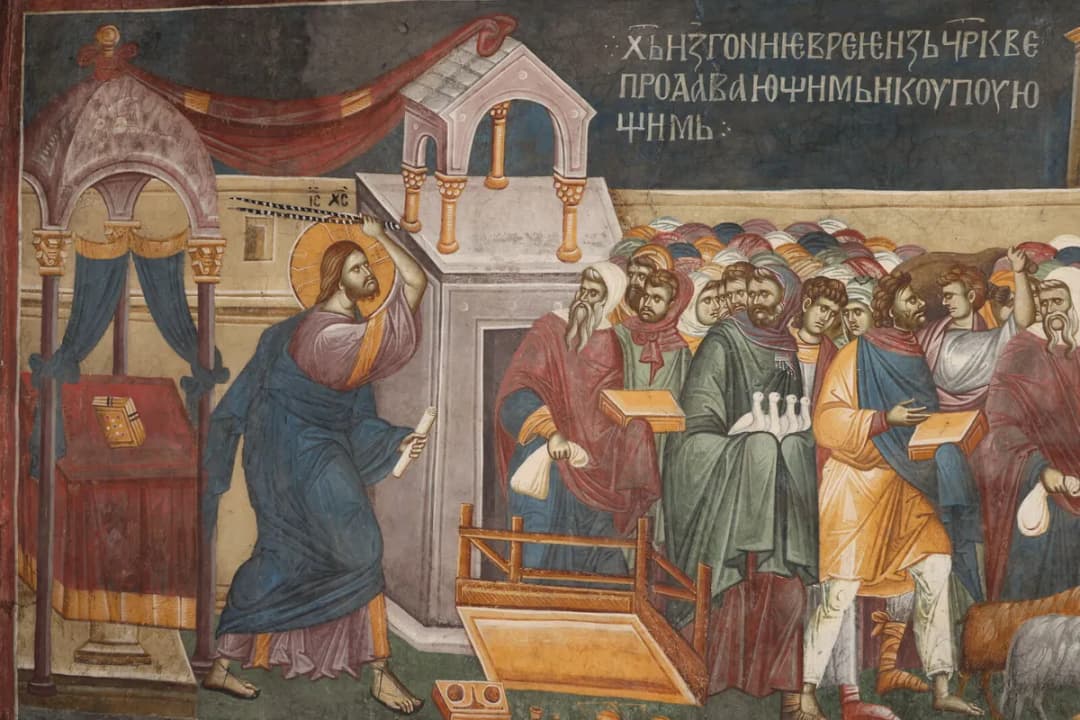
The Phoenicians dominated much of ancient commerce, and Tyre's extensive trade network is vividly described by Ezekiel. Judah exported wheat, oil, honey, and balsam in exchange for foreign imports including timber, fish, dyes, and luxury goods. The religious festivals drew merchants to Jerusalem, and even Tyrian traders frequented its markets. Jesus cleansed the temple of merchants who had established a market for sacrificial animals and money exchange in its courts.
☩Figurative Usage
Jesus used the merchant seeking fine pearls as an image of one who sacrifices everything for the kingdom of heaven. The book of Revelation portrays the merchants of the earth mourning over fallen Babylon because no one buys their cargo anymore—a vivid picture of earthly commerce's ultimate futility.
Related Verses40 mentions
See Also
References
- 1.John McClintock and James Strong, "Merchant," in Cyclopedia of Biblical, Theological and Ecclesiastical Literature, vol. VI (Harper & Brothers, 1867–1887).
- 2.American Tract Society, "Merchant," in American Tract Society Bible Dictionary (American Tract Society, 1859).