
Money(coin)
Summary
Money in biblical times progressed from weighed silver and gold to coined currency, with the shekel serving as the primary unit of value throughout Hebrew history.
☩Uncoined Money
Ancient nations weighed precious metals rather than counting coins, a practice represented on Egyptian monuments showing gold and silver kept in rings. The first biblical mention of money as a medium of exchange appears with Abraham, who was 'very rich in cattle, in silver, and in gold.' Transactions were conducted by weight: Abraham weighed out 400 shekels of silver to purchase the cave of Machpelah, in 'current money with the merchant.' The Hebrew term for money (keseph) means silver, indicating this was the primary medium of exchange.
☩The Shekel as Standard
The shekel (from the Hebrew shakal, 'to weigh') was the primary unit of value throughout Hebrew history. A standard weight was maintained in the sanctuary under the priests' charge, giving rise to the phrase 'the shekel of the sanctuary.' The half-shekel was required of every Israelite who reached twenty years of age as an offering to the Lord. Jewels were often made conforming to shekel weights so they could serve as money when needed—Rebecca's ring weighed a half shekel and her bracelets ten shekels.
☩Coined Money
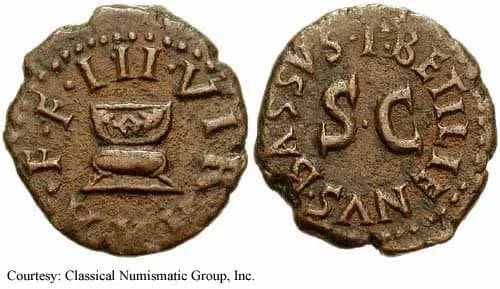
The first mention of coined money in Scripture occurs after the Babylonian exile, referring to Persian darics. Antiochus VII granted Simon Maccabaeus permission to coin Jewish money around 140 BC—the first recorded Jewish coinage. These shekels bore a pot of manna and almond rod on one side, with 'Jerusalem the holy' inscribed on the reverse. By New Testament times, Roman denarii, Greek drachmas, and various copper coins circulated alongside temple currency.
☩Teaching on Money
Scripture contains extensive teaching about the proper attitude toward wealth. Jesus warned against laying up treasures where moth and rust corrupt, urging instead treasures in heaven. He declared that no one can serve both God and mammon. Paul taught Timothy that the love of money is the root of all evil. Yet money itself is morally neutral—it is the misplaced affection for riches that leads to spiritual ruin.
Related Verses147 mentions
References
- 1.James Hastings (ed.), "Money," in Dictionary of Christ and the Gospels, vol. II (T. & T. Clark, 1906–1908).
- 2.John McClintock and James Strong, "Money," in Cyclopedia of Biblical, Theological and Ecclesiastical Literature, vol. VI (Harper & Brothers, 1867–1887).
- 3.Andrew Robert Fausset, "Money," in The Englishman's Critical and Expository Bible Cyclopædia (Hodder & Stoughton, 1878).