
Stubble
Summary
The dry stalks of grain left after harvest, used figuratively for the fragile and inflammable nature of the wicked before God's judgment.
☩Description
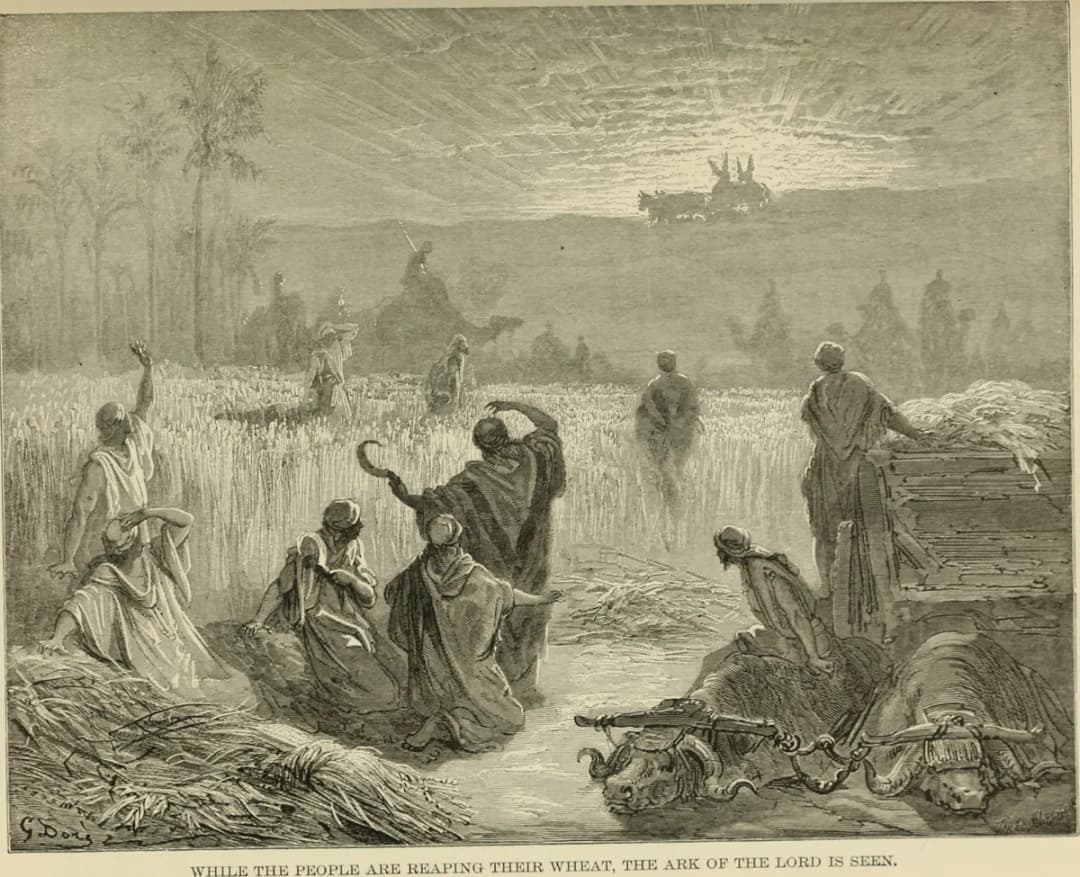
The Hebrew 'qash' denotes the dry stalk of grain, left standing in fields after the ears were cut. In Egypt, reapers cut only the ears with sickles, leaving straw on the ground—thus when Pharaoh commanded the Hebrews to gather straw themselves, though cruel, it was not impossible. The stalks were sometimes burned over or broken up as chaff during threshing.
☩Figurative Use
Stubble pictures the wicked who cannot stand before God's judgment: 'Thy wrath consumeth them as stubble.' 'The day that cometh shall burn them up, saith the LORD of hosts, that it shall leave them neither root nor branch.' Works of hay, wood, and stubble will be burned in testing, though the builder may himself be saved.
Related Verses18 mentions
See Also
References
- 1.John McClintock and James Strong, "Stubble," in Cyclopedia of Biblical, Theological and Ecclesiastical Literature, vol. IX (Harper & Brothers, 1867–1887).
- 2.John McClintock and James Strong, "Stubble," in Cyclopedia of Biblical, Theological and Ecclesiastical Literature, vol. IX (Harper & Brothers, 1867–1887).
- 3.James Orr (ed.), "Stubble," in International Standard Bible Encyclopedia, vol. V (Howard-Severance Company, 1915).
- 4.John McClintock and James Strong, "Stubble," in Cyclopedia of Biblical, Theological and Ecclesiastical Literature, vol. IX (Harper & Brothers, 1867–1887).
- 5.John McClintock and James Strong, "Stubble," in Cyclopedia of Biblical, Theological and Ecclesiastical Literature, vol. IX (Harper & Brothers, 1867–1887).
- 6.James Orr (ed.), "Stubble," in International Standard Bible Encyclopedia, vol. V (Howard-Severance Company, 1915).