
Threshing
Summary
The agricultural process of separating grain from stalks, always performed in the open air in biblical times using one of three methods: beating with sticks, treading by animals, or using threshing instruments.
☩Beating with Sticks
The earliest and simplest method of threshing involved beating the grain with sticks. This technique was used for small quantities, in the early part of harvest season, and for frailer kinds of grain. Gideon employed this method when threshing wheat in a winepress to hide from the Midianites. Ruth gleaned in the fields of Boaz and beat out what she had gathered.
☩Treading by Animals
The most common method used horned cattle—usually oxen yoked in pairs—driven around the threshing floor to trample out the grain with their hoofs. The Mosaic law forbade muzzling the ox while it tread out the grain, a humane regulation allowing the animal to eat as it worked. This law is cited by Paul as a principle supporting the rights of ministers to material support. Asses and horses were occasionally used, though cattle remained the standard.
☩Threshing Instruments
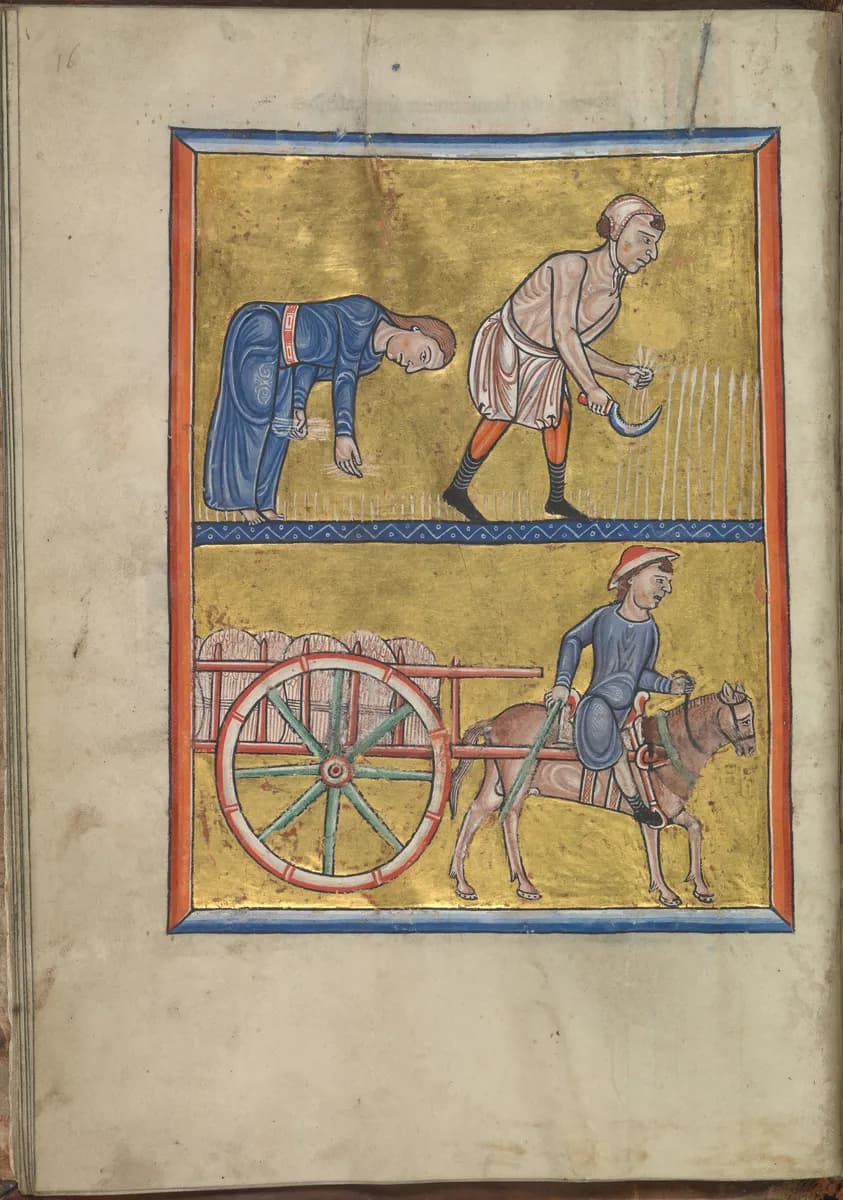
The most effective method employed threshing machines of various designs. The simplest was a wooden plank (threshing sledge) set with sharp stones or iron points, dragged over the sheaves. More elaborate was a sort of cart or wheeled sledge drawn by cattle. These instruments not only separated the grain but also crushed the straw for use as fodder.
☩The Threshing Floor
Threshing was always conducted on a designated floor in the open air, typically a hard, flat surface of exposed rock or packed earth in an elevated location to catch the wind for winnowing. Famous threshing floors in Scripture include the floor of Araunah the Jebusite, which David purchased and which became the site of Solomon's Temple.
☩Figurative Use
Threshing became a powerful metaphor for divine judgment in the prophetic writings. Nations are depicted as sheaves gathered on the threshing floor, and conquest as threshing with instruments of iron. The image of bruised grain symbolized the afflicted Jews in captivity. Conversely, abundant threshing 'unto the vintage' indicated extraordinary blessing.
Related Verses31 mentions
See Also
References
- 1.John McClintock and James Strong, "Threshing," in Cyclopedia of Biblical, Theological and Ecclesiastical Literature, vol. X (Harper & Brothers, 1867–1887).
- 2.James Orr (ed.), "Threshing," in International Standard Bible Encyclopedia, vol. V (Howard-Severance Company, 1915).
- 3.George Morrish, "Threshing," in Morrish's Concise Bible Dictionary (George Morrish, 1898).