
Ramah(rama, ramathaim zophim)
“Height, high place”
Summary
Ramah ('height') was a common name for elevated places in Israel, most notably referring to Samuel's hometown and the place where Rachel was symbolically depicted weeping for her children.
☩Ramah of Benjamin
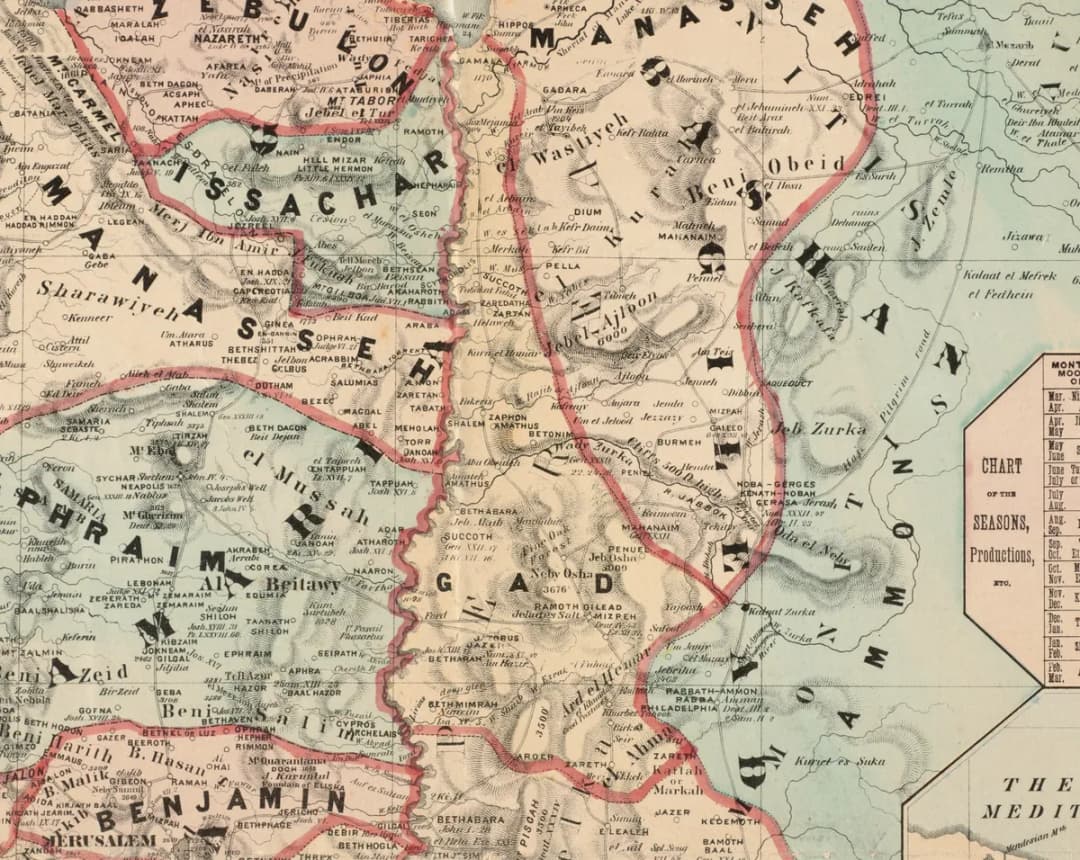
The most prominent Ramah was located in the territory of Benjamin, about five miles north of Jerusalem. It was a frontier town between the northern and southern kingdoms, fortified by Baasha of Israel and later dismantled by Asa of Judah. This Ramah is associated with the gathering of captives during the Babylonian exile, where Jeremiah depicts Rachel weeping for her children. The prophet himself was released from chains at Ramah after Jerusalem's fall.
☩Samuel's Ramah
Samuel's Ramah (also called Ramathaim-zophim) was located in the hill country of Ephraim, though its exact site is uncertain. It was the birthplace and lifelong residence of Samuel, and contained his home, a school of prophets, and his burial place. Here Samuel anointed Saul, Saul prophesied among the prophets, and David fled for refuge from Saul's persecution. Samuel judged Israel from this place, building an altar to the Lord there.
☩Other Places Named Ramah
Several other locations bore this name due to their elevated positions. Ramah of the South (Ramoth-negeb) was in the territory of Simeon, one of the places to which David sent spoil. Ramah of Gilead (Ramoth-gilead) was an important city east of the Jordan, designated as a city of refuge and frequently contested between Israel and Syria. Ramah of Naphtali was a fortified city in the north, whose exact location remains uncertain.
Related Verses36 mentions
See Also
References
- 1.John McClintock and James Strong, "Ramah," in Cyclopedia of Biblical, Theological and Ecclesiastical Literature, vol. VIII (Harper & Brothers, 1867–1887).
- 2.James Orr (ed.), "Ramah," in International Standard Bible Encyclopedia, vol. IV (Howard-Severance Company, 1915).
- 3.Andrew Robert Fausset, "Ramah," in The Englishman's Critical and Expository Bible Cyclopædia (Hodder & Stoughton, 1878).