
Caleb
“Dog, or possibly raging with zeal”
Summary
A faithful Israelite spy who, along with Joshua, brought back an encouraging report from Canaan and was rewarded with an inheritance in the promised land.
☩The Faithful Spy
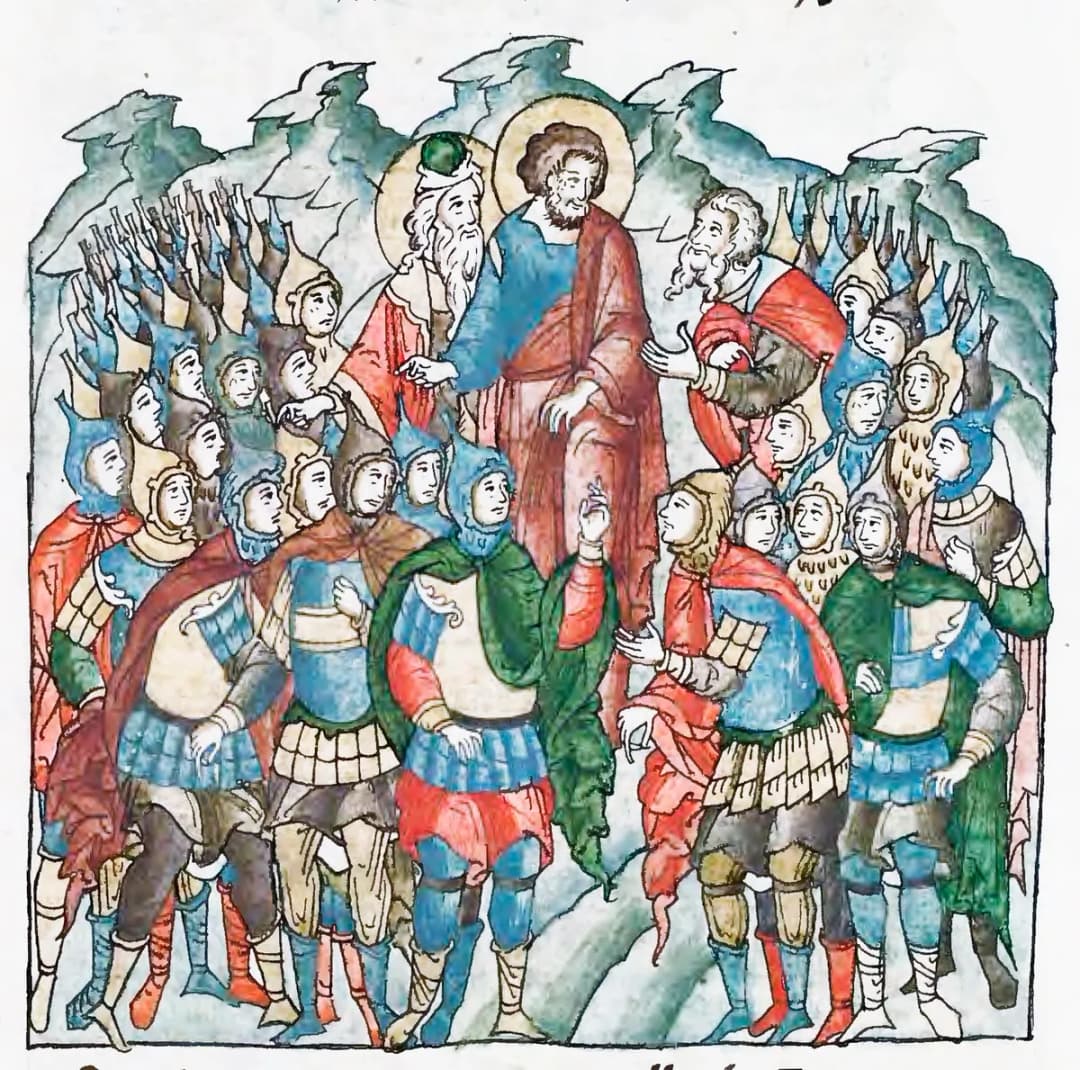
Caleb, the son of Jephunneh, represented the tribe of Judah among the twelve spies sent by Moses from Kadesh-Barnea to reconnoiter the land of Canaan in the second year of the Exodus. While ten of the spies returned with a discouraging report, emphasizing the strength of the inhabitants and the presence of giants, Caleb and Joshua urged the people to advance boldly, declaring, 'Let us go up at once and possess the land, for we are well able to overcome it.' For this act of faith and courage, they narrowly escaped stoning by the terrified congregation.
☩Divine Reward
Because Caleb had 'another spirit' and followed the Lord fully, God promised that he alone, with Joshua, would survive to enter the promised land, while all others of the Exodus generation would perish in the wilderness. God specifically promised that Caleb's descendants would possess the land he had walked upon as a spy. This promise was fulfilled forty-five years later when Caleb, at eighty-five years old, came to Joshua claiming his inheritance, declaring that he was still as strong as the day Moses sent him to spy out the land.
☩Conquest of Hebron
Joshua granted Caleb's request for the hill country where the Anakim dwelt. Despite the fearsome reputation of these giants, Caleb drove out the three sons of Anak and took possession of Hebron, also called Kirjath-Arba. He further offered his daughter Achsah in marriage to whoever would capture Kirjath-sepher (Debir), and when Othniel, his younger brother, accomplished this feat, Caleb not only gave him his daughter but also granted her request for the upper and lower springs of water.
☩The Kenizzite Connection
Caleb is sometimes called 'the Kenizzite' or 'son of Kenaz,' which has led some scholars to suggest he may have been of Edomite origin, since Kenaz was a grandson of Esau. If so, his incorporation into the tribe of Judah through marriage and covenant faithfulness demonstrates God's mercy to Gentiles even in Old Testament times, foreshadowing the inclusion of other foreigners like Rahab and Ruth. The territory associated with Caleb, called the 'Negeb of Caleb,' remained in his family's possession through the time of David.
Related Verses43 mentions
See Also
References
- 1.John McClintock and James Strong, "Caleb," in Cyclopedia of Biblical, Theological and Ecclesiastical Literature, vol. II (Harper & Brothers, 1867–1887).
- 2.George Morrish, "Caleb," in Morrish's Concise Bible Dictionary (George Morrish, 1898).
- 3.F. N. Peloubet & M. A. Peloubet (ed.), "Caleb," in Smith's Bible Dictionary (Porter & Coates, 1884).
- 4.James Orr (ed.), "Caleb," in International Standard Bible Encyclopedia, vol. I (Howard-Severance Company, 1915).
- 5.Philip Schaff and Johann Herzog (ed.), "Caleb, Calebites," in The New Schaff-Herzog Encyclopedia of Religious Knowledge, vol. II (Funk and Wagnalls, 1908–1914).
- 6.Andrew Robert Fausset, "Caleb," in The Englishman's Critical and Expository Bible Cyclopædia (Hodder & Stoughton, 1878).