
Eclipse
“Failure, abandonment (of light)”
Summary
The obscuring of the sun or moon by the shadow of another celestial body, alluded to in prophetic passages as imagery of divine judgment, though no eclipse is recorded as a historical event in Scripture.
☩Prophetic Allusions
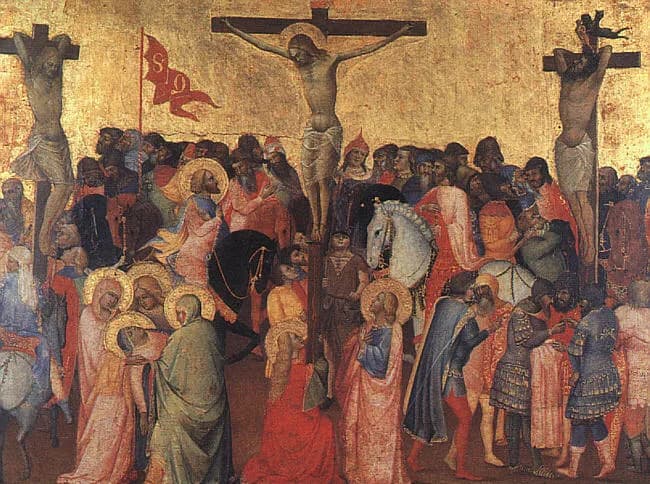
While no eclipse is specifically recorded as a historical event in Scripture, several prophetic passages contain apparent allusions to this phenomenon. Amos describes 'the sun going down at noon, the earth darkened in the clear day.' Joel and other prophets speak of the sun being darkened and giving no light. Some scholars have connected these passages to known eclipses near the time of their composition—such as the eclipse of February 9, 784 B.C. near Amos's time, or that of June 5, 716 B.C. near Micah's. The darkness at Christ's crucifixion, however, could not have been a natural solar eclipse since the Passover occurred at full moon, when solar eclipses are impossible.
☩The Lunar Eclipse of AD 33
While the three hours of darkness during the crucifixion was supernatural, astronomical calculations confirm a partial lunar eclipse occurred that same evening—Friday, April 3, AD 33. The moon rose over Jerusalem already in eclipse, likely appearing blood-red due to atmospheric scattering from its low position on the horizon. This may have been the celestial sign Peter quoted at Pentecost: 'the sun shall be turned into darkness, and the moon into blood' (Acts 2:20). Of Pilate's entire governorship (AD 26–36), only two Fridays fell on Nisan 14; the AD 33 date alone had a visible lunar eclipse in Jerusalem.
Related Verses14 mentions
See Also
References
- 1.John McClintock and James Strong, "Eclipse," in Cyclopedia of Biblical, Theological and Ecclesiastical Literature, vol. III (Harper & Brothers, 1867–1887).
- 2.Colin J. Humphreys and W. Graeme Waddington, "Dating the Crucifixion" (Nature, 306(5945), 743–746., 1983).