Millstone
Summary
A circular stone used for grinding grain, consisting of an upper rotating stone upon a stationary lower stone, essential to daily life in the ancient world.
☩Construction and Use
The ancient mill consisted of two circular stones—the upper and smaller rotated upon the lower. The hard and monotonous labor of grinding was imposed on women, particularly female slaves in wealthier households (Exodus 11:5; Matthew 24:41). If the upper stone was small, one person turned it; larger stones required two to four workers. The heavy toil was often lightened with song.
☩Legal Protection
Mosaic law prohibited taking a millstone as a pledge: 'No man shall take the nether or the upper millstone to pledge: for he taketh a man's life to pledge' (Deuteronomy 24:6). This protection recognized that grinding grain was essential for daily survival.
☩Symbol of Judgment
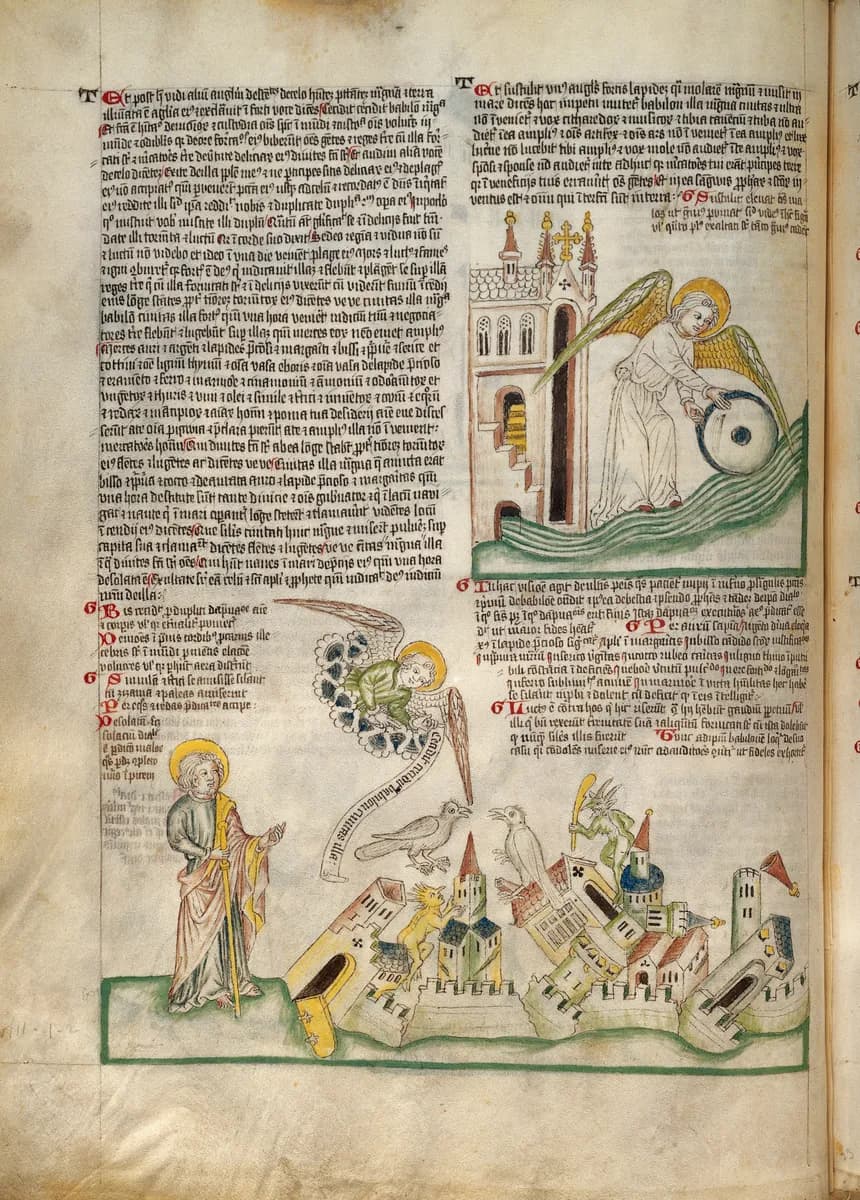
Jesus declared that whoever causes a little one to stumble would be better off with a great millstone hung around their neck and drowned in the sea (Matthew 18:6; Mark 9:42; Luke 17:2). In Revelation, a mighty angel casts a great millstone into the sea as an image of Babylon's final destruction (Revelation 18:21-22). The cessation of the mill's sound represents the complete desolation of a once-thriving city.