
Dress(hat, raiment clothing)
Summary
The clothing worn in biblical times, made primarily of wool, linen, or leather, consisting of inner and outer garments, girdles, and head coverings, with significant symbolic and religious meaning.
☩Materials
The earliest garment was Adam's apron of fig leaves, replaced by God with coats of skin—likely from animals slain in sacrifice. The Hebrews learned linen manufacture during their Egyptian sojourn, while wool from their flocks was the most common material. Camels' hair provided coarse cloth for the poor, as worn by John the Baptist. The law forbade mixing wool and linen in the same garment, symbolizing purity and simplicity.
☩Principal Garments
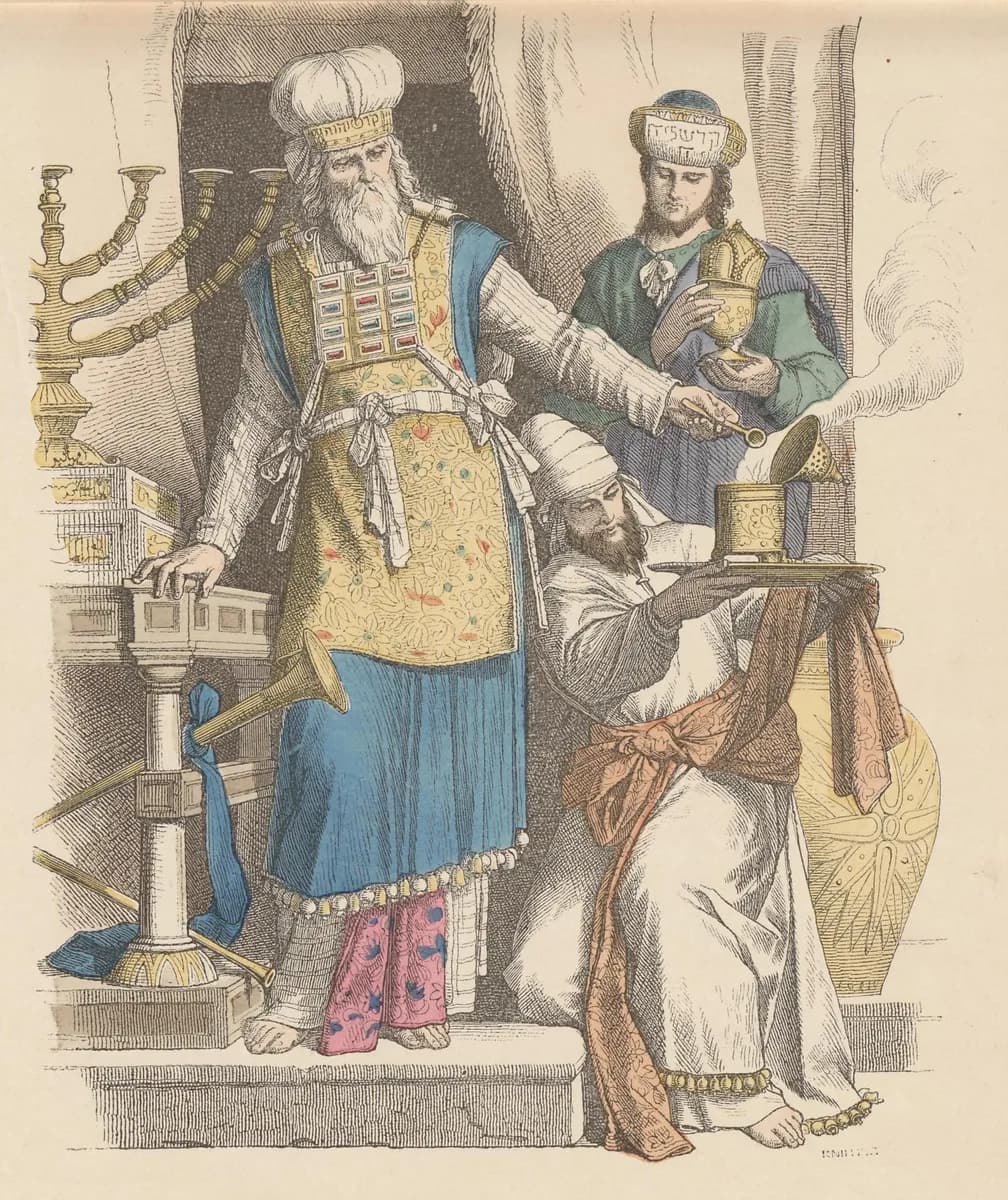
The three main garments were the inner tunic (chiton), the outer cloak (himation), and the girdle. The inner garment was a shirt-like vest reaching to the knees or ankles. Jesus' seamless tunic was of exceptional quality. The outer garment was a large square cloth worn like a shawl, which the poor used as bedding at night—hence the law against keeping a poor man's cloak overnight as pledge. The girdle secured these garments and served as a pocket.
☩Distinctive Rules
Men and women were forbidden to wear clothing distinctive of the opposite sex. Women's garments included veils and special outer wraps. White was the prevailing color, symbolizing purity, though the wealthy wore dyed garments of purple, scarlet, and other colors. Joseph's 'coat of many colors' (or long-sleeved robe) marked him as heir to the birthright. Fringes with blue threads on garment borders reminded Israelites of God's commandments.
☩Symbolic Significance
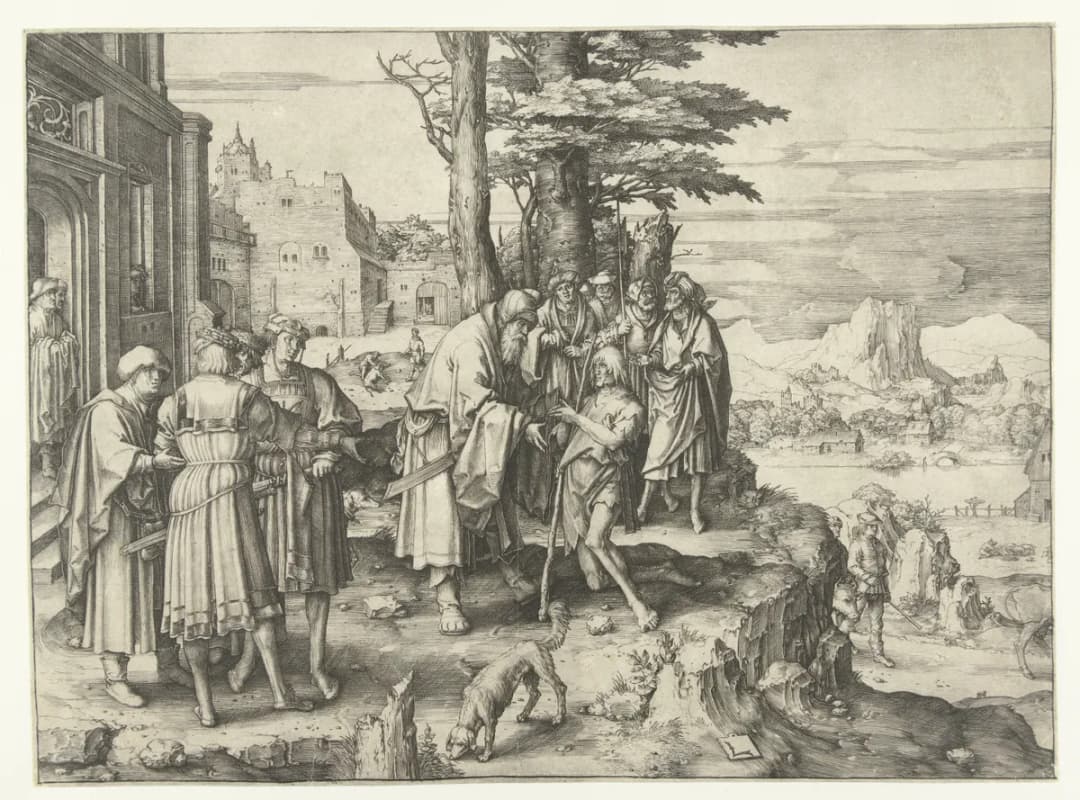
Clothing carried deep symbolic meaning: rending garments expressed grief, presenting robes signified honor or installation to office, and changing clothes marked transition or celebration. The 'best robe' given to the prodigal son indicated restoration to family status. Scripture speaks of righteousness as a garment, contrasting filthy rags of self-righteousness with the spotless robes God provides.
Related Verses146 mentions
References
- 1.John McClintock and James Strong, "Dress," in Cyclopedia of Biblical, Theological and Ecclesiastical Literature, vol. II (Harper & Brothers, 1867–1887).
- 2.James Orr (ed.), "Dress," in International Standard Bible Encyclopedia, vol. II (Howard-Severance Company, 1915).
- 3.Andrew Robert Fausset, "Dress," in The Englishman's Critical and Expository Bible Cyclopædia (Hodder & Stoughton, 1878).