
Wages
“Sakar, to hire; Greek misthos means pay for service, and opsonion means rations or soldier's pay”
Summary
Wages in Scripture refer to payment for labor, with biblical law requiring prompt payment and condemning the withholding of wages from workers.
☩Early Biblical Examples
The earliest mention of wages is Jacob's recompense from Laban, paid not in money but in kind—first by service for his wives, then by a share of the flocks. This payment in kind was natural among pastoral peoples. In Egypt, money payments were already in use when Moses' mother was hired to nurse him. Among the Jews, wages are mentioned for both soldiers and laborers. The Mosaic law was very strict about daily payment of wages: 'The wages of a hired servant shall not abide with you all night until morning.'
☩Rates and Payment
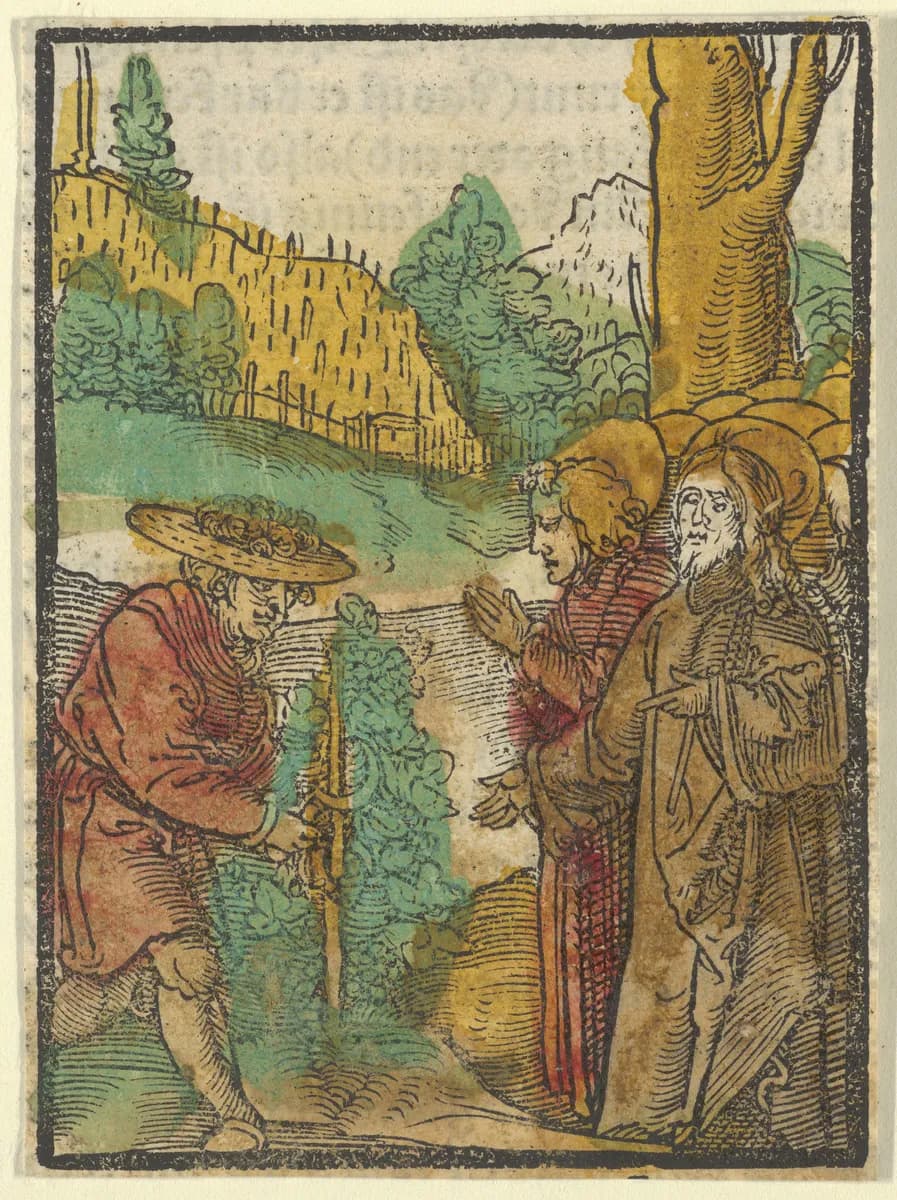
The only specific rate of wages mentioned in Scripture is in Jesus' parable of the vineyard laborers, where the daily wage is one denarius—approximately equivalent to a Roman soldier's pay and a fair rate for the time. Workers were often supplied with provisions in addition to their wages. The prophets strongly condemned those who withheld wages or used laborers without payment. Jeremiah pronounced woe on him who uses his neighbor's service without wages. James warns that the wages kept back by fraud cry out against wealthy oppressors.
☩Spiritual Application
Paul uses the language of wages to contrast the consequence of sin with God's gift of salvation: 'The wages of sin is death, but the gift of God is eternal life.' Jesus taught that the laborer is worthy of his hire, applying this to those who minister the gospel. John the Baptist told soldiers to be content with their wages and not supplement them through extortion. The contrast between wages earned and grace freely given is central to understanding salvation.
Related Verses25 mentions
References
- 1.John McClintock and James Strong, "Wages," in Cyclopedia of Biblical, Theological and Ecclesiastical Literature, vol. X (Harper & Brothers, 1867–1887).
- 2.James Orr (ed.), "Wages," in International Standard Bible Encyclopedia, vol. V (Howard-Severance Company, 1915).
- 3.F. N. Peloubet & M. A. Peloubet (ed.), "Wages," in Smith's Bible Dictionary (Porter & Coates, 1884).
- 4.James Hastings (ed.), "Wages," in Dictionary of Christ and the Gospels, vol. II (T. & T. Clark, 1906–1908).