
Zion
“Uncertain; possibly sunny, fortress, or citadel”
Summary
Originally the name of the Jebusite fortress captured by David, the term expanded to designate the Temple mount, then Jerusalem itself, and ultimately became a symbol for the people of God and the heavenly city.
☩The Original Zion
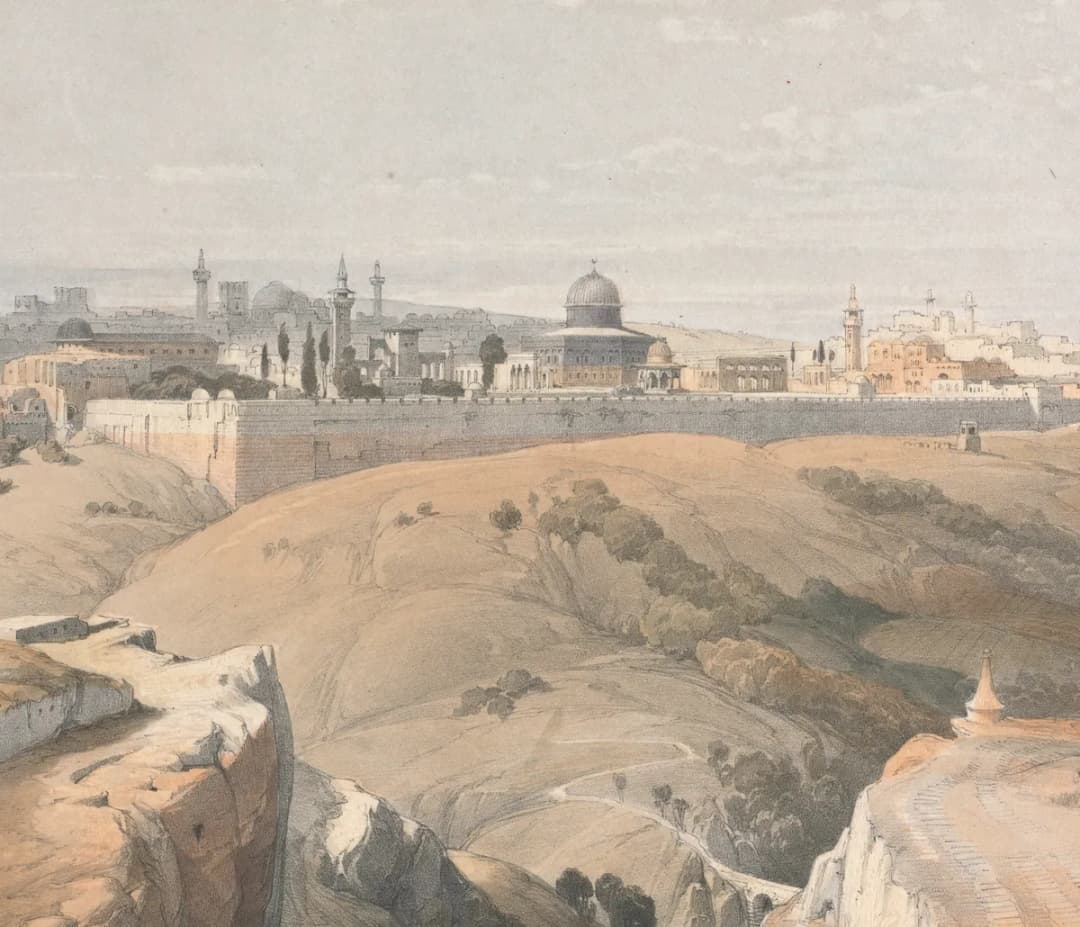
Zion was originally the name of the Jebusite citadel that David captured to make his capital city. This fortress stood on a rocky ridge that was naturally defended by steep valleys on three sides. The site's proximity to the Gihon spring made it strategically vital, and the Jebusites considered it so impregnable that they taunted David, saying even the lame and blind could defend it. After David captured it through Joab's daring exploit via the water shaft, it became known as 'the city of David.'
☩Zion as Temple Mount
When David pitched a tent for the ark of the covenant on the hill, Zion became associated with God's dwelling place and was called 'the holy hill.' In the prophetic writings, Zion typically refers to the Temple mount. Isaiah speaks of Yahweh dwelling in Mount Zion, and Joel calls people to blow the trumpet in Zion, clearly referencing the Temple location. The name came to embody all that the Temple represented—God's presence, Israel's worship, and divine protection.
☩Zion as Jerusalem and Israel
The prophets frequently used Zion as synonymous with Jerusalem itself. 'Daughter of Zion' became a tender designation for the inhabitants of the city or even the whole nation in its covenant relationship with God. In exile, the captives wept when they remembered Zion, using the name to encompass all their longing for their homeland, their faith, and their identity as God's people.
☩Spiritual and Heavenly Zion
The New Testament transforms Zion into a symbol of spiritual realities. The writer of Hebrews contrasts Mount Sinai, representing the old covenant of fear, with Mount Zion—the city of the living God, the heavenly Jerusalem. Revelation depicts the Lamb standing on Mount Zion with the 144,000 redeemed. Thus Zion became the enduring name for the ultimate dwelling of God with His people.
Related Verses167 mentions

References
- 1.John McClintock and James Strong, "Zion," in Cyclopedia of Biblical, Theological and Ecclesiastical Literature, vol. X (Harper & Brothers, 1867–1887).
- 2.James Orr (ed.), "Zion," in International Standard Bible Encyclopedia, vol. V (Howard-Severance Company, 1915).
- 3.James Hastings (ed.), "Zion," in Dictionary of the Apostolic Church, vol. II (T. & T. Clark, 1915–1918).