
Paradise
“An enclosed park or garden, from Persian pardes”
Summary
Paradise is a term of Persian origin meaning a royal park or enclosed garden, used in Scripture to designate the Garden of Eden, the intermediate abode of the righteous after death, and the heavenly dwelling place of the blessed.
☩Etymology and Origin
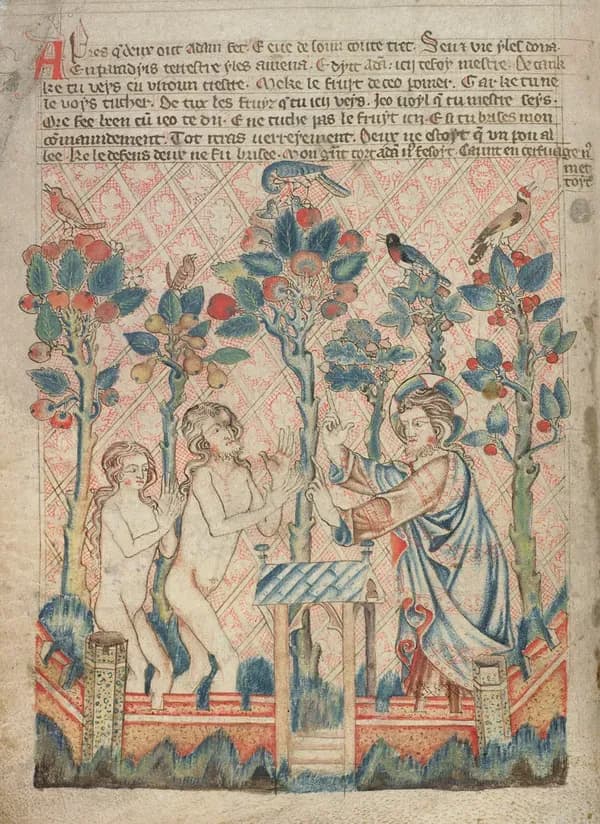
The word paradise derives from the Persian pardes, passing into Greek as paradeisos and into Hebrew as pardes (פַּרְדֵּס). It originally denoted a royal park or enclosed pleasure garden, particularly those surrounding Persian palaces. Xenophon (c. 400 BC) describes such paradises as wide, open parks with stately forest trees, clear streams, and herds of animals. The Septuagint translators adopted this word to render the Hebrew gan (garden) in Genesis 2-3, transforming the Garden of Eden into "the paradise of pleasure." The Armenian etymology suggests a compound meaning "necessary grains" or "edible herbs," applied to gardens adjoining dwellings.
☩Old Testament Usage
The Hebrew pardes occurs in only three places in the Old Testament: Nehemiah 2:8 ("the keeper of the king's forest"), Ecclesiastes 2:5 ("orchards"), and Song of Solomon 4:13 ("an orchard of pomegranates"). However, the Septuagint uses paradeisos more broadly, applying it wherever there is allusion to Eden. The valley of the Jordan becomes "the paradise of God" (Genesis 13:10), and Ezekiel 31 presents elaborate imagery of paradise in describing Assyria's glory. The prophetic vision of trees watered by rivers in this chapter may reflect what Ezekiel himself witnessed of Persian parks during his exile.
☩Development in Jewish Literature
In Jewish apocalyptic and pseudepigraphical literature, paradise became spiritualized as the abode of the righteous after death, contrasting with Gehenna, the place of punishment. Rabbinical theology held that paradise was one of six or seven things created before the world. There was debate whether earthly and heavenly paradise were identical or distinct. Some traditions placed paradise in the third heaven where God's throne resides. The apocalyptic works 4 Ezra and 2 Enoch describe paradise with sensuous delights reserved for the eternal dwelling of the righteous. Alexandrian Jews like Philo allegorized paradise as representing virtue, with its trees symbolizing spiritual thoughts.
☩New Testament References
Paradise appears only three times in the New Testament, each with distinct significance. In Luke 23:43, Christ promises the penitent thief, "Today shalt thou be with me in Paradise," using language the dying man could understand—a place of rest and relief from suffering. In 2 Corinthians 12:4, Paul speaks of being "caught up into Paradise" where he heard unspeakable words, connecting it with "the third heaven" of verse 2. In Revelation 2:7, the overcomer is promised to eat from "the tree of life, which is in the Paradise of God," linking Eden's imagery with the heavenly reward described in Revelation 22. The New Testament's restraint contrasts markedly with the sensuous descriptions in rabbinic and apocryphal writings.
☩Theological Significance
The reticence of Scripture regarding paradise's precise nature stands in striking contrast to both Jewish speculation and later Mohammedan literature with its carnal descriptions. Christ's single use of the word likely reflects that it had become associated with sensuous material happiness; He preferred terms like "the kingdom of God" in His regular teaching. The biblical progression moves from Eden as a solitary garden to the heavenly city where saints commune together (Hebrews 12:22; Revelation 21-22). Paradise thus represents not merely restoration of what was lost in Eden, but transformation into something greater—perfect fellowship with God and His people.
References
- 1.John McClintock and James Strong, "Paradise," in Cyclopedia of Biblical, Theological and Ecclesiastical Literature, vol. VII (Harper & Brothers, 1867–1887).
- 2.James Orr (ed.), "Paradise," in International Standard Bible Encyclopedia, vol. IV (Howard-Severance Company, 1915).
- 3.James Hastings (ed.), "Paradise," in Dictionary of the Apostolic Church, vol. II (T. & T. Clark, 1915–1918).
- 4.Philip Schaff and Johann Herzog (ed.), "PARADISE," in The New Schaff-Herzog Encyclopedia of Religious Knowledge, vol. VIII (Funk and Wagnalls, 1908–1914).
- 5.James Hastings (ed.), "Paradise," in Dictionary of Christ and the Gospels, vol. II (T. & T. Clark, 1906–1908).
- 6.Andrew Robert Fausset, "Paradise," in The Englishman's Critical and Expository Bible Cyclopædia (Hodder & Stoughton, 1878).