
Calvary
“Skull”
Summary
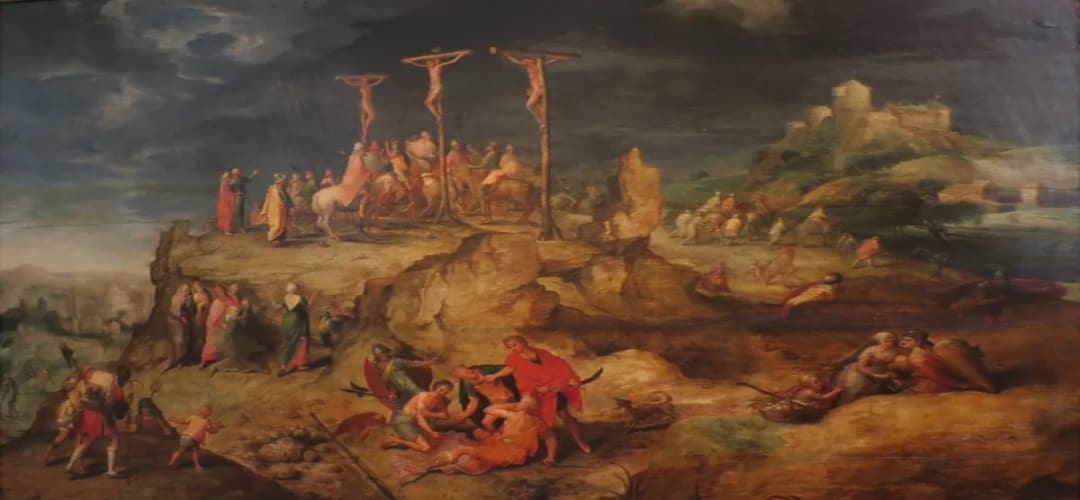
The place outside Jerusalem where Jesus was crucified, called in Hebrew 'Golgotha,' meaning 'the place of a skull.'
☩The Name
The word 'Calvary' appears only in Luke 23:33 in English translations, derived from the Latin 'calvaria' meaning 'skull.' This is the Latin rendering of the Greek 'kranion,' which itself translates the Hebrew 'Golgotha.' All four Gospels record the name, with Matthew and Mark giving the Aramaic form while Luke uses the Latin equivalent. The name likely derives from the skull-like shape of the location rather than being a place of execution where skulls accumulated.
☩Location
The crucifixion took place outside the city, yet near it, fulfilling the writer of Hebrews' statement that 'Jesus suffered without the gate.' In the place where He was crucified there was a garden, and in the garden a new tomb where His body was laid. The site was apparently a place of some elevation where passersby could observe, and near a main road. Scripture does not actually call it a 'hill' or 'mount,' though tradition has done so.
☩Traditional and Proposed Sites
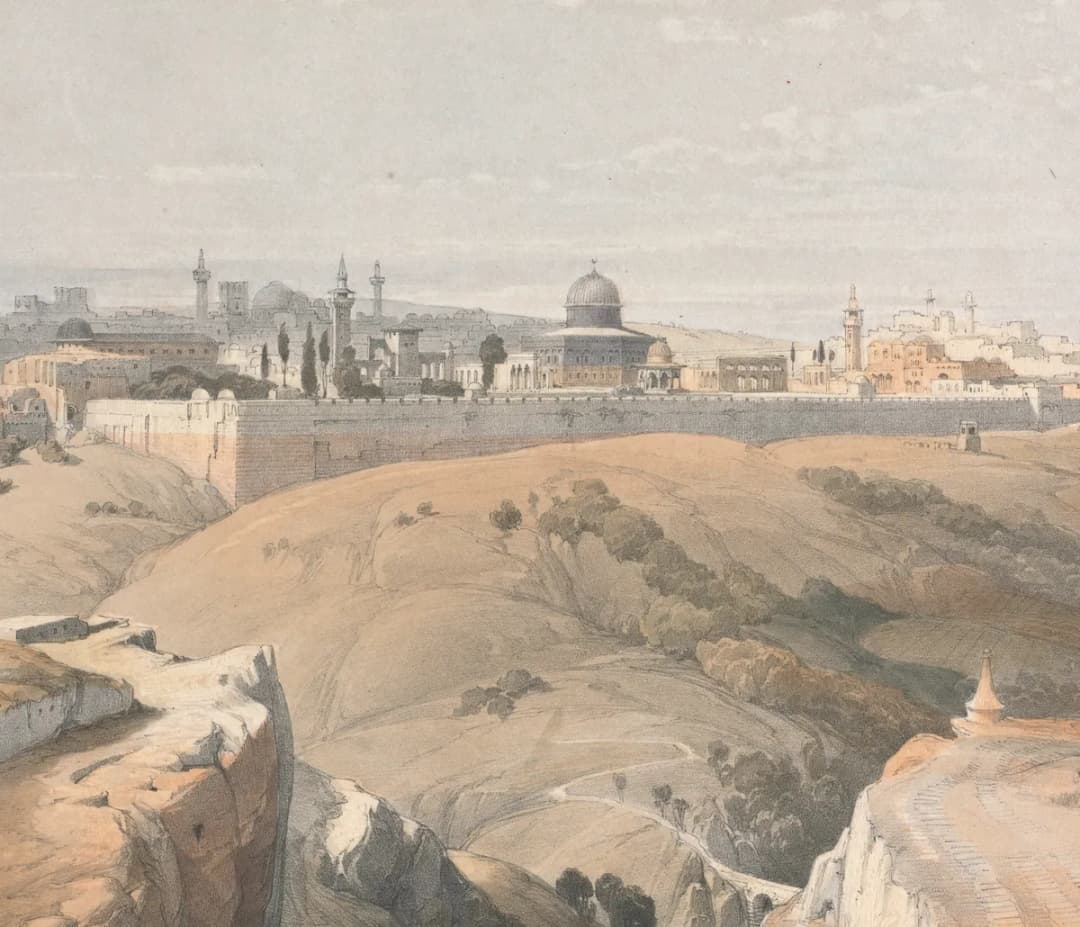
The traditional site within the Church of the Holy Sepulchre is now well within the old city, though proponents argue the walls were differently placed in Jesus' day. A more probable location, pointed out on the north of the city near the Grotto of Jeremiah, has natural skull-like contours visible from a distance. This site would have been outside the city yet near it, by a garden, near a road, and visible to passersby—matching all scriptural requirements.
☩Spiritual Significance
In death's stronghold, the Lord of life gave death its deathblow through death. Of all spots, Calvary became the most sacred in the primitive church. Doubtless God has so ordered that the actual place remain unknown, lest it be made an object of idolatry or become a shrine of contention—as has indeed occurred over the so-called Holy Sepulchre. What matters is not the geographical location but the spiritual reality of what transpired there.
References
- 1.John McClintock and James Strong, "Calvary," in Cyclopedia of Biblical, Theological and Ecclesiastical Literature, vol. II (Harper & Brothers, 1867–1887).
- 2.George Morrish, "Calvary," in Morrish's Concise Bible Dictionary (George Morrish, 1898).
- 3.Andrew Robert Fausset, "Calvary," in The Englishman's Critical and Expository Bible Cyclopædia (Hodder & Stoughton, 1878).