
Ai(aiath, aija)
“Heap of ruins”
Summary
An ancient Canaanite royal city east of Bethel, famous for being the second city conquered by Joshua after the initial defeat caused by Achan's sin.
☩Patriarchal Period
The site of Ai is mentioned as early as Abraham's time, when the patriarch pitched his tent between Ai and Bethel and built an altar there. The name itself means "ruin" or "heap of ruins," possibly reflecting an earlier destruction. Abraham returned to this same location after his sojourn in Egypt.
☩Conquest and Destruction
Ai was the second Canaanite city attacked by Israel after crossing the Jordan. The initial assault resulted in an unexpected defeat because Achan had taken devoted items from Jericho's spoil. After Achan's sin was exposed and punished, Joshua led a successful second attack using an ambush strategy. The city was captured and burned, becoming a "heap of ruins," with all twelve thousand inhabitants put to death and the king hanged. Only the cattle were kept as spoil. The narrative emphasizes that Ai had not been rebuilt when Joshua was written.
☩Later History
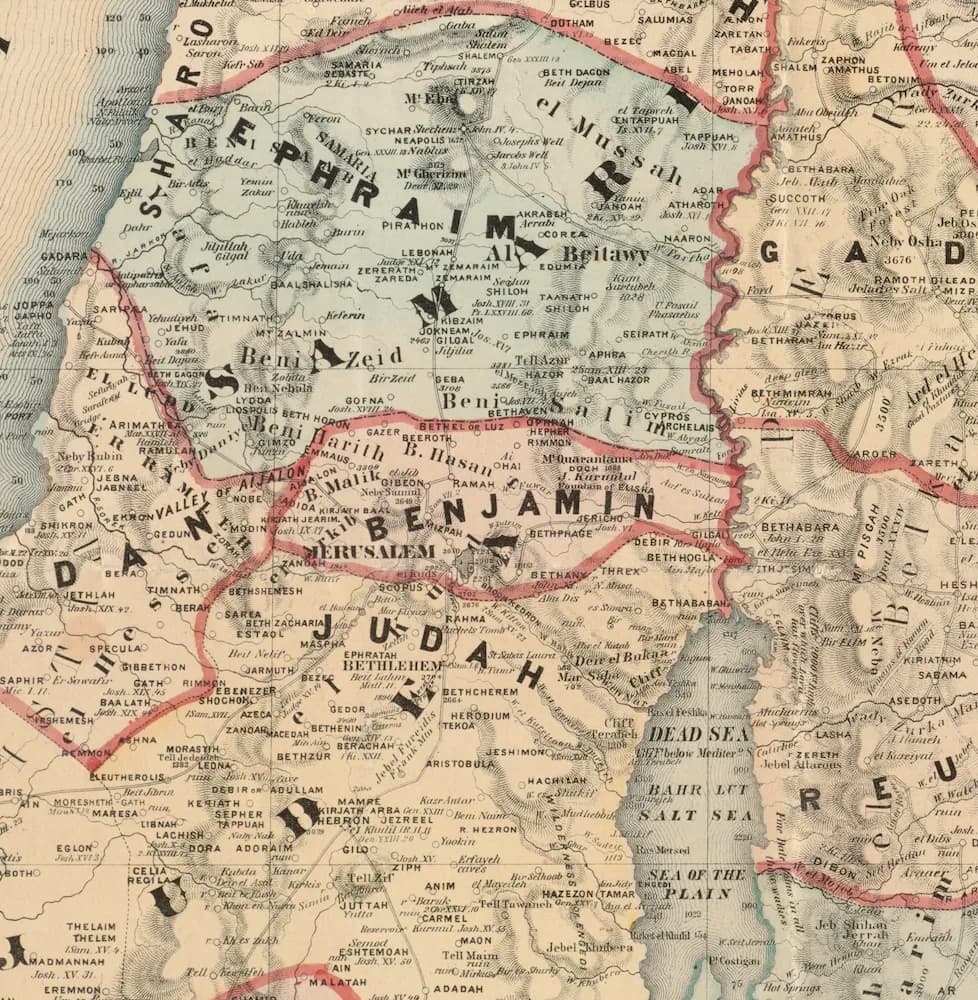
Despite the complete destruction, Ai was eventually rebuilt. Isaiah mentions it (in the form "Aiath") in his vivid description of an Assyrian army's approach to Jerusalem. After the Babylonian exile, men of Bethel and Ai returned with Zerubbabel, and the town was later resettled by Benjamites. The site has been tentatively identified with et-Tell, about a mile from Bethel, though this identification remains debated among archaeologists.
Related Verses6 mentions
See Also
References
- 1.John McClintock and James Strong, "Ai," in Cyclopedia of Biblical, Theological and Ecclesiastical Literature, vol. I (Harper & Brothers, 1867–1887).
- 2.James Orr (ed.), "Ai," in International Standard Bible Encyclopedia, vol. I (Howard-Severance Company, 1915).
- 3.F. N. Peloubet & M. A. Peloubet (ed.), "Ai," in Smith's Bible Dictionary (Porter & Coates, 1884).
- 4.Andrew Robert Fausset, "Ai," in The Englishman's Critical and Expository Bible Cyclopædia (Hodder & Stoughton, 1878).