
Castle
Summary
A fortified structure or military stronghold, often translated from various Hebrew and Greek terms denoting towers, citadels, or encampments.
☩Hebrew Terms
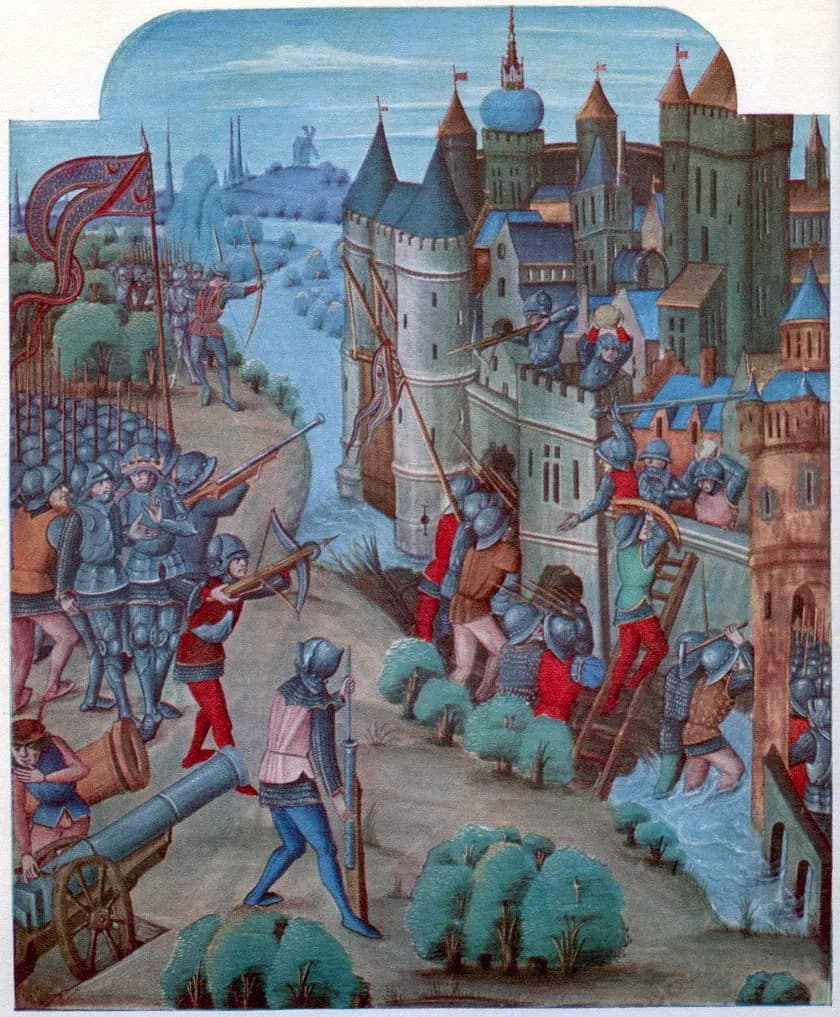
The English word 'castle' translates several Hebrew terms in the Old Testament. These include biranith, a citadel; tirah, an enclosure or walled settlement often referring to nomadic hamlets with palisades; metsad or metsudah, a fort or stronghold; and migdal, a tower. The 'castles' of the sons of Ishmael mentioned in Genesis were watch-towers used by nomadic shepherds for security against raiders. Among the Hebrews, castles were military fortresses frequently built on eminences for strategic advantage.
☩The Castle in Acts
In the New Testament, 'castle' translates the Greek parembolē, referring to the military barracks at the fortress of Antonia in Jerusalem. This fortress, originally built by the Hasmonean high priest John Hyrcanus and later magnificently rebuilt by Herod the Great, was named in honor of Mark Antony. Situated at the corner of the Temple's north and west cloisters, it commanded a view of the entire sacred precinct. Roman soldiers stationed there kept watch over the Temple courts during Jewish festivals. Two staircases connected the fortress to the Temple courts, enabling rapid response to any disturbance. It was here that Paul was taken after his arrest in the Temple, addressed the crowd from the stairs, and was later protected from a conspiracy against his life.
Related Verses15 mentions
References
- 1.John McClintock and James Strong, "Castle," in Cyclopedia of Biblical, Theological and Ecclesiastical Literature, vol. II (Harper & Brothers, 1867–1887).
- 2.James Hastings (ed.), "Castle," in Dictionary of the Apostolic Church, vol. I (T. & T. Clark, 1915–1918).
- 3.James Orr (ed.), "Castle," in International Standard Bible Encyclopedia, vol. I (Howard-Severance Company, 1915).