
Epicureans
“Followers of Epicurus”
Summary
Followers of the philosopher Epicurus who taught that pleasurable emotions and tranquility of mind were the aim of human life; Paul encountered them in Athens.
☩Philosophy of Epicurus
The Epicureans derived their name from Epicurus (341-270 BC), an Athenian philosopher whose 'Garden' rivaled the Stoic 'Porch' and Plato's 'Academy.' Epicurus taught that true pleasure—particularly quiet ease of mind (ataraxy)—should be the aim of human life, with experience rather than abstract truth as the test of philosophy. His system, unlike most philosophies, maintained its original form with little development throughout its history. By Paul's time, Epicureanism had degenerated in popular understanding into mere materialism and sensual selfishness.
☩Encounter with Paul
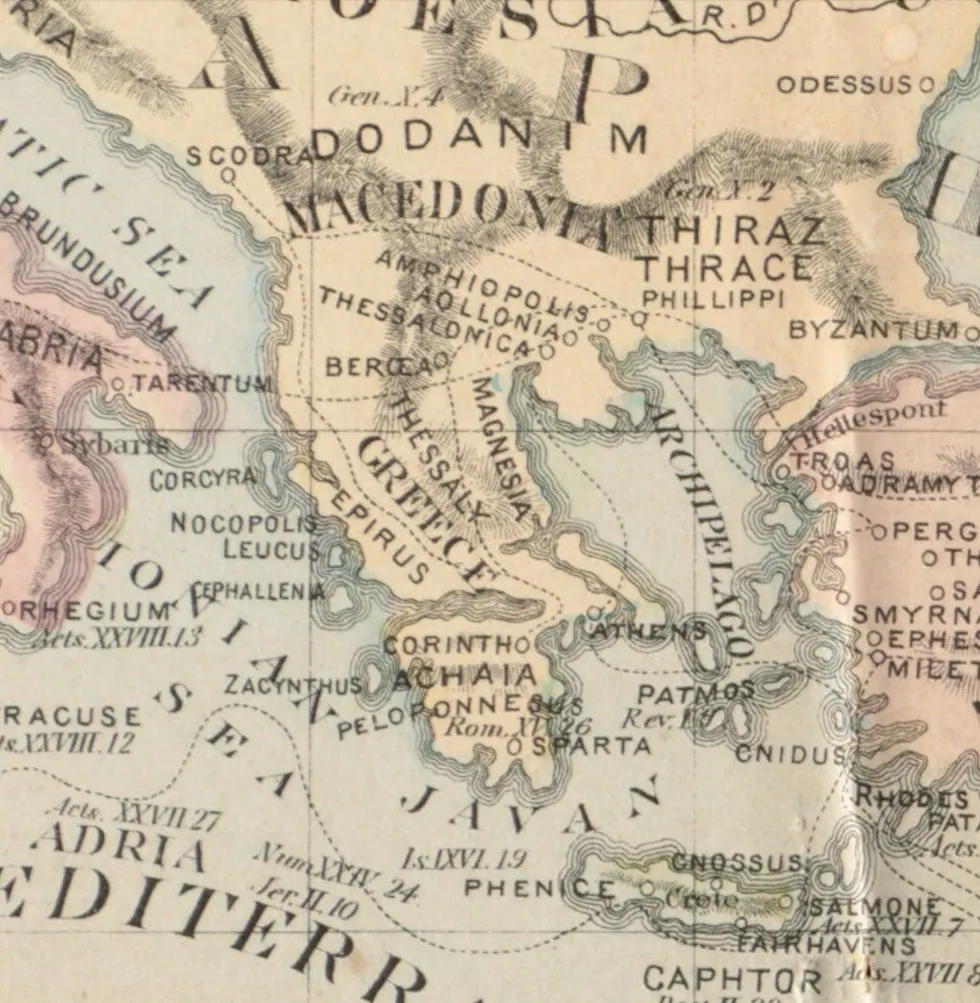
When Paul visited Athens during his second missionary journey, he encountered both Epicurean and Stoic philosophers in the marketplace. These were the two most influential philosophies of the day. Some called him a 'babbler' while others took interest in his teaching about Jesus and the resurrection. Paul's address on Mars Hill directly countered Epicurean materialism by proclaiming God as Creator and sustainer of all things, divine providence over history, the spiritual nature of humanity made 'to seek God,' and the coming judgment through the risen Christ.
See Also
References
- 1.F. N. Peloubet & M. A. Peloubet (ed.), "Epicureans," in Smith's Bible Dictionary (Porter & Coates, 1884).
- 2.George Morrish, "Epicureans," in Morrish's Concise Bible Dictionary (George Morrish, 1898).
- 3.Unknown source, "Epicureans."
- 4.Andrew Robert Fausset, "Epicureans," in The Englishman's Critical and Expository Bible Cyclopædia (Hodder & Stoughton, 1878).