
Mowing
Summary
Mowing in biblical times referred primarily to cutting grass or grain with a sickle, as the climate of Palestine dried vegetation too quickly for hay-making in the modern sense.
☩Agricultural Practice
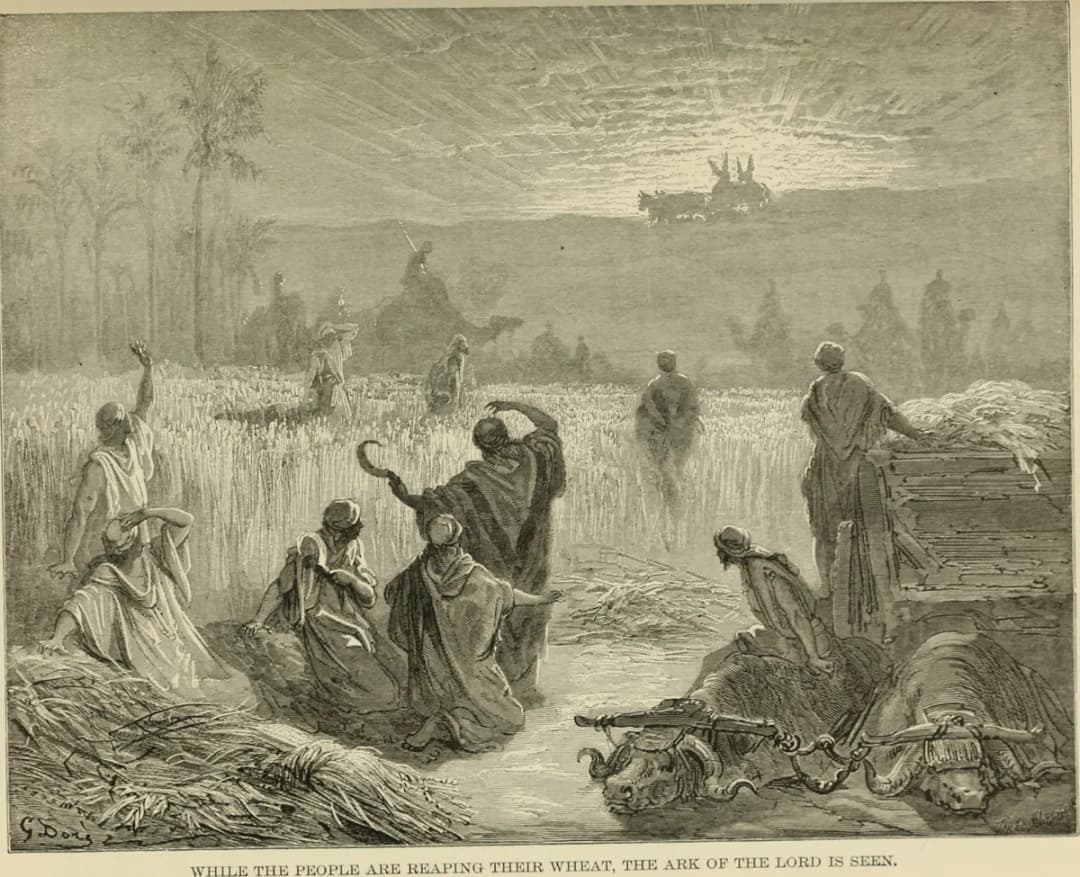
Due to the intense heat of Palestine's climate, grass dried up before reaching a height suitable for the scythe, making hay-making as understood in cooler climates impractical. Instead, corn and forage were cut with sickles. The Psalmist uses the image of rain upon mown grass to describe the blessing of a good king's rule, referring to how rainfall starts new growth after cutting. The 'mower' in Scripture is essentially a reaper, using the same term as for harvesting grain.
☩The King's Mowings
The phrase 'king's mowings' in Amos's vision of the locusts may refer to a royal right of early pasturage, where the first growth of spring herbage was taken as tribute to feed the king's cavalry and horses. This interpretation finds support in the account of Ahab's search for grass to keep his horses and mules alive during the drought. After the king's mowings, the common people could then harvest their own greenstuffs from the subsequent growth.
See Also
References
- 1.John McClintock and James Strong, "Mowing," in Cyclopedia of Biblical, Theological and Ecclesiastical Literature, vol. VI (Harper & Brothers, 1867–1887).
- 2.James Orr (ed.), "Mowing; Mown Grass," in International Standard Bible Encyclopedia, vol. III (Howard-Severance Company, 1915).