
Appeal
Summary
The legal process by which a party dissatisfied with a lower court's judgment seeks review by a higher authority, most famously exercised by Paul when he appealed to Caesar.
☩Appeals in Jewish Law
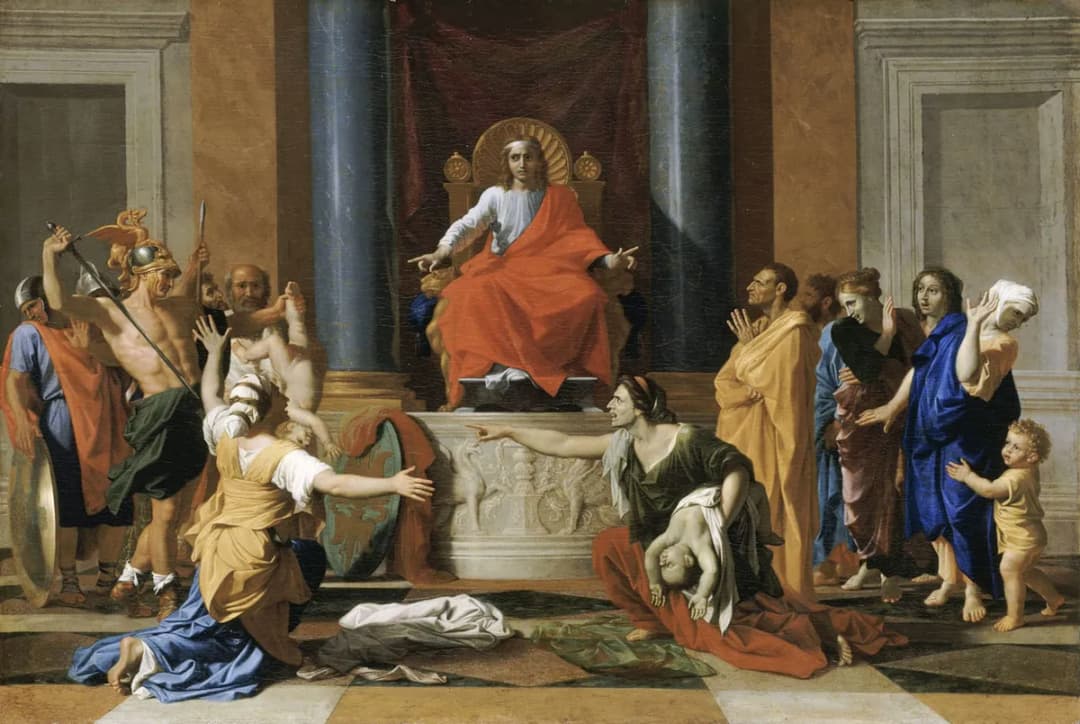
The Mosaic law recognized a principle of appeal through the establishment of a central court. Moses himself originally served as the court of final appeal, hearing the hard cases that lower judges could not resolve. Deuteronomy directed that matters too difficult for local courts should be brought to the place where God put His name, to be decided by the Levitical priests and the judge in office at that time. Under the monarchy, the king became the final arbiter of appeals, and Jehoshaphat delegated his judicial authority to a permanently established court for this purpose. After the institution of the Sanhedrin, final appeal lay with that body.
☩Roman Law and Paul's Appeal
Under Roman law, a citizen originally had the right of appeal to the tribune of the people; later, with the establishment of the empire, appeals lay to the emperor, who succeeded to the power of the people. A Roman citizen could appeal in criminal cases from the provincial magistrate to the emperor. Paul exercised this right when, perceiving the deadly enmity of the Jews and the corruption of the governors, he declared 'I appeal unto Caesar.' This was not an appeal from a judgment already given, but an election to be tried before the supreme tribunal rather than by a local court whose impartiality he doubted.
☩Consequences of Paul's Appeal
Paul's appeal to Caesar transferred jurisdiction of his case from the provincial court to the imperial tribunal in Rome. Festus, after conferring with his council, declared 'Hast thou appealed unto Caesar? unto Caesar shalt thou go.' King Agrippa later observed that Paul might have been set free had he not appealed to Caesar. The appeal thus ensured Paul's journey to Rome, fulfilling his long-held desire to preach the gospel in the imperial capital, though it also meant continued imprisonment and eventual martyrdom.
See Also
References
- 1.George Morrish, "Appeal," in Morrish's Concise Bible Dictionary (George Morrish, 1898).
- 2.John McClintock and James Strong, "Appeal," in Cyclopedia of Biblical, Theological and Ecclesiastical Literature, vol. I (Harper & Brothers, 1867–1887).
- 3.F. N. Peloubet & M. A. Peloubet (ed.), "Appeal," in Smith's Bible Dictionary (Porter & Coates, 1884).
- 4.Andrew Robert Fausset, "Appeal," in The Englishman's Critical and Expository Bible Cyclopædia (Hodder & Stoughton, 1878).