
Firepan
“From 'to take up coals of fire'”
Summary
A metallic vessel used in temple service for carrying live coals, either for burning incense (censer) or for trimming lamps (snuff-dish).
☩Description and Types
The firepan (Hebrew: machtah, from 'to take up coals') was a vessel used in temple worship. The same Hebrew word is translated 'firepan,' 'snuff-dish,' and 'censer' depending on context, but they were essentially the same type of utensil—a metallic cinder-basin. Brazen firepans were part of the furnishings of the altar of burnt offerings (Exodus 27:3, 38:3), while golden firepans belonged to the golden candlestick (Exodus 25:38, Numbers 4:9).
☩Uses in Worship
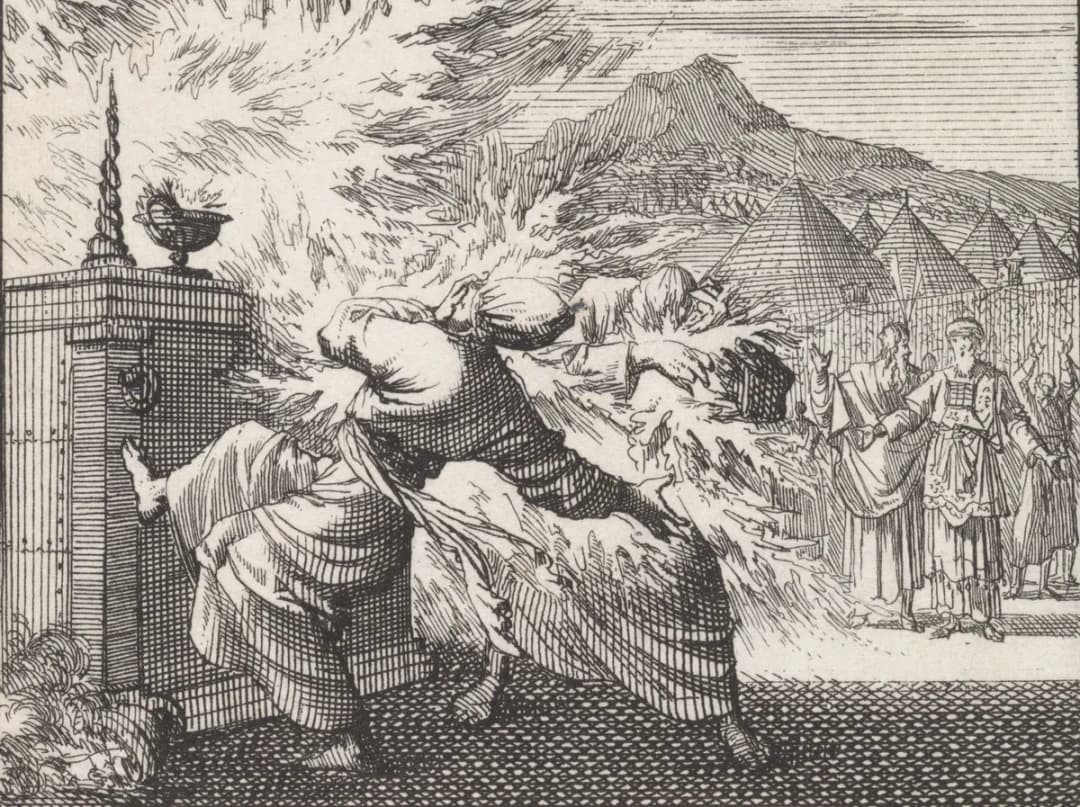
The firepan served at least two purposes. As a censer, it carried live coals from the altar for burning incense before the Lord (Leviticus 10:1, 16:12). Nadab and Abihu died when they offered 'strange fire' in their firepans, fire not taken from the altar as commanded. As a snuff-dish, golden firepans were used with the lampstand to carry the snuffers and receive the burnt ends of the wicks when trimming the lamps.
☩Form and Design
The firepan consisted of a pan or pot for the coals held by a straight or slightly curved long handle. This design is depicted in ancient Egyptian pictures of censers. The style of censer swung by chains, familiar in later centuries, came into use only around the 12th century AD. The simple pan-and-handle design allowed the priest to carry burning coals safely while approaching the altar or lampstand.
References
- 1.John McClintock and James Strong, "Firepan," in Cyclopedia of Biblical, Theological and Ecclesiastical Literature, vol. III (Harper & Brothers, 1867–1887).
- 2.James Orr (ed.), "Firepan," in International Standard Bible Encyclopedia, vol. II (Howard-Severance Company, 1915).
- 3.F. N. Peloubet & M. A. Peloubet (ed.), "Firepan," in Smith's Bible Dictionary (Porter & Coates, 1884).