
Leprosy
“A skin affliction, possibly from a root meaning 'to strike'”
Summary
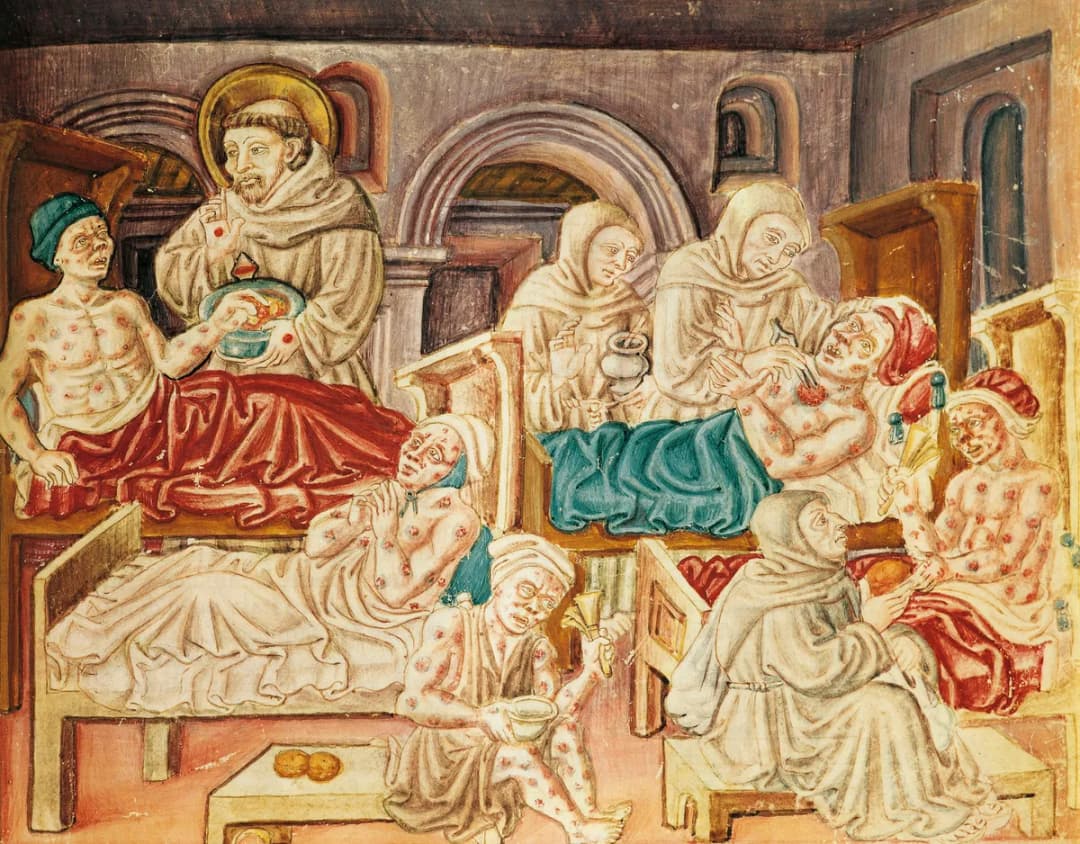
A skin disease requiring ritual isolation under Mosaic law, often used symbolically for sin; Jesus healed many lepers during His ministry.
☩Biblical Description
The Hebrew 'tsara'ath' (often translated 'leprosy') covered various skin conditions causing ritual uncleanness (Leviticus 13-14). The afflicted person was excluded from the community, required to wear torn clothes, let hair go unkempt, cover the upper lip, and cry 'Unclean, unclean' (Leviticus 13:45-46). The priest, not a physician, examined and pronounced judgment. Similar 'leprosy' could affect garments and houses (Leviticus 13:47-59; 14:33-53).
☩Notable Cases
Miriam was struck with leprosy for challenging Moses' authority (Numbers 12:10). Naaman the Syrian general was healed when he obeyed Elisha's command to dip seven times in Jordan (2 Kings 5). Gehazi, Elisha's servant, received Naaman's leprosy as judgment for greed (2 Kings 5:27). King Uzziah was struck with leprosy for presuming to burn incense in the Temple (2 Chronicles 26:19-21).
☩Jesus and Lepers
Jesus frequently healed lepers, demonstrating both divine power and compassion for outcasts. He touched the 'untouchable' leper who appealed to Him, saying 'I will; be thou clean' (Matthew 8:2-4). He cleansed ten lepers at once, though only one returned to give thanks (Luke 17:11-19). He sent the healed to the priests for verification, fulfilling the law's requirements (Leviticus 14). These healings displayed Jesus' authority over disease and defilement.
Related Verses58 mentions
References
- 1.John McClintock and James Strong, "Leprosy," in Cyclopedia of Biblical, Theological and Ecclesiastical Literature, vol. V (Harper & Brothers, 1867–1887).
- 2.James Orr (ed.), "Leprosy," in International Standard Bible Encyclopedia, vol. III (Howard-Severance Company, 1915).