Engine
“Invention, device (from root 'to think/devise')”
Summary
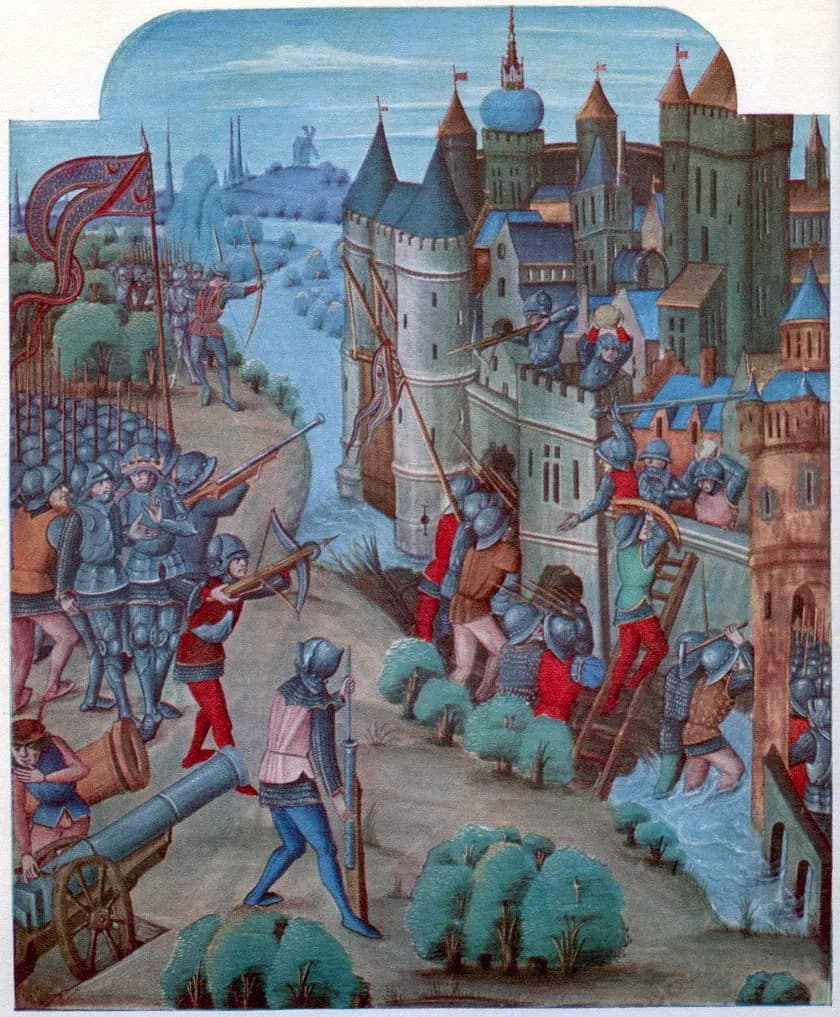
In biblical usage, 'engine' refers exclusively to military siege machinery—devices invented for attacking fortified cities or defending them. These included battering rams, catapults, and protective structures for besiegers.
☩Etymology and Usage
The Hebrew word chishshabon (חִשָּׁבוֹן) used in 2 Chronicles 26:15 means 'invention' or 'device' (from the root meaning 'to think' or 'devise'), corresponding to the English 'engine' from Latin ingenium ('ingenuity'). Both terms emphasize the creative thought behind these mechanical contrivances. The Greek mechanē appears in the Apocrypha for similar devices (1 Macc 5:30; 2 Macc 12:15). These were not engines in the modern sense but mechanical devices designed for military application.
☩Types of Military Engines
Uzziah's engineers constructed engines 'to be on the towers and upon the bulwarks, to shoot arrows and great stones' (2 Chron 26:15). These were defensive weapons mounted on Jerusalem's fortifications. Offensive siege engines included the battering ram (Hebrew kar), described in Ezekiel 4:2 and 21:22, used to breach city walls. Nebuchadnezzar's siege of Tyre employed engines to 'beat down thy towers' (Ezek 26:9). The testudo—a protective penthouse shelter for besiegers—appears in Egyptian monuments, showing such technology predated Greek accounts.