
Wells
“Beer, a dug well; also ayin for a spring, and bor for a cistern”
Summary
Wells were essential sources of water in the arid lands of Palestine, often serving as gathering places and the focus of disputes, hospitality, and significant biblical events.
☩Construction and Importance
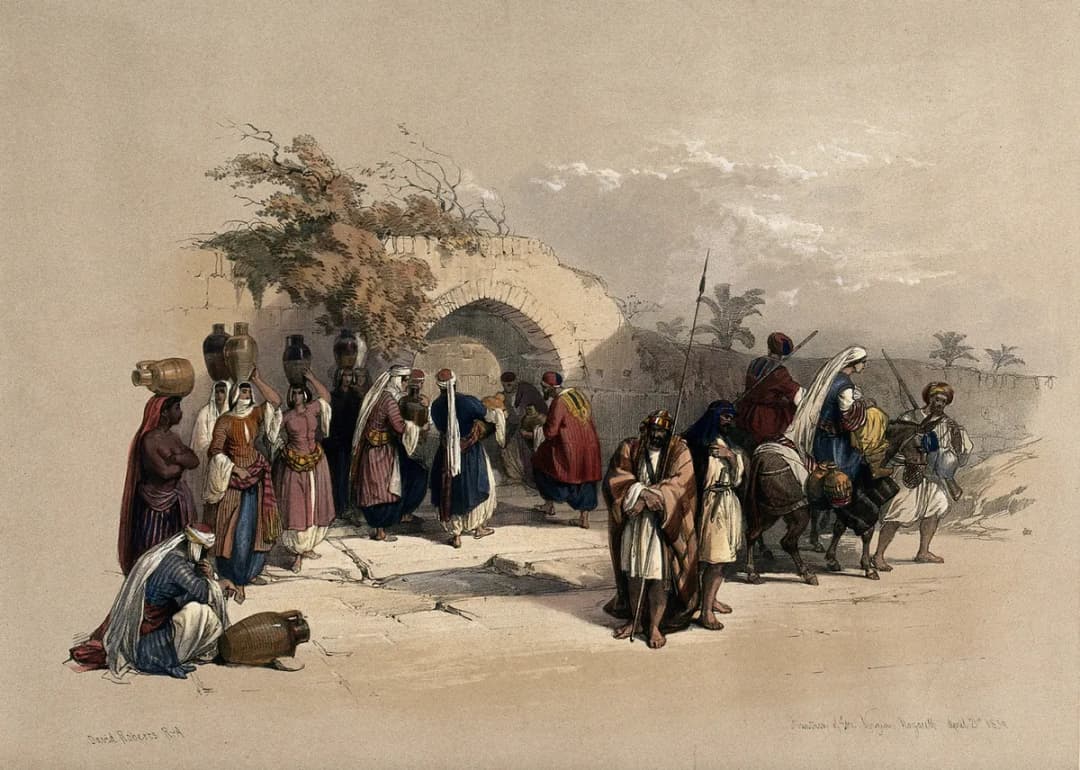
In regions where rainfall was limited and streams scarce, wells were vital for sustaining life. Wells were dug in locations where underground water could be reached, sometimes lined with stones, and often covered with a large stone to prevent contamination and evaporation. The digging of a well was a significant achievement, often named and remembered. Disputes over wells were common, as seen in Isaac's conflicts with the Philistines.
☩Biblical Events at Wells
Several important biblical narratives took place at wells. Abraham's servant found Rebekah at a well, and she demonstrated her character by watering his camels. Jacob met Rachel at a well and rolled away the stone for her. Moses defended the daughters of Reuel at a well in Midian. Most significantly, Jesus met the Samaritan woman at Jacob's well and revealed Himself as the source of living water that eternally satisfies.
☩Figurative Usage
Wells provided rich metaphorical imagery. A good wife is called 'a fountain' and 'well of living waters.' The mouth of the righteous is 'a well of life.' Salvation is compared to drawing water from wells of salvation with joy. Apostates are described as 'wells without water,' promising refreshment but delivering nothing.
Related Verses17 mentions

References
- 1.John McClintock and James Strong, "Well," in Cyclopedia of Biblical, Theological and Ecclesiastical Literature, vol. X (Harper & Brothers, 1867–1887).
- 2.James Hastings (ed.), "Well," in Dictionary of Christ and the Gospels, vol. II (T. & T. Clark, 1906–1908).