
Cush
“Black (derivation uncertain)”
Summary
The eldest son of Ham and ancestor of various African and Arabian peoples; also the biblical name for Ethiopia and surrounding regions.
☩The Person
Cush was the eldest son of Ham and grandson of Noah. His sons were Seba, Havilah, Sabtah, Raamah, and Sabtechah; his grandsons through Raamah were Sheba and Dedan. He was also the father of Nimrod, the mighty hunter who founded Babel (Babylon) and other great cities of Shinar, and later established Nineveh in Assyria. The descendants of Cush spread along tracts extending from the upper Nile to the Euphrates and Tigris.
☩The Land
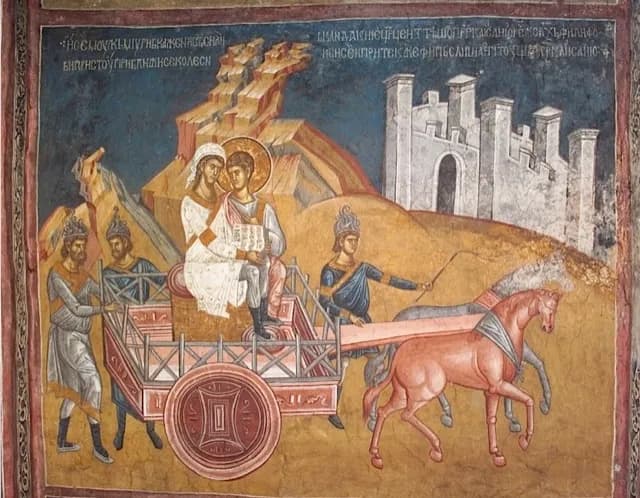
The land of Cush, commonly rendered 'Ethiopia' in most translations, was the territory south of Egypt from Syene (modern Aswan) southward. Egypt and Cush are frequently associated in Scripture. The name sometimes denotes the land itself and sometimes the people. Queen Candace's Ethiopian eunuch was from this region—an Abyssinian, not a Negro, who was educated enough to read the Greek Septuagint.
☩Another Cush
A Benjamite named Cush (meaning 'black') is mentioned only in the title of Psalm 7. Some scholars consider this an enigmatic title for Saul the Benjamite, with an allusion to his father Kish's similar-sounding name. The reference to 'Cush' or 'Ethiopian' may symbolically describe one who is black at heart and cannot change.
Related Verses9 mentions
See Also
References
- 1.John McClintock and James Strong, "Cush," in Cyclopedia of Biblical, Theological and Ecclesiastical Literature, vol. II (Harper & Brothers, 1867–1887).
- 2.James Orr (ed.), "Cush," in International Standard Bible Encyclopedia, vol. II (Howard-Severance Company, 1915).
- 3.George Morrish, "Cush," in Morrish's Concise Bible Dictionary (George Morrish, 1898).
- 4.Andrew Robert Fausset, "Cush," in The Englishman's Critical and Expository Bible Cyclopædia (Hodder & Stoughton, 1878).