
Grasshopper
“A leaper”
Summary
An insect mentioned frequently in Scripture, often as an image of insignificance or as part of locust swarms that devastated crops.
☩The Insect and Its Species
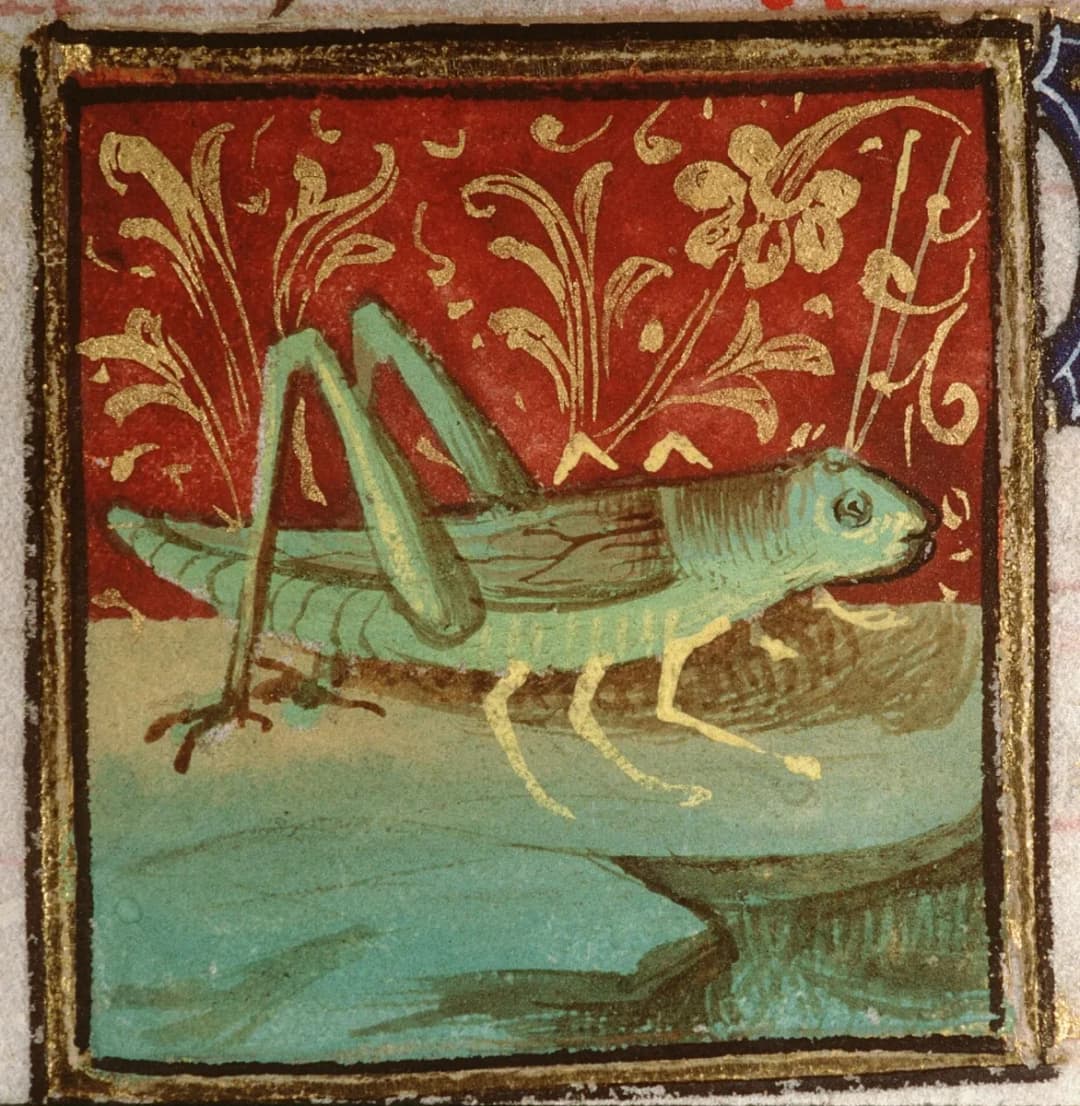
Several Hebrew words are translated 'grasshopper' or 'locust' in English versions, reflecting the various species and stages of these insects. The grasshopper belongs to the locust family and was considered clean for food under Mosaic law. John the Baptist ate locusts in the wilderness, as Bedouin and some Orientals do today.
☩Symbol of Insignificance
The grasshopper served as an image of smallness and insignificance. The faithless spies reported that the inhabitants of Canaan were so mighty that 'we were in our own sight as grasshoppers.' Isaiah uses the image to contrast human insignificance with divine majesty: the inhabitants of earth are as grasshoppers before God who sits above the circle of the earth.
☩The Locust Plague
When grasshoppers and locusts gathered in vast swarms, they became instruments of divine judgment, stripping the land bare. The eighth plague upon Egypt was a locust invasion so severe that it covered the face of the earth and devoured every green thing. Joel's prophecy pictures a devastating locust army as a type of the day of the Lord.
Related Verses10 mentions
References
- 1.James Orr (ed.), "Grasshopper," in International Standard Bible Encyclopedia, vol. II (Howard-Severance Company, 1915).
- 2.John McClintock and James Strong, "Grasshopper," in Cyclopedia of Biblical, Theological and Ecclesiastical Literature, vol. III (Harper & Brothers, 1867–1887).
- 3.George Morrish, "Grasshopper," in Morrish's Concise Bible Dictionary (George Morrish, 1898).
- 4.F. N. Peloubet & M. A. Peloubet (ed.), "Locust," in Smith's Bible Dictionary (Porter & Coates, 1884).