
Apple
“Apple or fragrant fruit, from its fragrance”
Summary
A fruit tree and its produce mentioned favorably in Scripture for its beauty, shade, fragrance, and restorative properties, though its exact botanical identity remains debated.
☩Biblical References
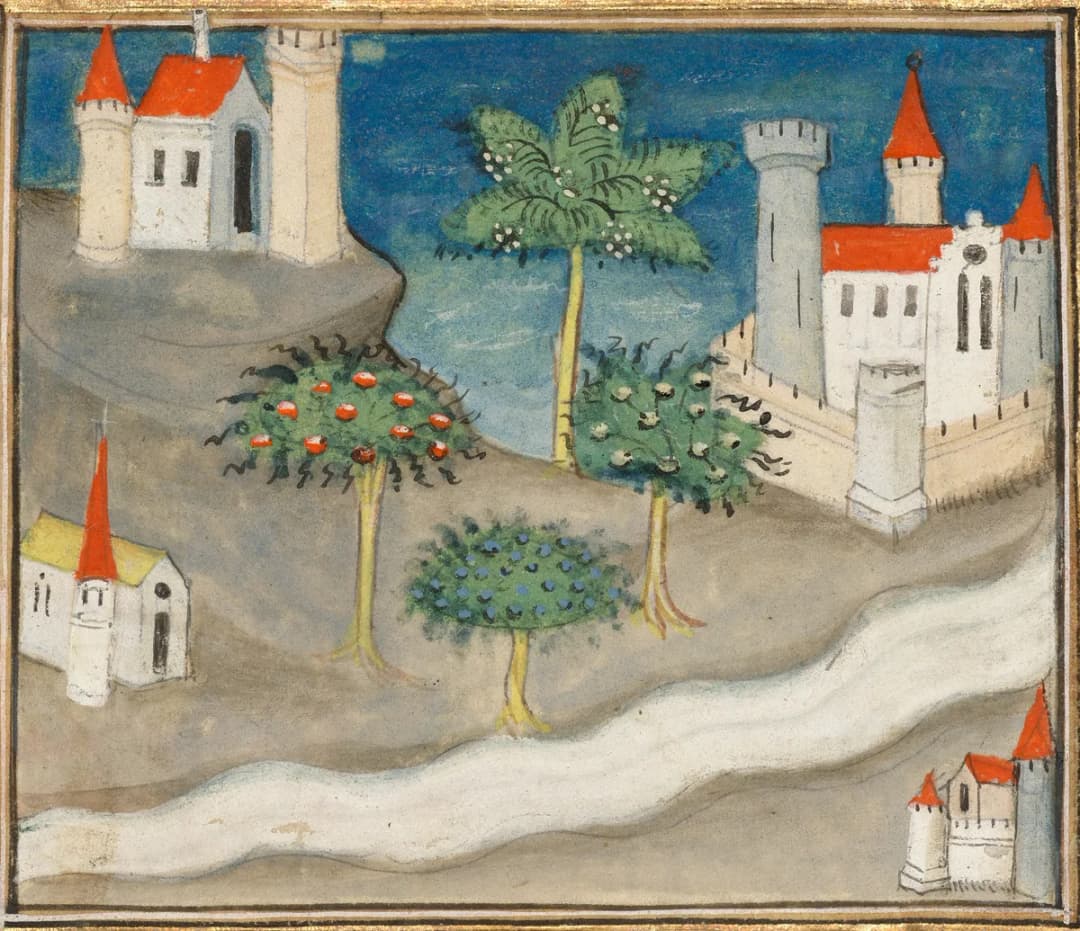
The apple (Hebrew tappuach) is mentioned in the Song of Solomon as an attractive tree providing welcome shade, with fragrant and restorative fruit. In Proverbs, "a word fitly spoken" is compared to "apples of gold in baskets of silver," emphasizing both beauty and value. Joel lists it among the valuable trees of Palestine alongside the vine, fig, palm, and pomegranate. The word also appears in place names such as Tappuah, probably indicating areas where the fruit was abundant.
☩Identification
Scholars have debated whether the Hebrew tappuach refers to the common apple, the citron, the quince, or the orange. The citron was celebrated among the ancients and was used by Jews at the Festival of Tabernacles. The quince was highly esteemed for its fragrance and was sacred to Venus in ancient mythology. However, since the Arabs still call the apple by a similar name (teffach), and the apple was anciently cultivated in Palestine and celebrated for its agreeable smell, it remains the most likely identification. The word has no connection with the forbidden fruit in Eden, as Scripture does not identify what kind of tree bore "the fruit of the knowledge of good and evil."
☩Apple of the Eye
The phrase "apple of the eye" refers to the pupil, using the Hebrew words for "little man" or "daughter of the eye," expressing something most precious and carefully protected. This image appears commonly across many languages and cultures.
Related Verses11 mentions
See Also
References
- 1.John McClintock and James Strong, "Apple," in Cyclopedia of Biblical, Theological and Ecclesiastical Literature, vol. I (Harper & Brothers, 1867–1887).
- 2.James Orr (ed.), "Apple, of the eye," in International Standard Bible Encyclopedia, vol. I (Howard-Severance Company, 1915).
- 3.Andrew Robert Fausset, "Apple," in The Englishman's Critical and Expository Bible Cyclopædia (Hodder & Stoughton, 1878).