
Tapestry
Summary
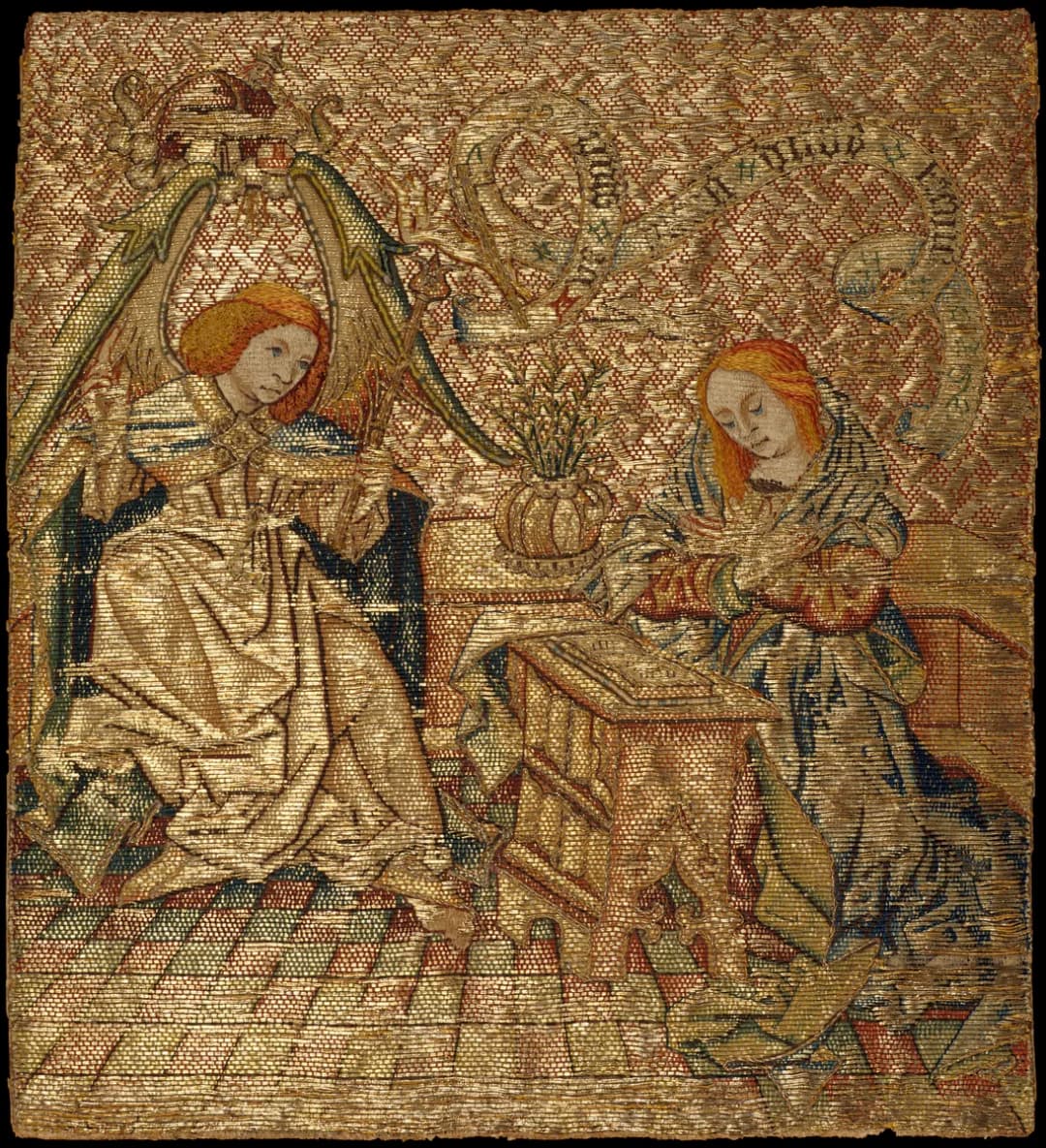
Tapestry refers to woven or embroidered textiles used for decoration and covering, mentioned in connection with the Tabernacle, royal palaces, and domestic settings.
☩Tabernacle Tapestries
The most detailed biblical descriptions of tapestry concern the curtains of the Tabernacle. These were made of fine twined linen with blue, purple, and scarlet thread, decorated with cherubim worked into the fabric by skilled craftsmen. The veil separating the Holy Place from the Most Holy Place was similarly decorated. Gold thread was also woven into some of the priestly garments.
☩Royal and Domestic Use
Tapestries adorned the palaces of ancient kings, as described in the book of Esther where the royal court featured hangings of white, green, and blue fastened with cords of fine linen and purple. The virtuous woman of Proverbs 31 is praised for making her own tapestries and coverings of fine linen and purple. In a negative context, the seductress boasts of her bed adorned with coverings of Egyptian tapestry.
Related Verses11 mentions
See Also
References
- 1.John McClintock and James Strong, "Tapestry," in Cyclopedia of Biblical, Theological and Ecclesiastical Literature, vol. X (Harper & Brothers, 1867–1887).
- 2.James Orr (ed.), "Embroidery," in International Standard Bible Encyclopedia, vol. V (Howard-Severance Company, 1915).
- 3.George Morrish, "Curtains," in Morrish's Concise Bible Dictionary (George Morrish, 1898).
- 4.F. N. Peloubet & M. A. Peloubet (ed.), "Embroidery," in Smith's Bible Dictionary (Porter & Coates, 1884).
- 5.Andrew Robert Fausset, "Tapestry," in The Englishman's Critical and Expository Bible Cyclopædia (Hodder & Stoughton, 1878).
- 6.James Hastings (ed.), "Embroidery," in Dictionary of Christ and the Gospels, vol. II (T. & T. Clark, 1906–1908).